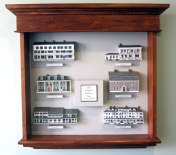
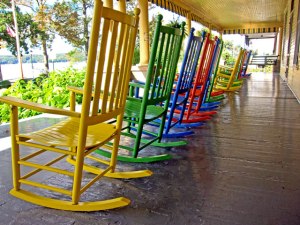
NATIONAL MUSEUM OF INDUSTRIAL HISTORY – 21 OCTOBER 2018

“Americans invent as the Greeks sculptured and
the Italians painted: It is genius.”
-The Times – London – 1876

About a year ago I clipped an article from an antiques magazine about a new museum in Bethlehem, Pennsylvania – the National Museum of Industrial History. Earlier this year I was also emailing with a letterpress historian about a part I need for a rare press I bought, and he told me about his involvement in the temporary Printing and Papermaking exhibit at the museum. No problem deciding that on the drive home Sunday 21 October from Hershey that I spend time at this museum – only about two years old, and affiliated with the Smithsonian.

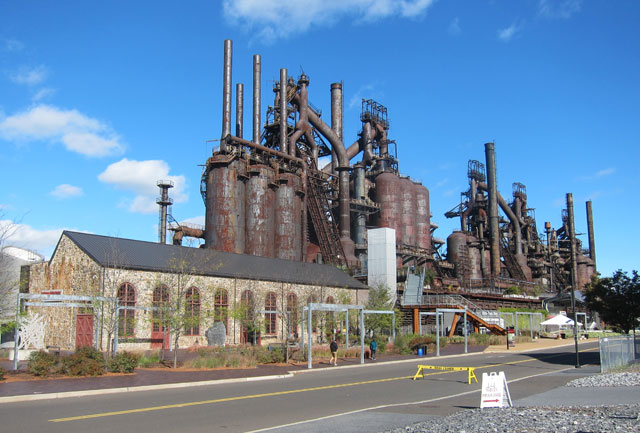
I back-roaded to Bethlehem, and arrived on the grounds of a Bethlehem Steel plant that is being conserved, and repurposed as a visitor area, and cultural center. The visitor center sits in the shadow of this furnace complex.

I walked around, poked into some abandoned buildings

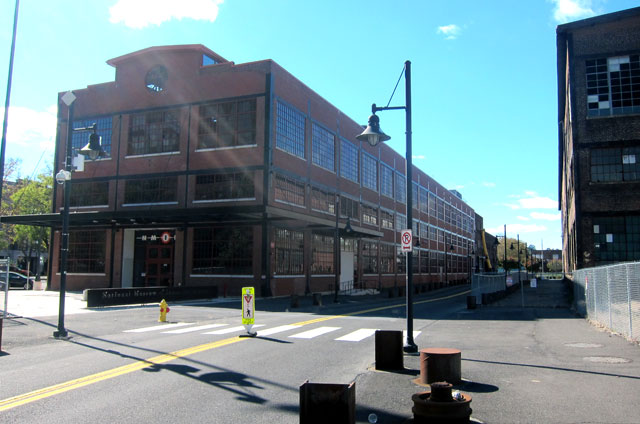
and then found the museum in this restored building.

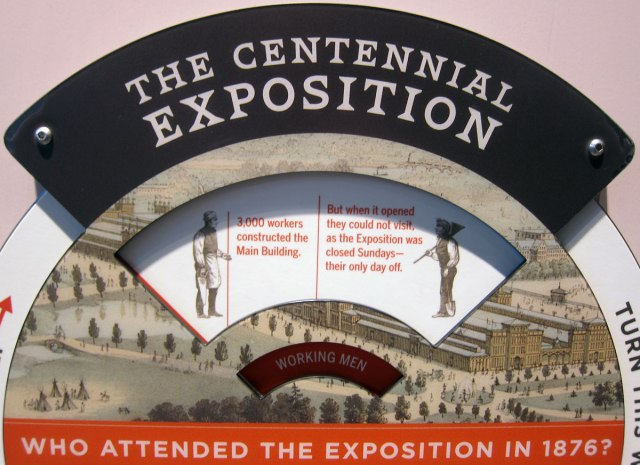
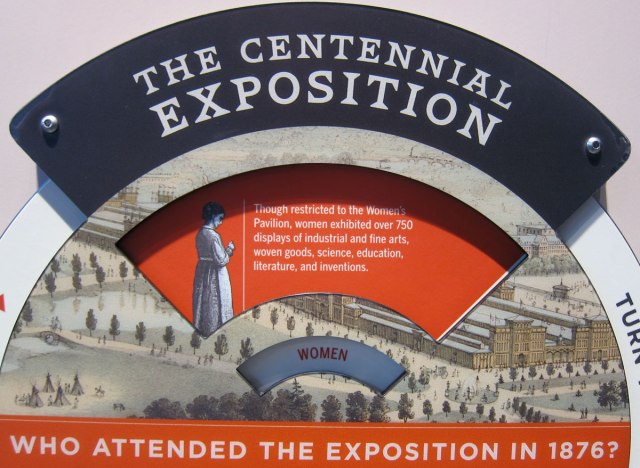
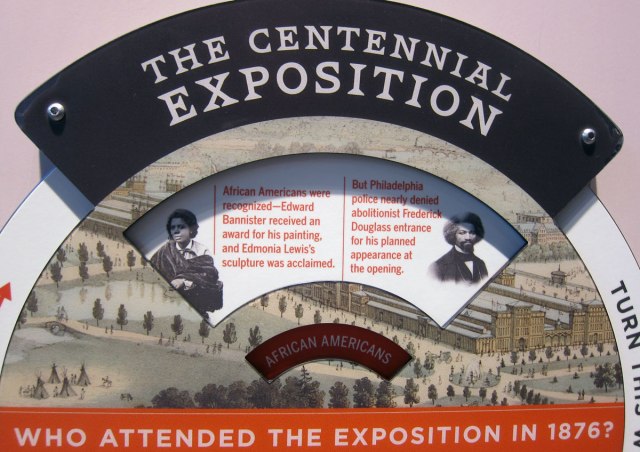
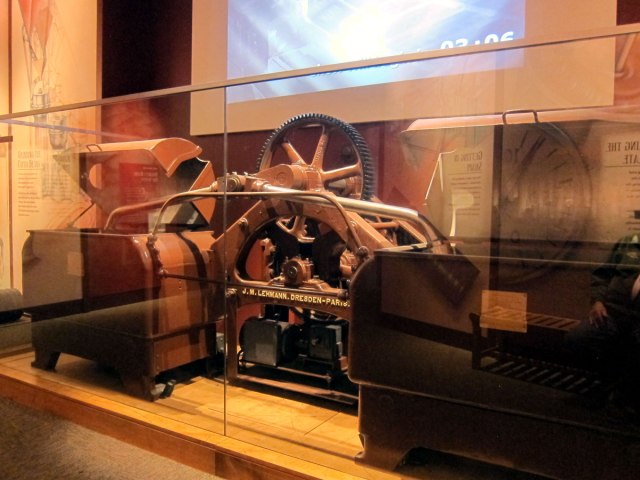
as you enter, the initial exhibit represents what a visitor would have marveled at in the Machinery Hall at the 1876 Centennial Exposition in Philadelphia. If you know me, you know I have been fascinated for over five decades by world’s fairs and expositions.


these words provided an introduction to the Centennial Exposition exhibit. Much of this machinery at the beginning here is from the Smithsonian, having originally been exhibited in Philadelphia in 1876. Steve, there is even a piece there on loan from the American Precision Museum in Windsor, Vermont. You can click on the image to the right to read it if you wish. Below are some of the equipments that were shown in Philadelphia in 1876.


I found these “facts’ interesting. If you wish to read the facts, click to enlarge

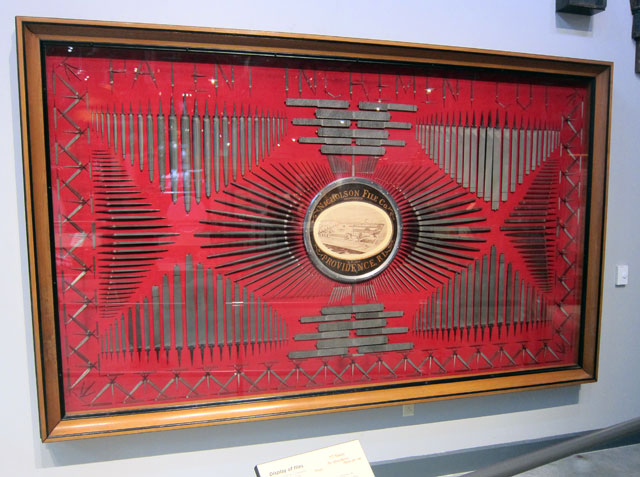
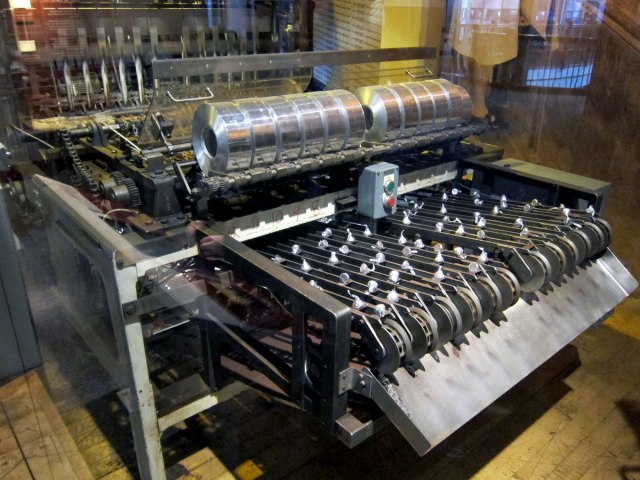
this display of files made by the Nicholson File Company of Providence, RI, was also shown at the fair in 1876. The company’s improved file-cutting machine (1864) revolutionized the industry. Files could now be made by machine (36,000 a day) instead of being cut by hand.

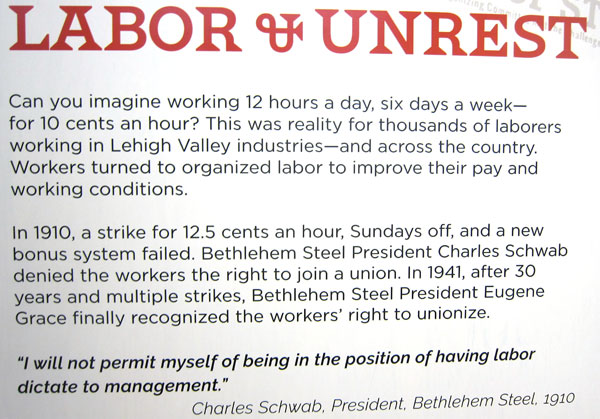
Continuing on in the museum, stories of iron and steel, and the silk and propane industries were presented.

These panels explain how iron, then steel is made. Was learning about the process in Pittsburgh, and I have these here so I can study again – but you may wish to open and read.

Many of my posts are read by people doing “on-line searches” and my hope is that this post will provide some additional information on, and incentives for people to visit the National Museum of Industrial History. I will not quiz my cadre of faithful readers to see what you have learned here – you are safe. But here is some more that I want to share.

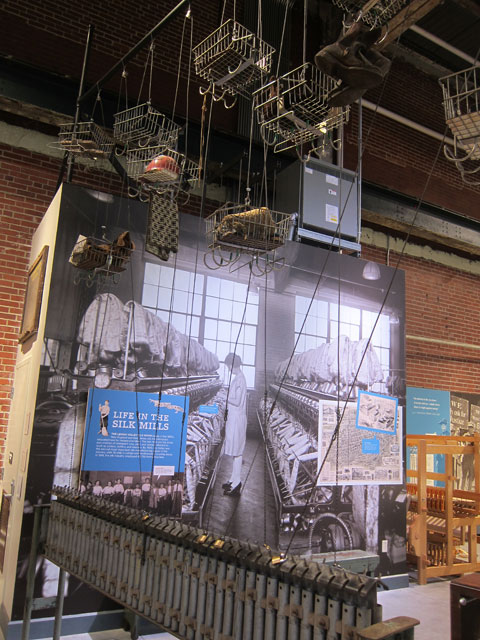
Have you seen a worker’s “welfare room” before? A locker room – but see where in 1941 workers had for the first time a place to shower and store personal items. They placed their personal items in these “welfare baskets,” hoisted them up to the ceiling and padlocked it to their numbered spot on the central stand

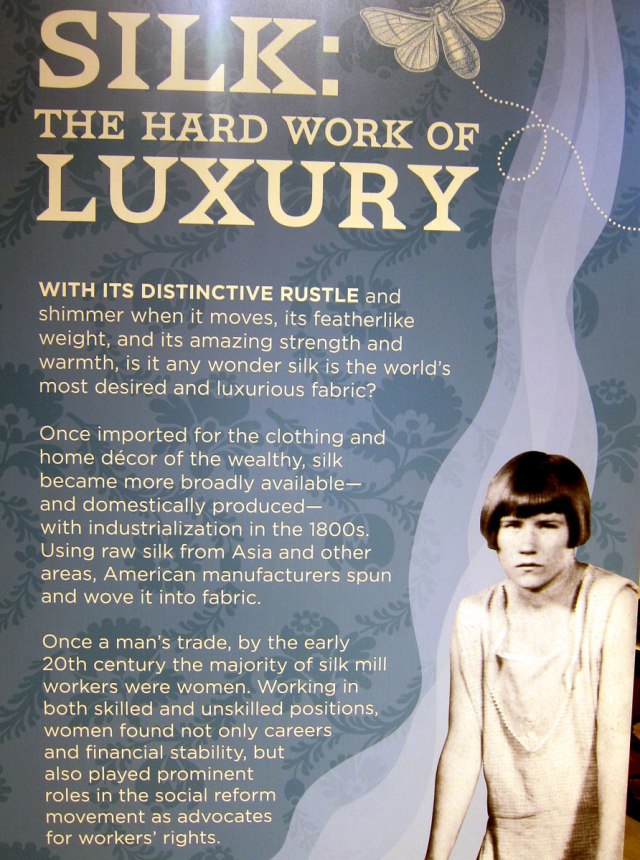
there is a section on the silk industry that was in this area.

I was fascinated learning about propane and the distribution of LP gas – originally waste from the oil mines, but now used.

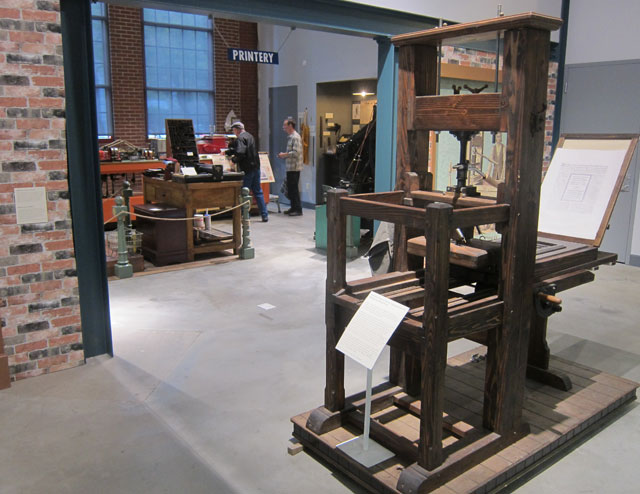
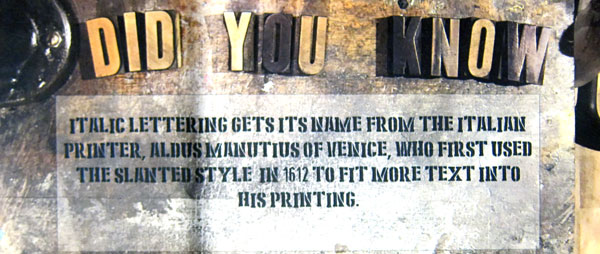
I then spent a little time looking around the printing exhibit. Below is a model of the Daye Press – the first printing press in the Colonies, arriving in 1638. It was made by the fellow I have been emailing with. Ironically, I just wrote an article about this press for my monthly “Did You Know That…” history piece in my newspaper – THE WALPOLE CLARION – click on this link to read that article.

There are several themes that run through my life, and have contributed to my foundation and interests. I have had printing presses since 1957. Wanted to print a newspaper, but quickly realized not something I could do with a 3×5 inch press. I currently have about 8 presses, equipment, and maybe 30 fonts of type. Sold a big press two years ago, third time I had sold a Chandler and Price 6×10 inch bed, and I was sad – did not have to sell it, but wasn’t using it – not fair to someone else and the press. No problem, found another two months ago in the back room of an antique shop – it is now in my garage awaiting some tweaking – mainly paint – pink is not correct on a printing press.

This model of a paper making machine was in operation. The model of a Fourdrinier Paper Making Machine was made in 1933 for The Franklin Institute, where it was used to demonstrate papermaking until 1999. The model turns out an eight inch wide web of paper at the rate of five feet per minute.

and, here is a fast fact for you.

RAY RECOMMENDS – If passing through Bethlehem, Pennsylvania, take a couple hours and experience and learn at the National Museum of Industrial History. And, if you can, plan a “Wayzgoose” event.

Posted in 2018-a - Pennsylvania | Tagged , , , | Leave a comment

FLIGHT 93 MEMORIAL and a HERSHEY REDUX – 19-20 OCTOBER 2018

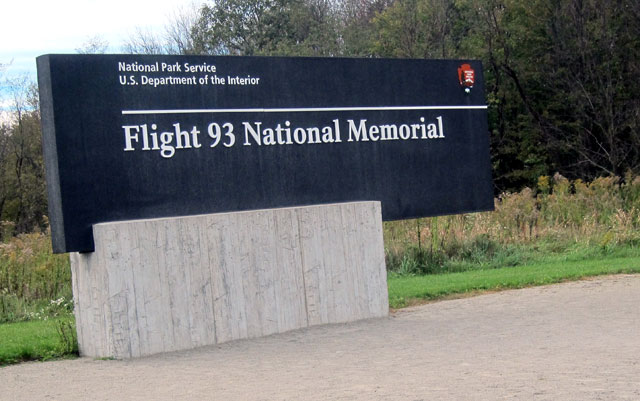
My program and introduction to amazing Pittsburgh, Pennsylvania (posts eventually coming) finished up before noon on Friday the 19th. Plan was to stop at the Flight 93 National Memorial in Shanksville on my way to Hershey for two nights with a full day in between.

I back-roaded (of course) to Shanksville and the Flight 93 National Memorial. I took US 22 east out of Pittsburgh, then cut down to US 30. I definitely have to get back to explore Western Pennsylvania, The Allegheny Mountains, Ligonier, Laurel Mountain, etc. Arriving at the Memorial I was overwhelmed with the number of cars (exceeding space in the parking lot) from all over the US – and this a mid-Friday, with school in session. A solemn place, I will let my images speak for themselves with limited words of explanation. A volunteer Ranger is on hand to give an introduction to the site and that day.

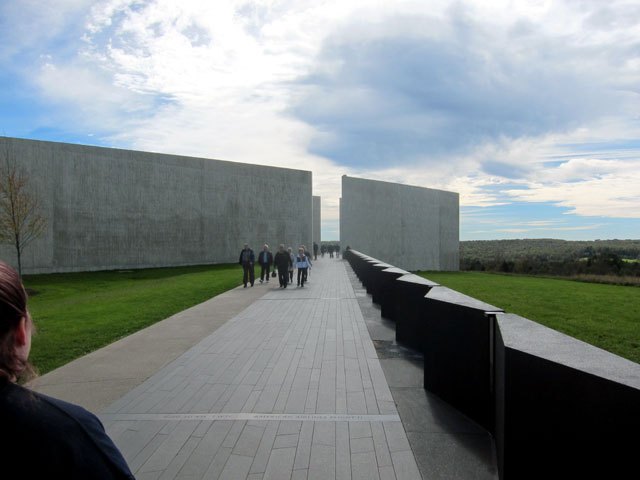
then you head down the path to the visitor center. The blackish path in the center is the track of the doomed plane.

people were crowded around all the displays reading away

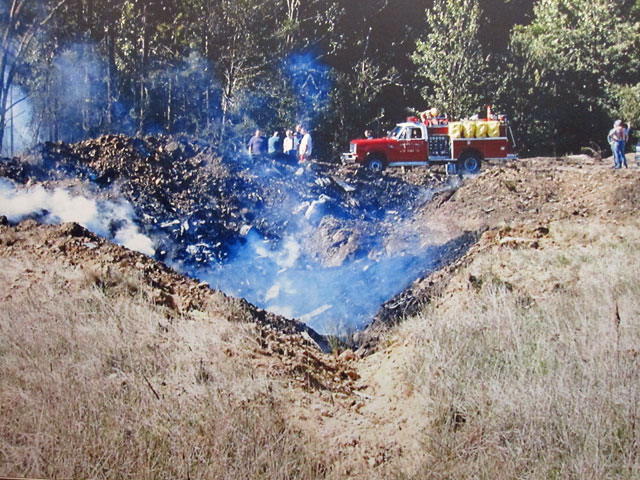
the next three images I took from the displays. First here is a photo right after the crash that created a 45 foot deep crater with barely anything remaining. A stand of trees for forty feet was blown down.

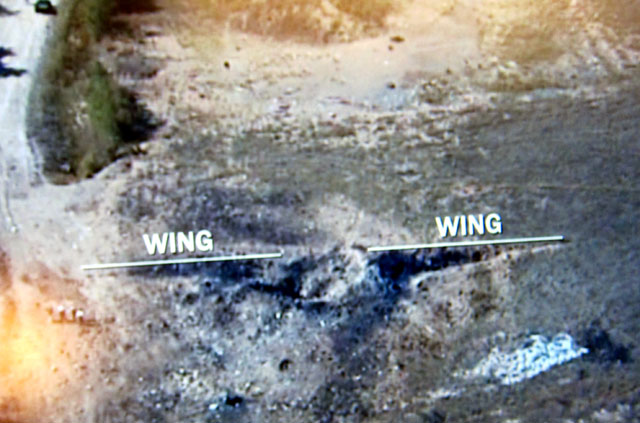
this is an aerial photo taken of the site by helicopter

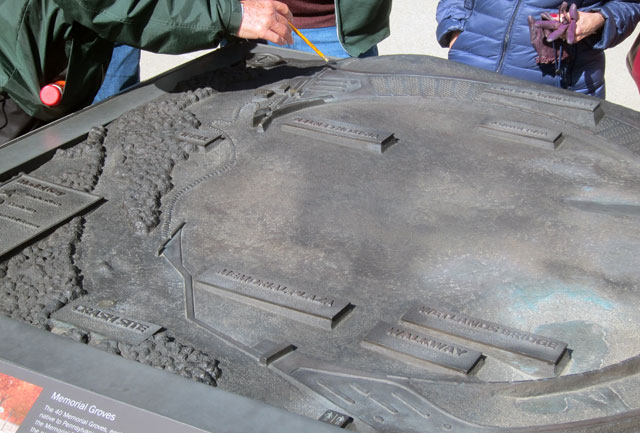
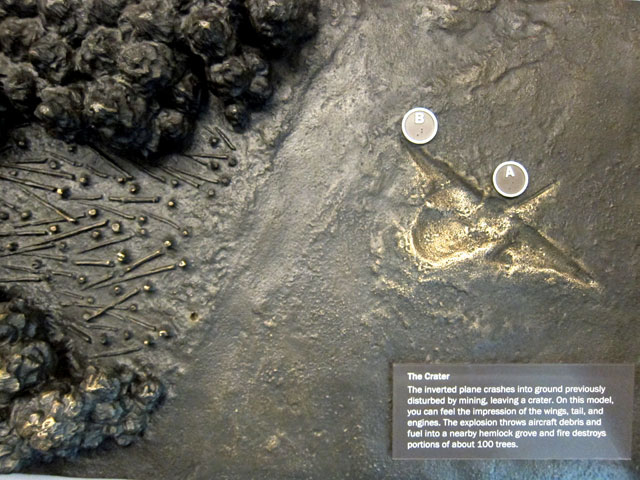
and, there is a bronze plaque you can touch to feel the destructive contours Note the swath of trees blown over.

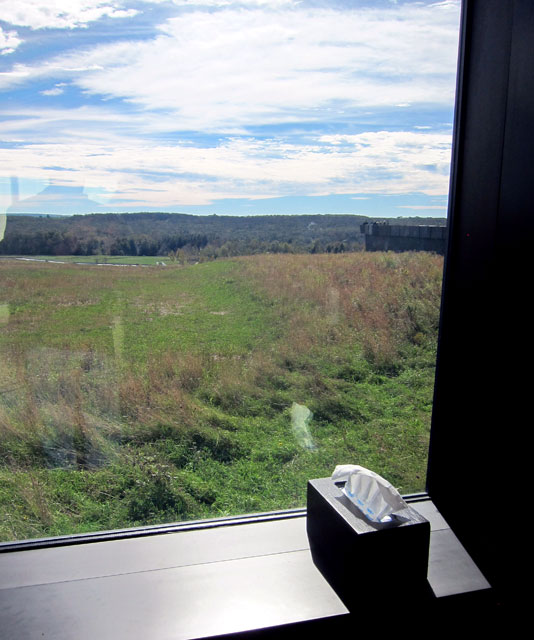
at the end of the hall you can look out at the crash site, now signified by a 17 ton boulder. Probably the only National Memorial with tissue boxes strategically placed. I almost pulled one out.

the end of the ramp overlooking the site. This area was originally an open-strip mine, abandoned and covered over at the time. Two people working in the area saw the plane in its last few seconds – apparently upside down – and traveling at over 500 MPH.  A few more seconds of flight, and the plane would have landed in the local School.

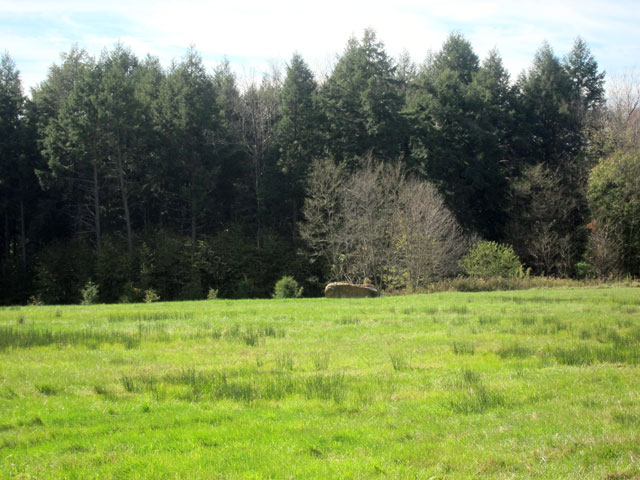
the boulder marking the approximate site of impact

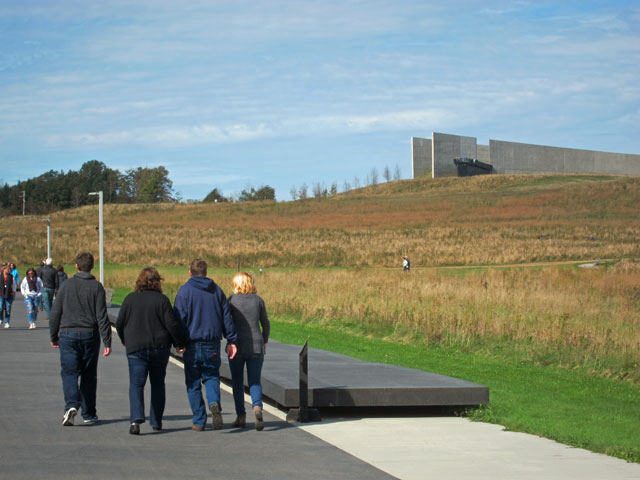
and, looking back to the Visitor center.

I headed to Hershey to settle into my B&B. I have fond memories of Hershey from the 1960s to the 1990s at the AACA (Antique Automobile Club of America) Fall Meet and Flea Market – miles and miles of automotive related flea market. My Dad set up there selling cars and parts, and I would visit when I could. A few times David and Gary were also able to join me. I have a couple non automotive antiques in the house that I found over the years there, and I use, and cherish for the memories. But when you are focusing on a car show, there is no time left to “do Hershey.”

Hershey has changed since I was last there 25 years ago. I cannot image walking fields of blacktop — it was so much more fun, and a challenge, trodding through mud. It is crowded now, the Amusement Park has expanded into one of the former show fields, The Hershey Story is about 9 years old, and the AACA museum about 15 years old. I had to see it all. On Saturday the 20th I arrived at the AACA museum shortly after it opened.

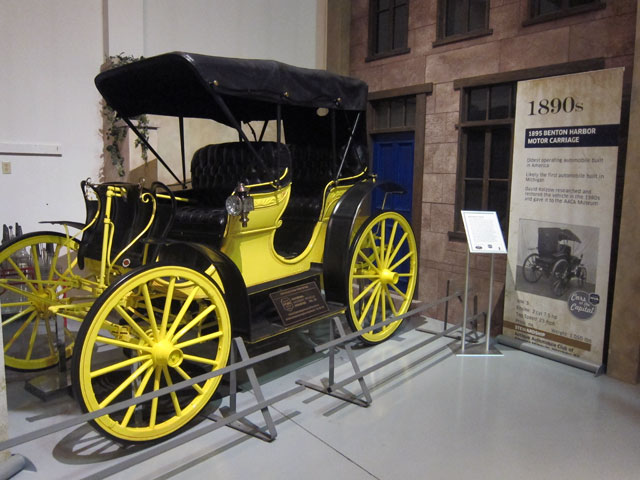
Charles Duryea and his brother Frank are credited with building the first gasoline powered auto in the US demonstrating it September 21, 1893, in Springfield, Massachusetts, But in the museum is the 1896 Chicago Benton Harbor, now considered to be the first vehicle in America built from scratch as an automobile as opposed to construction on a modified horse-drawn carriage.

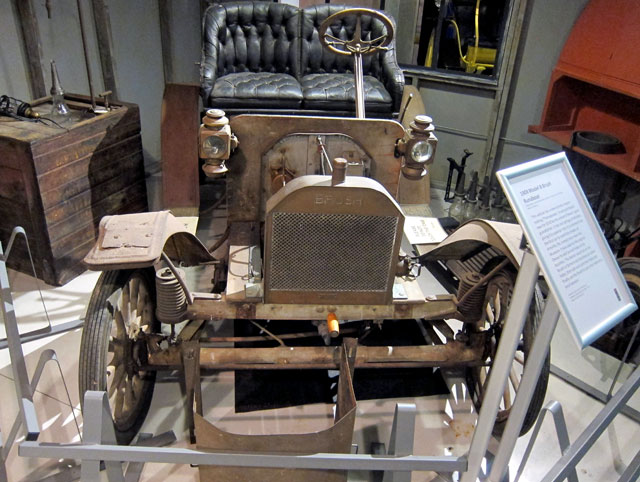
In a reconstructed blacksmith shop (the early automobile repair shop) is this original BRUSH – the only car made with a wooden front axle. I think my Dad had one once. I love original condition.

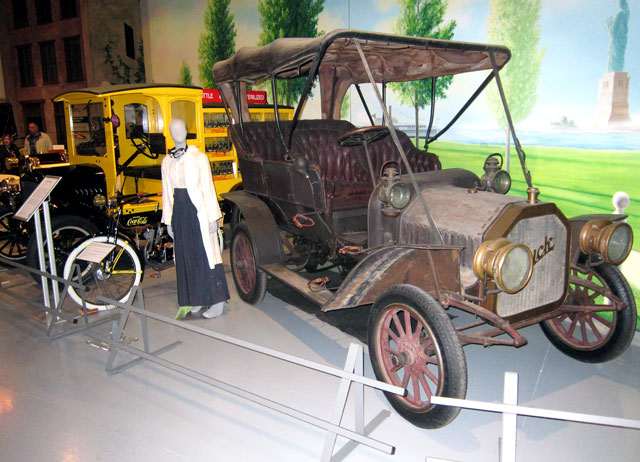
another original around the corner was this 1909 Buick Touring car. In the late 50s my Dad bought a 1908 Buick, with a “mother-in-law” seat in the rear from the Buick dealership in Brewster, NY. It was one of 14 known at the time.

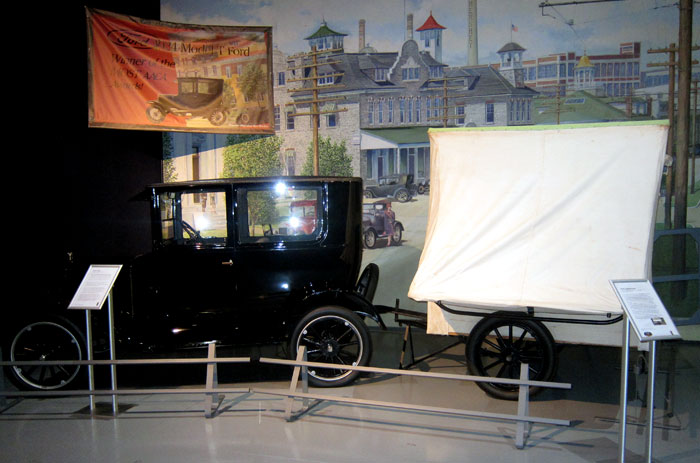
This 1924 Model T Ford has won numerous awards, but of note and interest is this early camping trailer, a 1928 Zagelmeyer. Frank Zagelmeyer also invented the ball and socket trailer hitch so commonly used today.

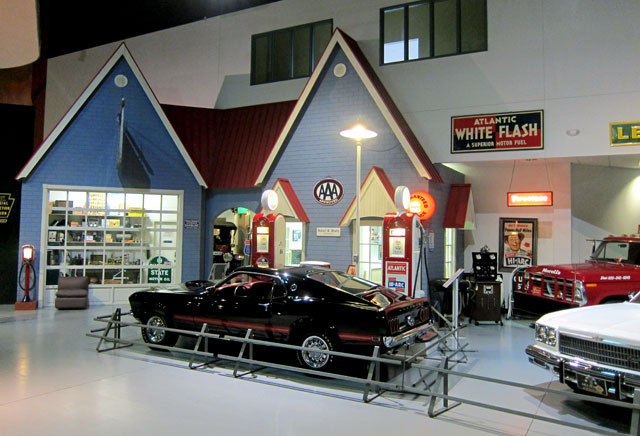
and, a replica of an early filling station

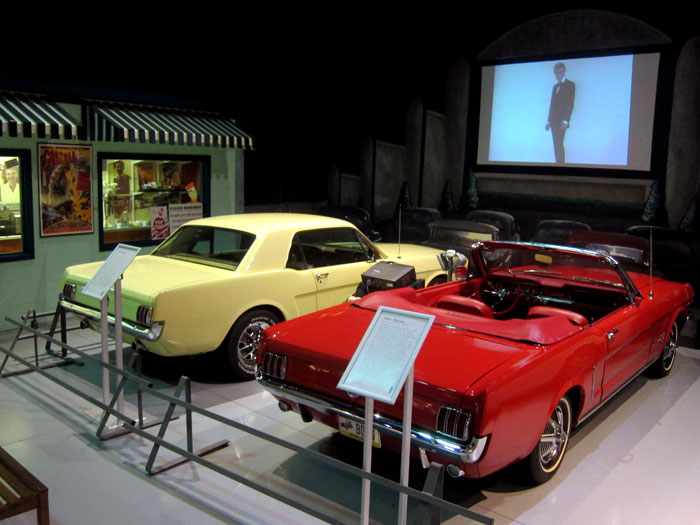
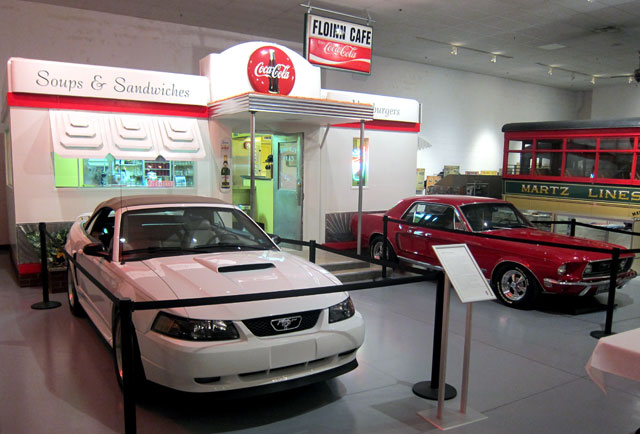
and, a drive-in theater and refreshment stand. The exhibits at the museum rotate, and the temporary exhibit of Mustangs were departing. At the drive-in were these two classic Mustangs. In my “Mustang” days (late 1980s, early 1990s) I owned a 1965 Hardtop (Maroon) and a 1966 Convertible (Royal Blue). I know all the trouble spots in these models.

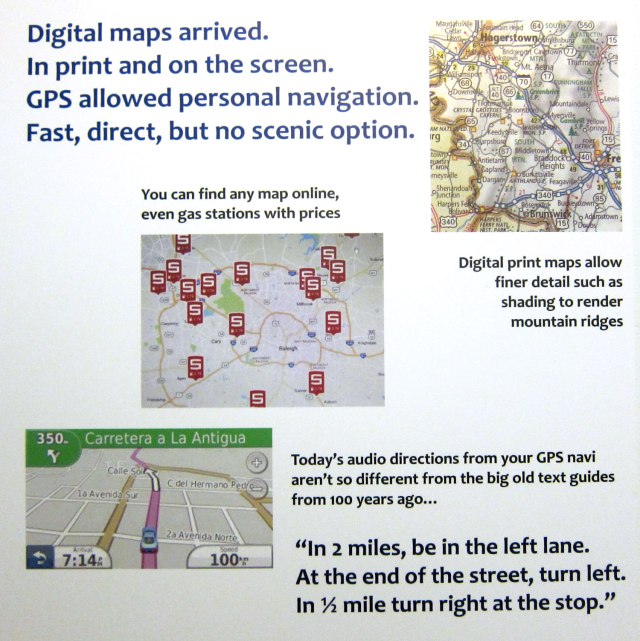
I love old-fashioned paper maps, and the frustration opening and closing them. Here is the exhibit on maps that I wanted to share, and you can click on the gallery for larger readable images.

On permanent exhibit is the largest collection of Tucker automobiles and literature. You should take time to read more about this revolutionary vehicle from the late 1940s.

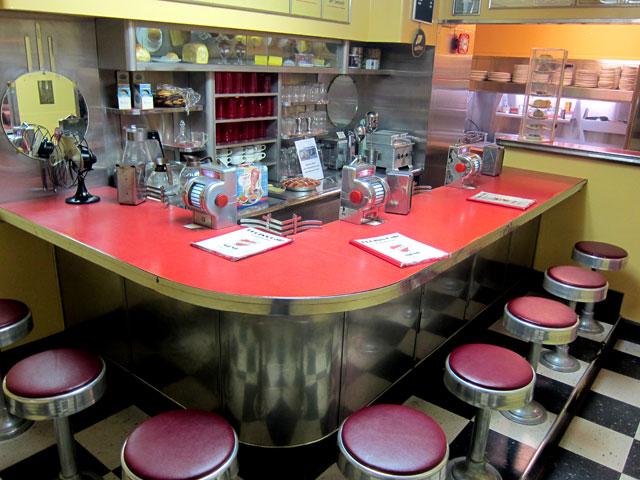
When I was on the TV show “Giant Step” with Bert Parks (in 1957 opposite the Walt Disney’s Disneyland, so you probably missed me), I told him I wanted to own a diner when I grew up. I have been fascinated and collected diner items since (what else?). But I had never seen this small style diner – Flo Fortnoy’s restored 1941 Valentine Diner. Next to the door is a money slot where the owner would drop his/her payments for the diner to be collected by the Valentine Diner Company.

so much to see here, and with the rotating exhibits certainly worth additional visits. Outside was one of the Hershey “Kissmobiles.” I did not get one – a “kiss” that is – just waiting.

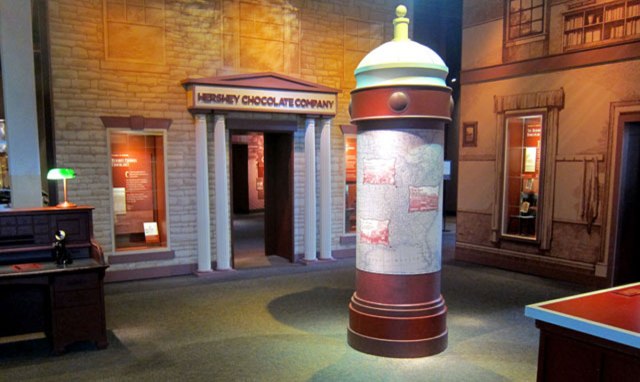
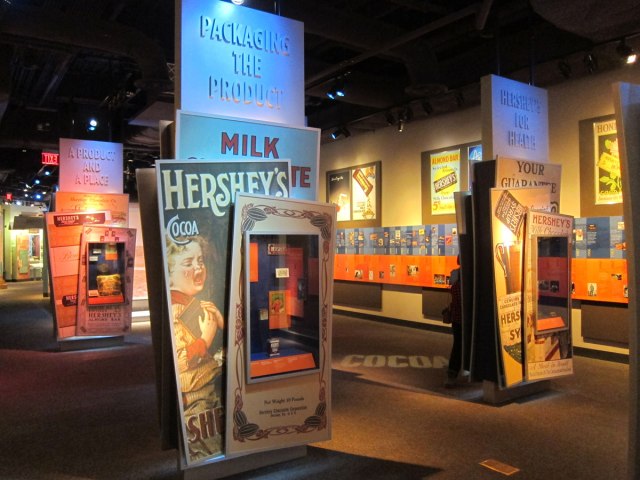
Almost three hours at the AACA museum, so off it was (skipping lunch to save time, of course) to see The Hershey Story – another new museum since I was last in Hershey. I read one book on Milton Hershey before this trip, and hope to attend a History of Chocolate adventure at Historic Deerfield in February – ending on Valentine’s Day, of course. I highly recommend a visit – I spent close to two hours – would have been more if I had not read a book beforehand.

Here are some views of the exhibits.

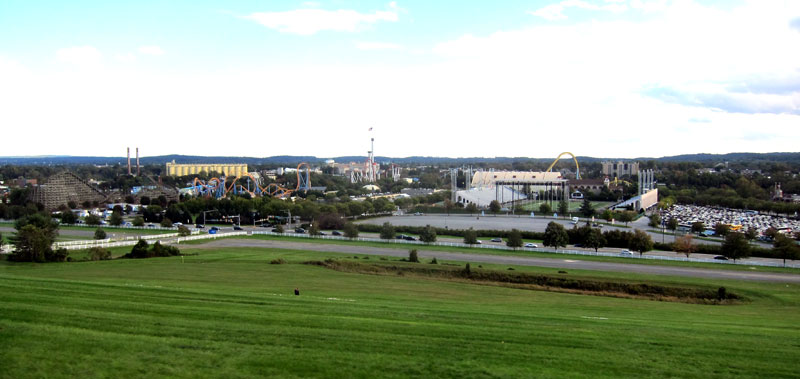
Next I headed over to the relocated and expanded CHOCOLATE WORLD to buy my ticket for a “Trolley Tour” of Hershey. Again, glad I did because I like to learn the “lay of the land” and how the roads are all connected. Here is a view looking from a Hershey School campus looking at downtown, the stadium and expanded amusement park (you have to learn how Milton Hershey built his atypical “company town”), and the now paved fields that I loved to explore cars and car parts on.

On the tour I saw Milton Hershey’s home

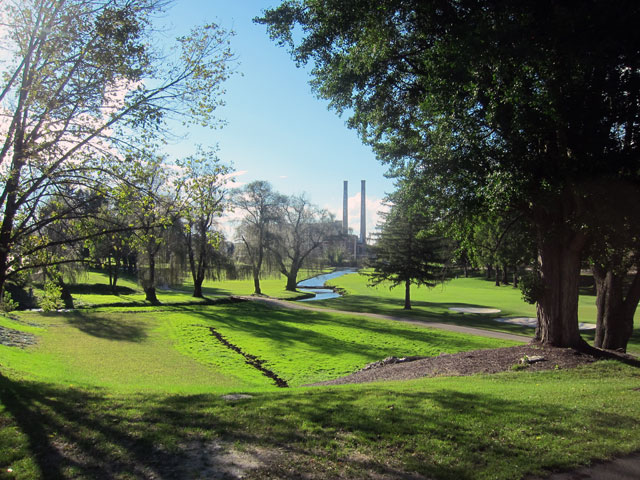
one of his golf courses, and much more.

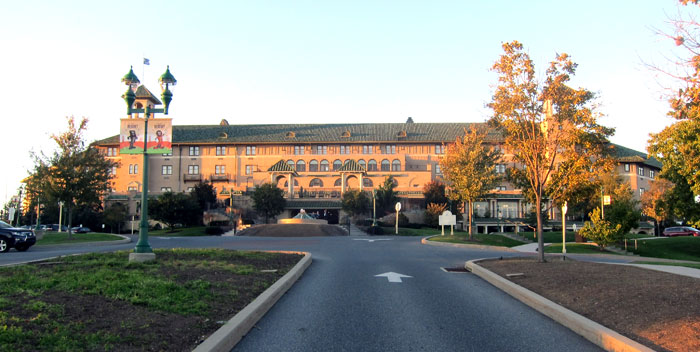
My plan for dinner was to head to The Hotel Hershey – I had made my reservation a week beforehand. My Dad had a car friend who always stayed there during the car events. I wanted to stay, but with tax was facing about $500 a night – my Dad’s friend had sold a world renowned travel agency in the late 40s – he could afford it. BUT, I wanted to experience it – and HIGHLY RECOMMEND you do also, at least for dinner as I did.

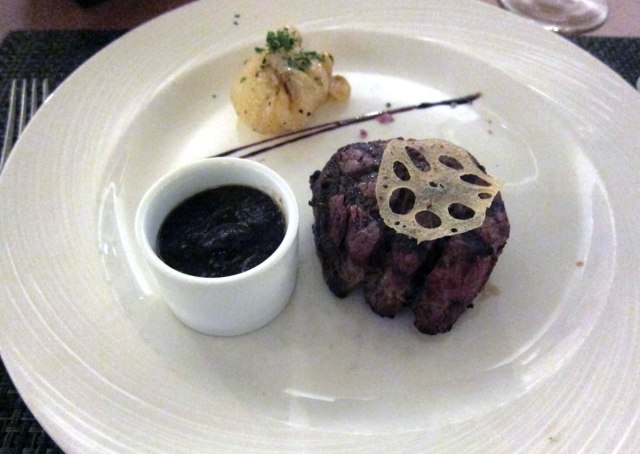
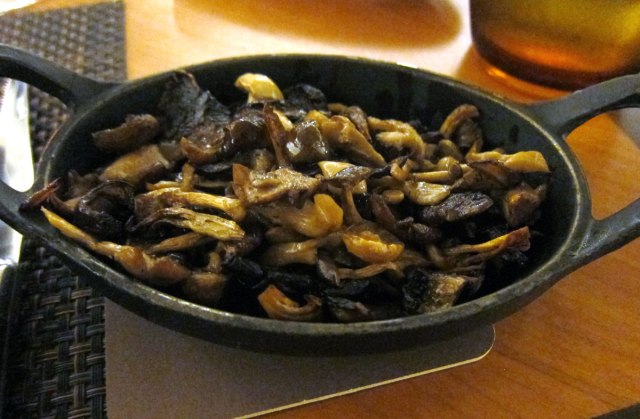
With many dining venues, I choose the finest restaurant – The Circular. And, hands down, the best experience I have had. “Good evening, Mr. Boas,” my server Mike greeted me. And, it just got better. But, “please just call me Ray.” He corrected himself later and complied.

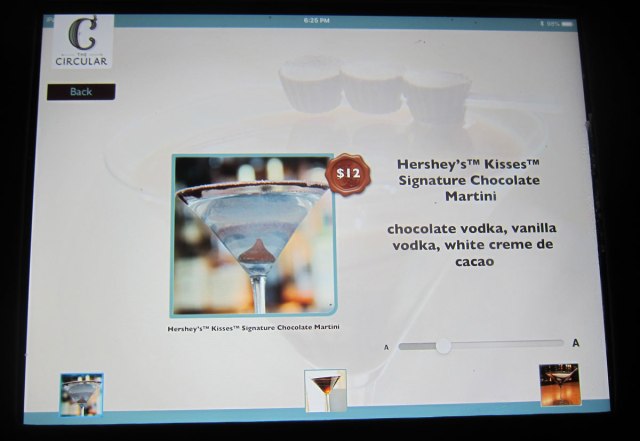
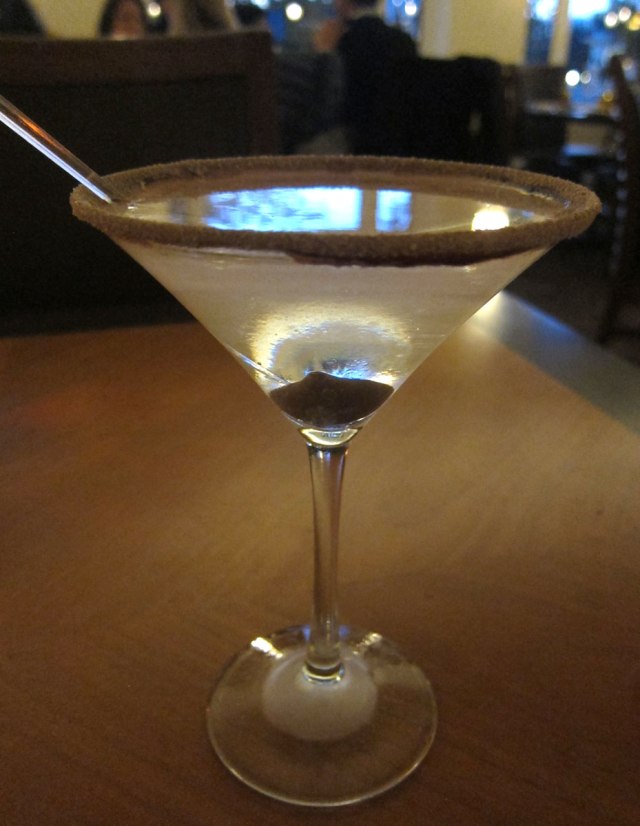
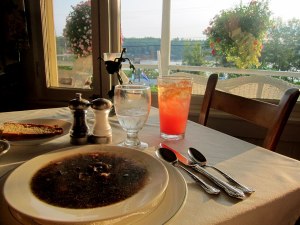
I was first given an iPad to view the drink and wine selections. Was there a choice? Yes – I selected – Hershey’s® KissesTM Signature Chocolate Martini with Smirnoff vanilla vodka, 360 chocolate vodka, and white crème de cacao. The gallery below shows you my table and its accoutrements.

Not knowing how to top this day, I headed back to my B&B to prepare for my adventure on Sunday in Bethlehem, Pennsylvania, and the trip home. I will get to Sunday at National Museum of Industrial History hopefully within a few days, and then get to telling you about all my fun and learning in Pittsburgh.

Thank you so much for spending your time experiencing my adventures with me – love, RAY


Posted in 2018-a - Pennsylvania | Tagged , , , , , , , , | 1 Comment

OVER THE ALLEGHENIES and the JOHNSTOWN FLOOD – 13-14 OCTOBER 2018

I have wanted to visit Johnstown, Pennsylvania, to experience the site of the May 31, 1889, flood since I read David McCullough’s The Johnstown Flood in the 1970s. This, his first book published in 1968, launched his writing career gaining him two Pulitzer Prizes. The opportunity finally came about, and I left home about 6 AM Saturday the 13th, arriving about 530 miles and 8 1/2 hours later at the Johnstown Flood Museum.

The Johnstown Flood Museum

Originally the library, it was refurbished after the flood by Andrew Carnegie. The buildings across the street (below) also are survivors from the flood.

A company town in 1889, over 7,000 workers were employed by the Cambria Iron Company. An important rail center, earlier Johnstown was a canal center beginning in 1834 with the completion of the Allegheny Portage Railroad which united the eastern and western sections of the Pennsylvania Canal by creating a number of inclined plane stations to haul canal barge sections on train cars over the 2,291 foot high point of the Allegheny Mountains that separated Hollidaysburg and Johnstown. As was common in canal building for low water periods, a dam was built at South Fork, 14 miles from Johnstown, to create a reservoir to supply water when needed to the canal system. When the Pennsylvania Railroad was completed across the state in 1852 it made the canal system obsolete, and the newly finished South Fork Dam went into neglect.

I started (as I usually do) with a wonderful introductory film, and then toured the main floor exhibits. Not much there, but a solemn tribute to the 2,209 lives lost in about 10 minutes as the 40 foot wall of water swept through the valley. This display showed souvenirs of this news sensational event that captured the world’s attention.

See what looks like a bottle in the middle? It is a “Memory Jar.” A popular fad during the late 19th century, On this bottle the Overdorff children affixed relics of the flood to the bottle with red sealing wax.

You know I like to share things you probably know nothing about – and I didn’t either. 310 pre-fab houses that were heading to the Oklahoma Territory for homesteaders were instead shipped to Johnstown for shelter. Manufactured in Chicago, the 1 1/2 story “shanties” came in two sizes: 16 by 24 feet and 10 by 20. One survived to this day, and was relocated outside of the museum.

This surviving example is significant showing the living conditions of an affected worker after the flood, and as an example of one of the first examples of ready-made housing in the US.

It was 5PM, so I headed to my B&B, got settled, and asked for a dinner recommendation. I wanted to ride the Johnston Inclined Plane, built in 1890 and the steepest vehicular incline in the world, and my hostess told me her favorite restaurant was at the top of the incline. Off I went.

The Johnstown Inclined Plane

when originally built, the large car was double decker with room for horses, wagons and carriages on the main floor, and passengers on the second level. Now there is room for two cars end to end, and a passenger room on the side.

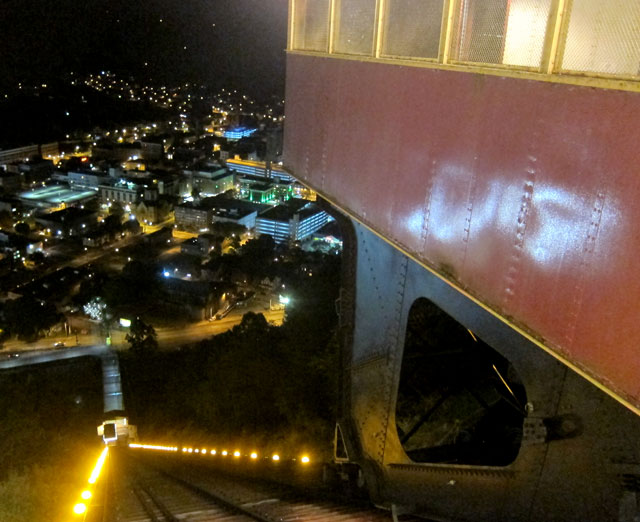
and up I went

and, sharing my ride with you – enjoy this video (I am wrong in the video, it was the 1936 flood when 4,000 were taken to safety on the incline).

Chatting with the hostess at Asiago’s Tuscan Italian restaurant atop the mountain, I was seated at the best table overlooking the dining room and city below.

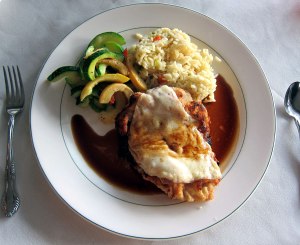
The operator of the Inclined Plane told me I had better have the bubble bread appetizer which I did – AMAZING, and when looking at the menu my choice was simple – Tuscan Chicken. You may know my daughter-in-law is Tuscan from Cortona.

Following dinner I looked at the plane’s equipment

and then heading back down the 896.5 feet

and arriving back at the lower station there was not a bump, a jerk, nor any noise – just a smooth landing.

Awakening on Sunday, I had a packed plan before arriving in Pittsburgh by 4 for an exciting week long program you will eventually read about. I first drove back up to Westmont (the high end of the Inclined Plane) to visit Grandview Cemetery. As a company mill town, the Cambria Iron Company began developing the mountain top for housing, and the Incline Plan to move workers to and fro. A cemetery was planned, and sadly immediately became the final resting place for flood victims, including the unknown persons buried behind this monument.

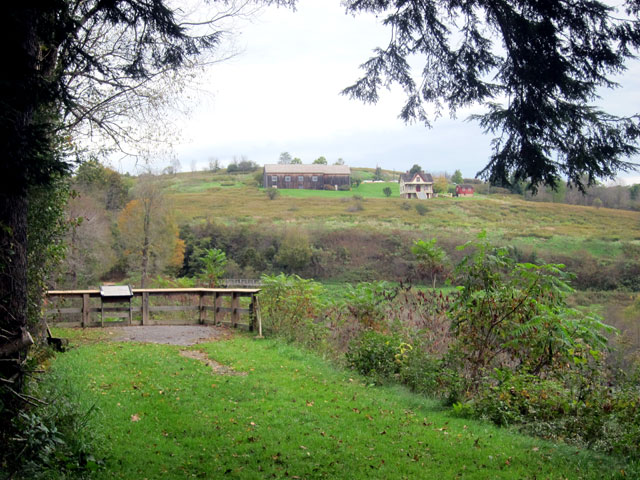
Next I headed to South Fork, the site of the failed dam, which is now the Johnstown Flood National Memorial. In 1879, a group of wealth Pittsburgh industrialists (including Andrew Carnegie, Henry Clay Frick, and Andrew Mellon) purchased the defunct reservoir and surrounding area and formed the South Fork Fishing and Hunting Club. It was the retreat from the dirty city for 66 members. A large clubhouse and 16 cottages were built for the club (nine remain). Below is original home of President, Elias J. Unger, and the visitor center that was reconstructed to replicate Unger’s barn. In the center of the image you can make out the remaining ends of the earthen dam.

These images show you what went wrong. You can see in the drawing that there were originally viaducts under the dam controlled by valves on a wood tower out in the lake. The dam had deteriorated once abandoned, and when the club came in they removed

the control tower, and the viaducts that could be opened for run off. In addition, to make room for carriages to cross the dam, they removed four feet from the top. Without a means for run-off, and with the water level now closer to the top of the dam, a disaster was waiting to happen. Here are some sketches (that you can click to enlarge) showing the before and after the club’s “renovations.”

And a photograph after the dam gave way – it was an immediate burst.

3:10 PM the dam gave way
4:07 PM at Johnstown, the water divides into three paths of devastation; resulting in:

The death of 2,209 people
99 entire families died, including 396 children
124 women and 198 men were left widowed
More than 750 victims were never identified and rest in the Plot of the Unknown in Grandview Cemetery
Bodies were found as far away as Cincinnati, and as late as 1911
1,600 homes were destroyed
$17 million in property damage was done
Four square miles of downtown Johnstown were completely destroyed
The pile of debris at the stone bridge covered 30 acres
The distance between the dam that failed and Johnstown was 14 miles.

There are many on-line sources of images showing you the after effects in Johnstown.

I then circled around what was the circumference of the lake, and first came upon the “clubhouse” owned by the Park Service, empty and yet to be restored. The lake came to a point just on the other side of the road in front.

what is missing in this image below?

And, here in a gallery that you can click and enlarge, are six of the remaining nine summer homes of the club members.

Just down the road is the South Overlook of the South Fork Dam Site.

and, across the way you can see the North Overlook and the Visitor Center.

and here is a short video panning the area of the former reservoir, now a small street, fields, and a rail line.

Finishing up in South Fork I decided that I could make a quick trip to the Allegheny Portage Railroad National Historic Site and still get to downtown Pittsburgh in time. You can pack more into a day when you carry peanut butter crackers for lunch – keeping priorities straight.

Following the success of the Erie Canal in 1825, Pennsylvania needed a route to the new west. A railroad was built from Philadelphia to the Susquehanna River, where canals took over transporting freight and passengers. Work was done on the Western Division of the canal linking Pittsburgh and Johnstown, but 36 miles and 3,000 foot Allegheny Mountains provided a barrier to connection. The solution was a series of inclined plane railroads. Canal barges were loaded onto train cars (in many cases barges were developed to be split into two or three sections to fit on the cars). On steep grades the loaded cars were pulled by tow wires powered by steam engines. On the straighter sections horse, and later steam locomotives were utilized. The 23 day trip from Philadelphia to Pittsburgh by wagon on the old turnpike now took but four days. This portage over the mountains operated until 1857 when a direct railroad route was completed.

Steam houses were constructed looking like the below

At the park this Engine House is reconstructed over the original footprint

but a tad larger to protect what is left of the original stonework foundation.

and, off the tracks go


Well, hopefully you got this far, and enjoyed what I shared. I then headed to Pittsburgh for the Road Scholar program Signature City Pittsburgh for the 14th through the 19th. I had absolutely no idea how fabulous Pittsburgh is now, and all the history at this river junction. I will eventually share all that with you. But I will probably share my return home first (will be easier to write about). So, for a look at the Flight 93 National Memorial, Hershey, and the National Museum of Industrial History, come back soon. Yours, RAY

Posted in 2018-a - Pennsylvania | Tagged , , , , | 5 Comments

TWO TRAIN TRIP TALES – 4 OCTOBER 2018 and 14 JUNE 2018

So these adventures are four months apart? I still want to remember, and to share, and hopefully provide you with some ideas for future fun. Let me begin with the past week, and go back. Only lived in New Hampshire for sixteen years, and never been on the Green Mountain Railroad. It was time, looking at the remaining fall schedule, and my schedule, it had to be now. A GREAT TRIP followed for an almost three hours from Chester, Vermont to Summit and back. I told you about Summit and the original rail line back in July. I booked the 10 AM train, and BLUE BELLE and I arrived at the Chester Depot at 9:20 for the 9:30 boarding.

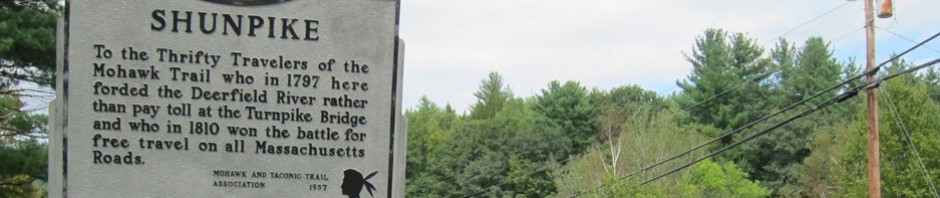
Looking back across Route 103 is Lisai’s Market established in Bellows Falls in 1926 (I enjoy shopping in the Bellows Falls store). But why show you this view? In 1963 I shopped here (different ownership them). I was “shunpiking” in my 1929 Model A Ford roadster from Connecticut, and needed some cans to heat for dinner while camping.
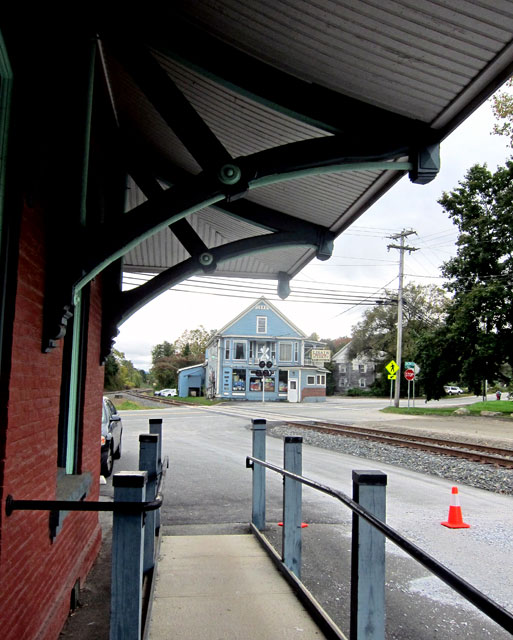
This “iron horse” was ready with a large number of carriages. Since the return trip was reversing direction, there was a locomotive at each end to lead the way and pull.

It was time to board. For some reason I thought I would have the train to myself – ha. Forgot it was leaf peeping, hoards of folks, and tour buses pulling up for boarding also.

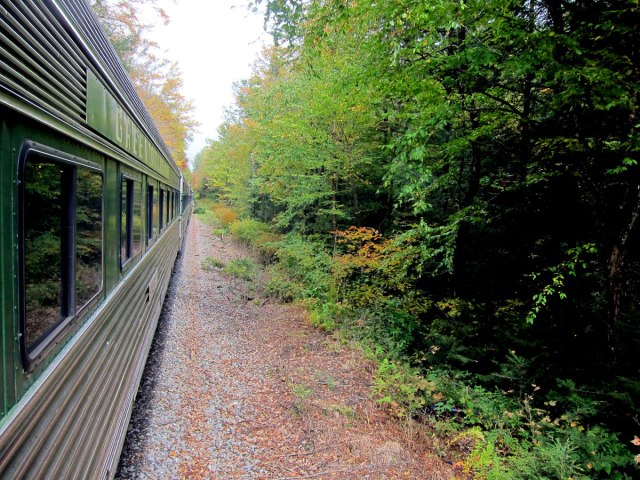
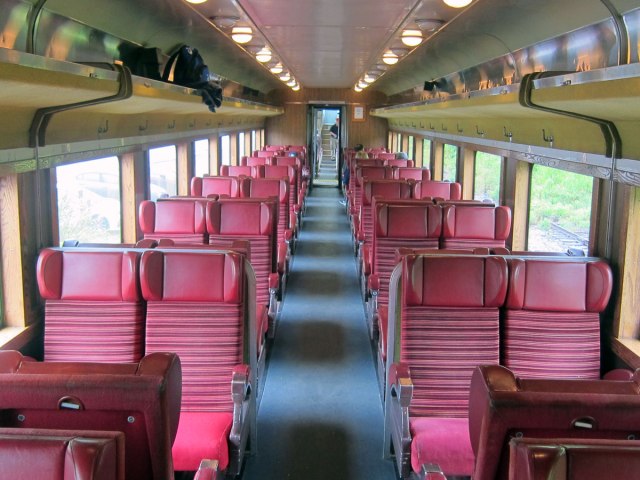
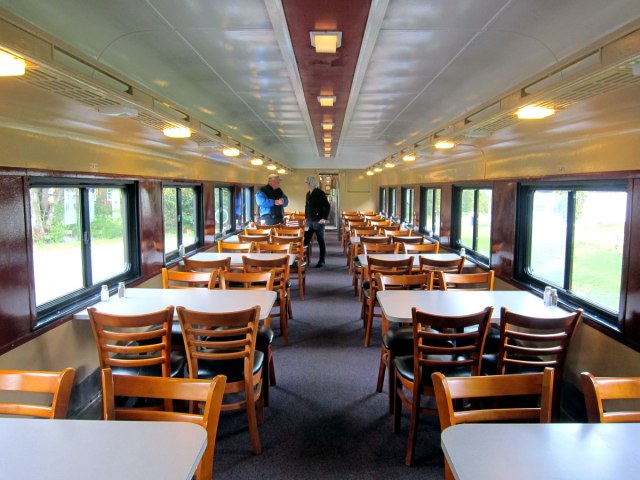
We “general passengers” were shown to these beautiful Budd cars, while the bus groups were in some older style coaches. Quickly seeing my options, I staked out this comfortable spot in the bar/food service car. I had two chairs and a table to myself – special for a sold out train.

Here are the interiors of the other cars in the consist.

And the whistle blew, and off we excitedly went. The trip for the most part was following the “backside” of Vermont Route 103. So much fun to get a different perspective. There was one section of backwoods along dirt roads to Cavendish I was not familiar with. Looking at my road map and seeing the train tracks I have some new shunpiking to do to “fill in the map.”

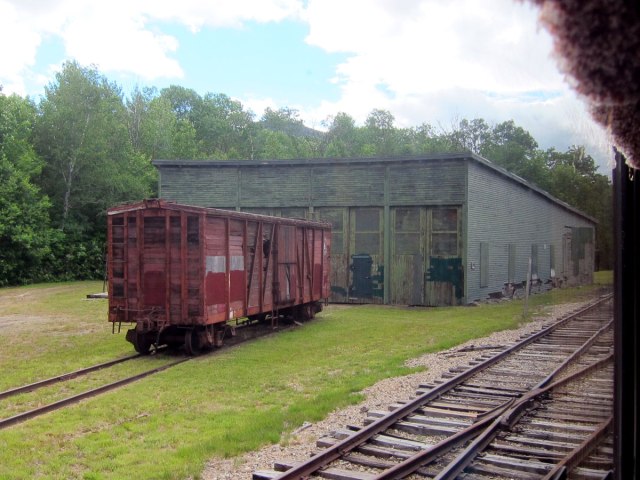
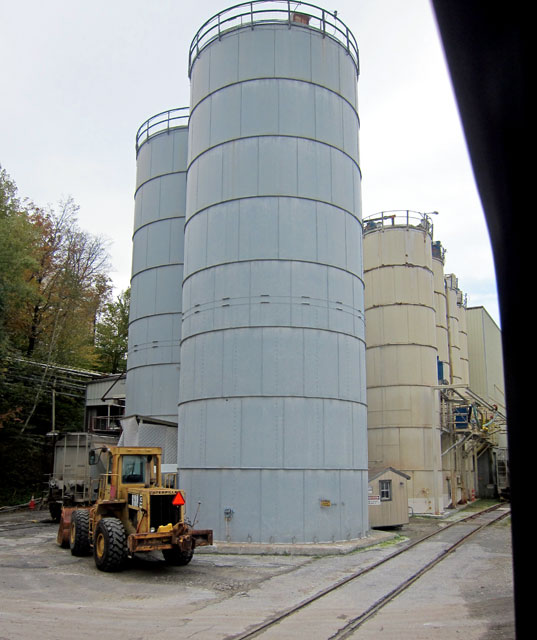
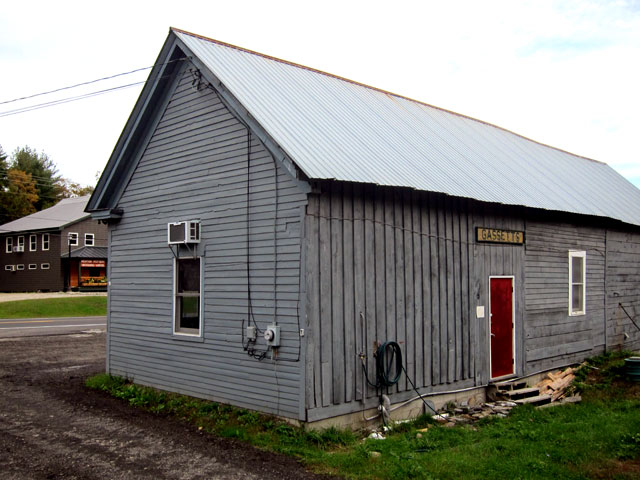
We passed this old Talc plant (closed in the 1970s) in Gassetts, now abandoned, but later on passed a new one. The Vermont Rail System carries freight through out the state, and connects with other lines. There are over 230 miles of tracks it leases from the State, and about 150 employees operate the freight trains. The Green Mountain Railroad is the tourist passenger subsidiary, and has 9 employees. The railroad is a third generation privately run system. Nicole, the grand-daughter of the founder, sat with me and the couple across from me for awhile. She told us so much, and I asked so much. The family, and company history she wrote – click this link to read.

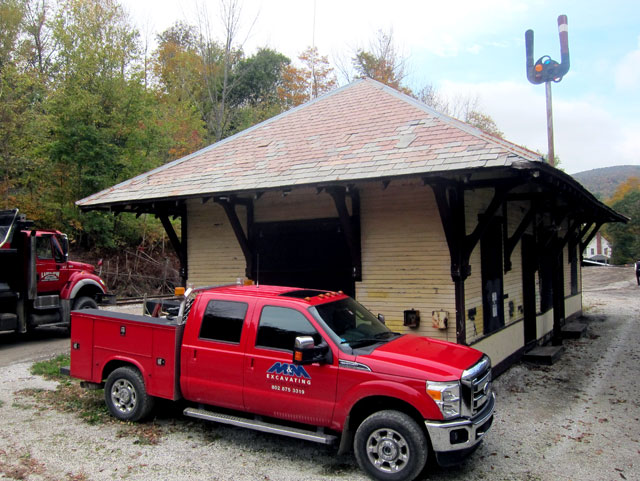
Coming into Ludlow, the station is actually up a hillside away from Route 103 and the business area. Nicole hopes that someday the State will restore the station, and it can be used for Okemo ski trains. Vail Resorts has recently purchased Okemo in a $82 million deal.

On the right of way of the old Rutland Railroad, the tracks were originally laid in 1848-49. Milk trains daily made trips to New York and Boston, even stopping at Cold River Station in Walpole. Until about 1953 the Green Mountain Sleeper would travel this route from Boston to Montreal. Following World War II, train travel and shipping waned in favor of cars and trucks. Eventually strikes closed the Vermont railroads and lines, and the track and right of ways became property of the State.

At a spot in Summit – Mount Holly – we stopped, the engineer walked through the train to the engine headed back towards Chester. I offered to help him, but he said, “no problem, downhill all the way, I just have to release the brakes.” At Summit we were at about 1511 feet elevation, so the coast back to Chester at about 500 feet was easy.

If you ever travel Route 100 from Weston to Ludlow you travel under a fantastic trestle just before the junction with 103. What a treat to now be on the trestle.
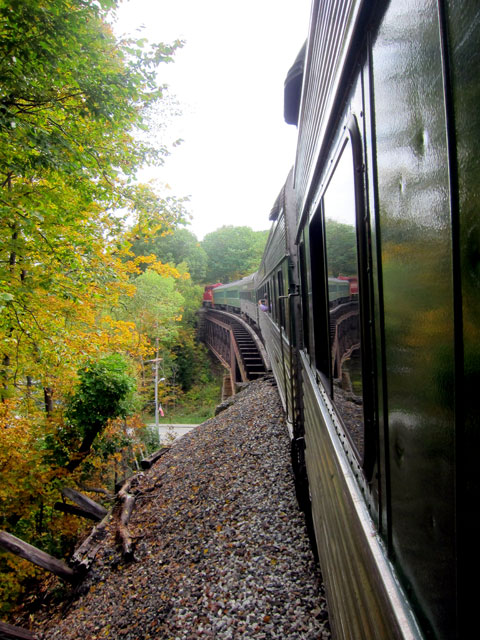
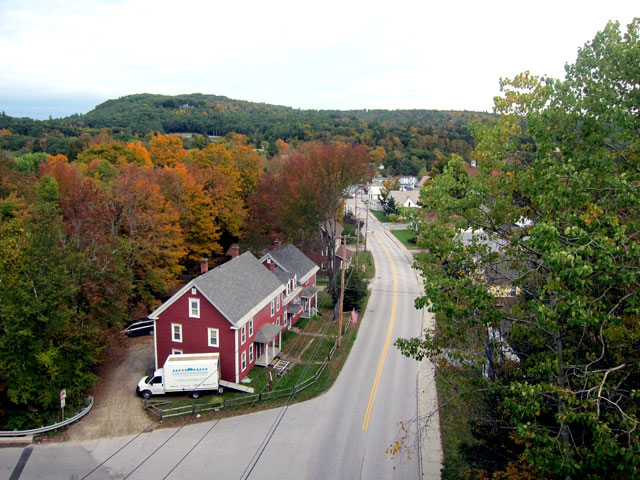
and, from the center of the trestle looking north to “downtown” Ludlow.
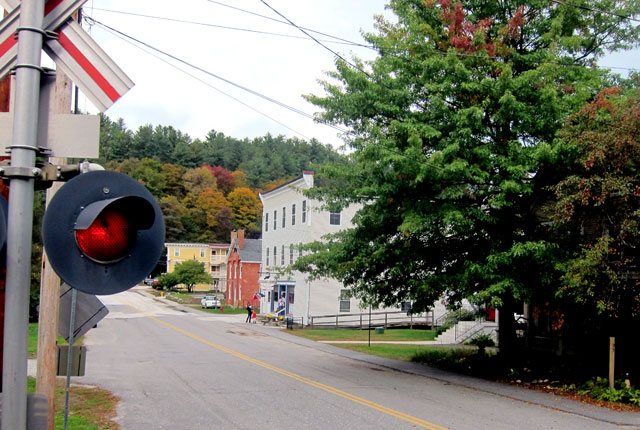
Do you remember my first “shunpiking” post from Crows Bakery and Cafe in Proctorsville in April 2011? Here is Crows from the train while crossing the road heading towards Cavendish.
and the trackside of the Gassetts stations – looks more like a freight station (similar to what was at the Cold River Station)
and, sadly all good things do come to an end, but memories linger, and new adventures come along.

I am so glad I went – foliage was not peak (it was when I was back in the area with Gary and Alex on the weekend) but I loved seeing the “backside” of a familiar route as I said earlier. AND, Nicole told me that this is the last year the Foliage Tour will head in this direction. From now on, the train will go from Chester to Bellows Falls as it had previously (before floods destroyed track – now repaired) and pass two covered bridges and travel through a gorge. I should have booked my 2019 trip.

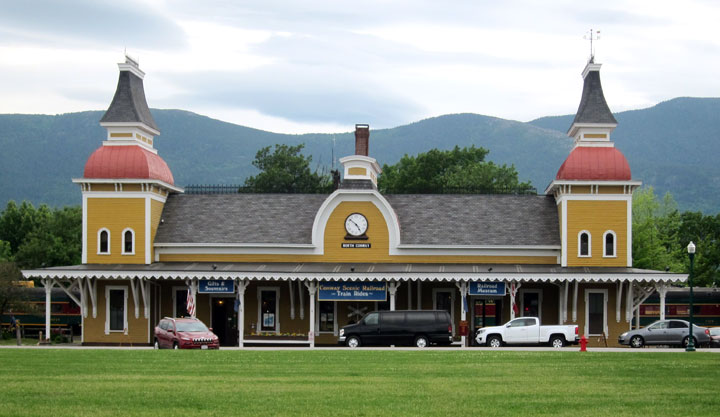
So, now let me re-ride the rails that I rode in North Conway June 14th. I did a two night sojourn 13-15 June with the the focus being the Conway Scenic Railway leaving North Conway and going to Crawford’s Notch. Back roads, of course, on the way across state. I stopped first at this Calef’s Country Store in Barrington for lunch – worth a trip and a stop.


When did you last see a phone booth, or a pay phone on a poll? Long time ago, right? Well, I captured this view for you, albeit without the phone itself. You can still stand there and use your cell and pretend. Now a second reason to make a trip to Calef’s.


Passing through Union – how perfect a stop on the way to a train adventure.

lots of photo ops there – here are just two

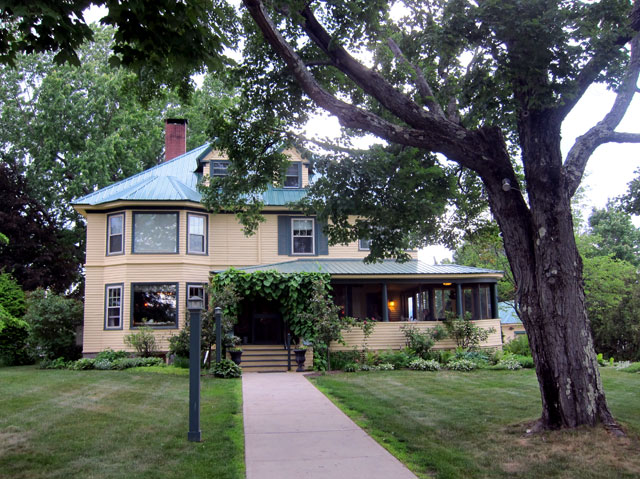
I arrived in North Conway at my home for the next two nights – the Cranmore Inn, operating since 1863, in the shadow of Mt. Cranmore Ski Resort.

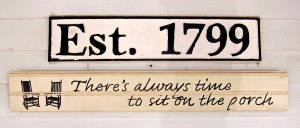
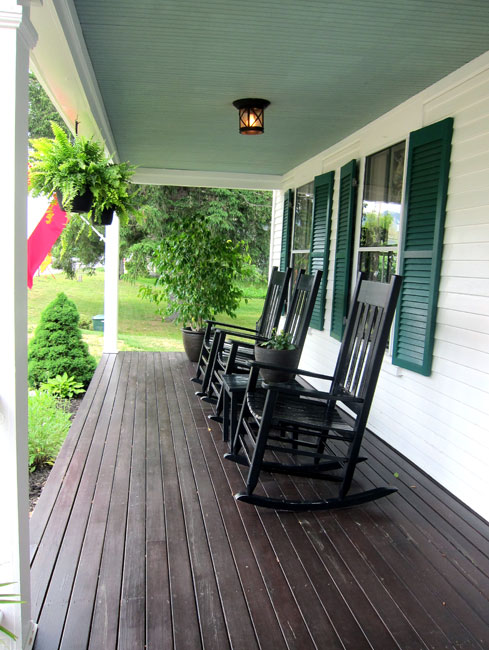
Yes, just perfect with rocking chairs on the porch
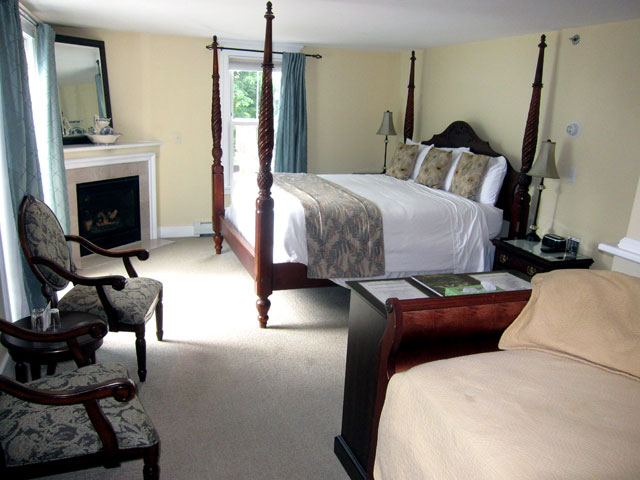
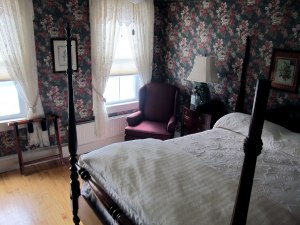
and I was “upgraded” to a lovely spacious room, but as you know I love to spend my time in the common areas – not bad here.

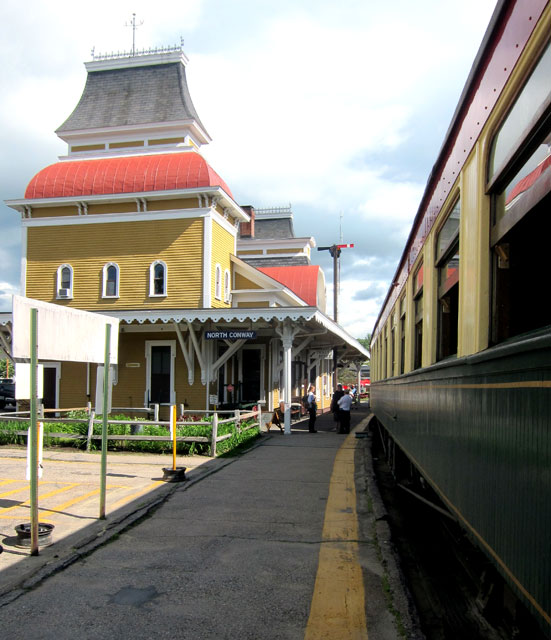
I then walked back to “town” and the common and train station to “scope out” the next day’s adventure getting the “lay of the land and tracks.”

going back to town, you know I love 19th century country or general stores. Here are some classic interior views.

and a classic and perfect sign

For this first evening there I decided to cross the border to Fryeburg, Maine for dinner at the Oxford House Inn.
a great evening meal on the porch

The next morning, I was ready for a day and lunch on the rails, and walked over to the station.

I booked a seat in the observation dome – if you are going to do it – do it right, for something different, and a higher view.

I shared similar images when I traveled across Canada by Via Rail Canada, but here is how you get up to the observation dome
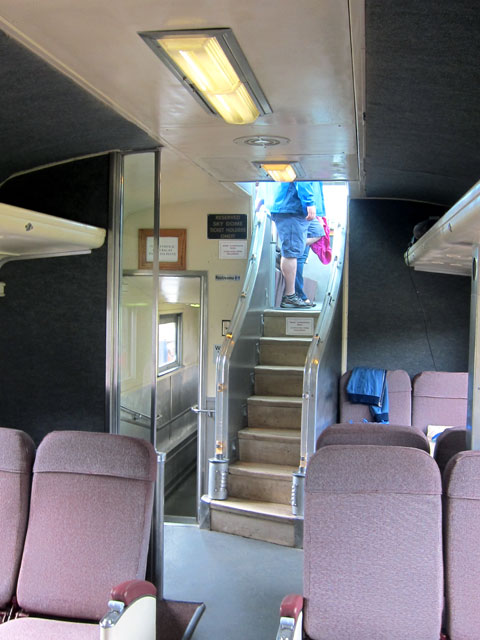
and, in the dome itself

and we were off following the river and up into the Notch. Here is the classic scene on the Saco River

almost the same view as the painting I saw in June at the New Hampshire Historical Society –  “A View on the Saco” by Godfrey N. Frankenstein done in 1847.

Some views around the train

It was an overcast day, and upon arrival in Crawford Notch, a light rain greeted us.

and looking back towards from where we came
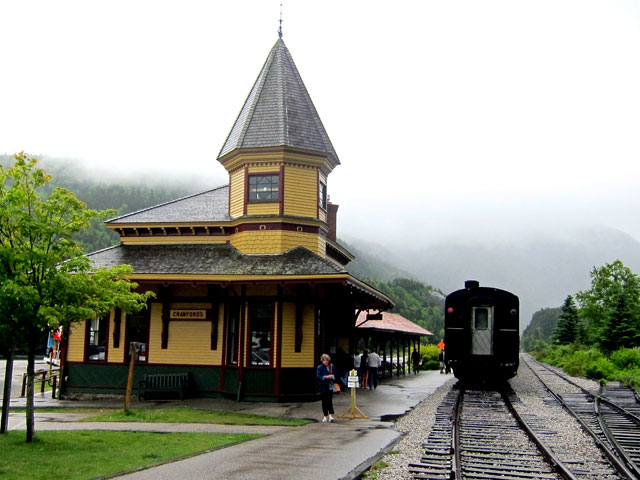
and, arriving back in North Conway looking east toward the Mt. Cranmore Ski Resort

and, a look inside the train station “pulse” not much changed from day one.

I am glad I took the trip, got to again see the “backside” to the road up to the notch, but I must confess the scenery is hidden by the trees surrounding the tracks, and “nothing to write home about.” It was the beginning of the season, and the dining car staff and food also was nothing exciting, and somehow eating on formica table tops is not my forte, particularly since I have had fine china and linen on Via Rail Canada – you get to expect a certain norm.

Dinner for my second night in North Conway was an easy decision. Cathy and I had stayed a couple times at the Eagle Mountain House in Jackson – I had to visit again. Heading north, and past Story Land, a right turn comes through this classic Covered Bridge (it was hit and damaged a month after my trip through).

The road up the hill follows a scenic stream with many water falls.

and, you arrive at The Eagle Mountain House – a classic old Victorian mountain hotel.

of course, another “rocking chair study”
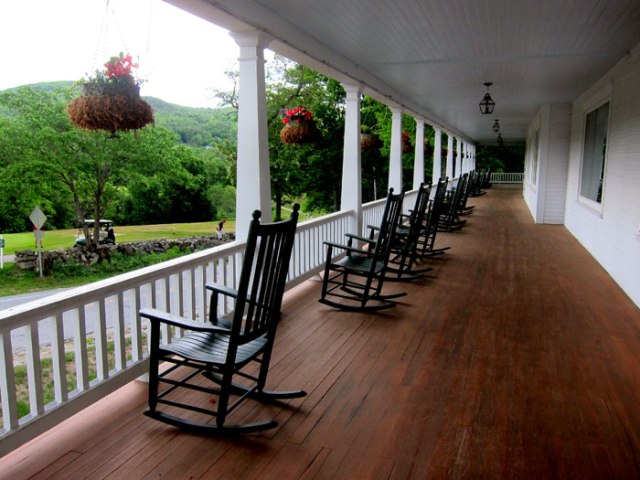
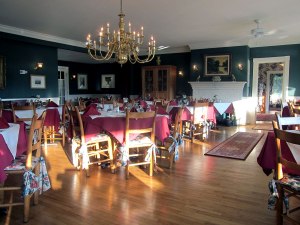
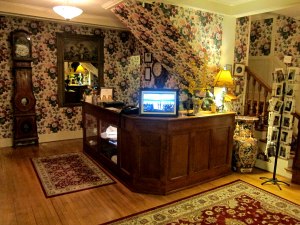
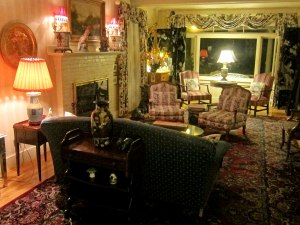
and some views inside (remember you can open my galleries for larger views)

Heading back home, my plan was to cross the state on The Kancamagus Highway. Its 34 miles was completed in 1959, but not completely paved until 1964. Closed in winters until 1968 when it was plowed for the first time. I do not recall driving through with Cathy, but I did tour most if not all of this route in 1962 or 63 in my 1929 Model A Ford Roadster, making it all the way up from Wilton, Connecticut. You can click on the map below for a larger view.


Heading west from North Conway I first stopped at the visitor center, and the Ranger suggested stops. There is wonderful scenery along this route and interesting history about early life in the area that you should take in. Life was a struggle in the mountains, and still is as you can see the trees to the right working to “hang-on.”


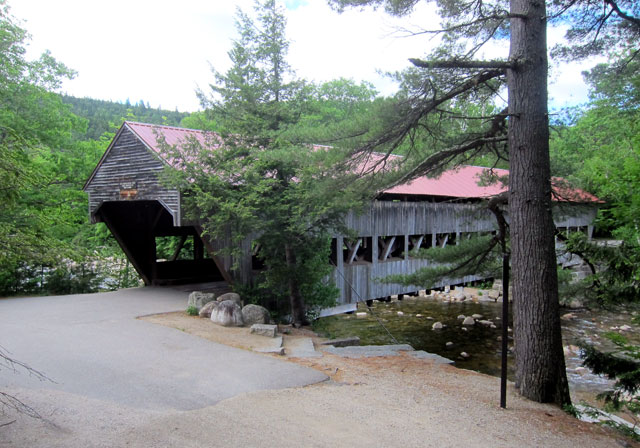
I first explored the area around the Albany Covered Bridge.

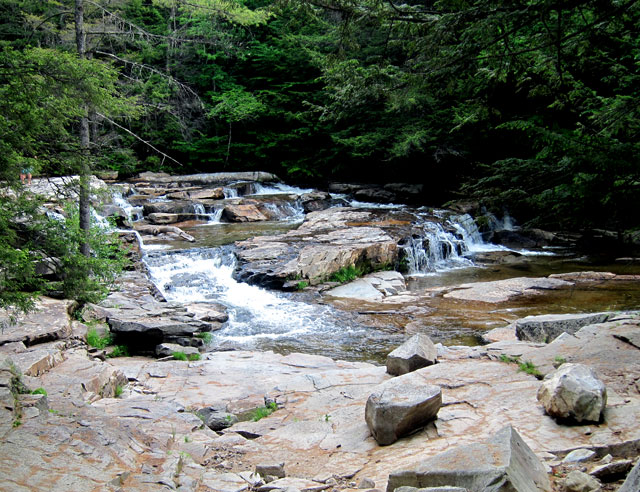
During the Depression years of the 1930s, before the road went all the way through, the road was relocated by the Civilian Conservation Corps, and Lower Falls developed as a roadside attraction. There are trails, picnic areas and observation locations.

Rocky Gorge has been visited since Civil War days. Trains shortened to 4 hours what was a three day stage trip to bring tourists to Conway. Then by carriage and coach they would be brought to this scenic area.

Continuing on a trail up from Rocky Gorge you come to bucolic Falls Pond.

All that remains of the thriving farming village, Passaconaway is this historic home. Open for tours, I was there the wrong day. Also there are other events held in this area.

If I had gotten to this post in a timely fashion, I could have shared more tidbits of history and facts learned along this route, but at least I am now giving you a flavor. If in the area, do take the time to travel along and enjoy The Kancamagus Highway.

I then cut down the western part of the state – back roads – and home. If you like trains, hurry to The Green Mountain Railroad, and you do not have to hurry to the Conway Scenic Railroad, except to tour the station and see the locomotives and cars in the rail yard there.
Posted in Day (or maybe two) Trips, ROADS and ROUTES | Tagged , , , , , , | 3 Comments

HISTORIC DEERFIELD – FANTASTIC DAY – 29 SEPTEMBER 2018

I feel so blessed, and I thank Him several times a day. And, I am blessed because I am where I am thanks to the thirteen years I had with Cathy – I thank her also every day. I am one of those fortunate people who can do what I want to do, when I want to, and as a result I have “too much fun” – there must be a law against that. My desires are not extravagant, there are no needs, only wants, and I want to live a full life, learn, share what I learn, and enjoy each day to the fullest. Hopefully you enjoy my need to share. Today was just such a day.

You may recall that in January I finally became a member of Historic Deerfield – only been driving through since 1963 – in my 1929 Model A Ford Roadster – and this fantastic spot is less than an hour from home. And, I still owe you my report of the week long program I attended there in July – THE RIVER, DRIFTING CONTINENTS, DINOSAURS, AND A GLACIAL LAKE – I will never look at rock cuts on a highway the same way again. Thursday I got an email reminder to members for this weekend’s events. Remember I got “hooked” on tin-smithing two weeks ago at Sturbridge? – today was “Historic Trade Demonstration – Tin-Smithing with Bill McMillen.” Ironically, I had spent a great deal of time this week researching ways I can learn tin-smithing. More on that along the way.

BLUE BELLE and I left sometime after 9AM, and due to usual fog in the Connecticut River Valley, to be safe we headed south on US Route 5, arriving at Historic Deerfield about twenty to eleven. The demonstration was to be in the Hall Tavern section (on the left in the image below) of the Visitor’s Center.

The greeter at the Visitor Center looked familiar, ends up he and his wife were in my July Program. I showed my membership card, got my wrist-band, and headed through the Tavern room to the side room demonstration.

I spent over two hours chatting with Bill McMillen, the pre-eminent tin-smith in the US, his wife Judy, and friend Steve (who recently reconstructed the sills for the Bradley law office across the river, and will help me solve my chimney mystery).

This week I was googling, and googling classes on tin-smithing. I found a Road Scholar program in October, but it follows a program I am attending in Pittsburgh, and conflicts with my CLARION schedule. bummer. Then I discovered Eastfield Village in East Nassau, NY. WOW is all I can say about the Colonial classes there. Last weekend when I was in Peru and Ludlow was Eastfield Village’s only open day for the year. And, in August Bill presented tin-smithing classes (along with the Williamsburg tin-smith, who I also met today). Again, I was too late – but not really since these events were not on my “radar” of interest as yet. I decided I need to learn more about Eastfield Village – apparently a “privately established” and unknown Sturbridge Village.
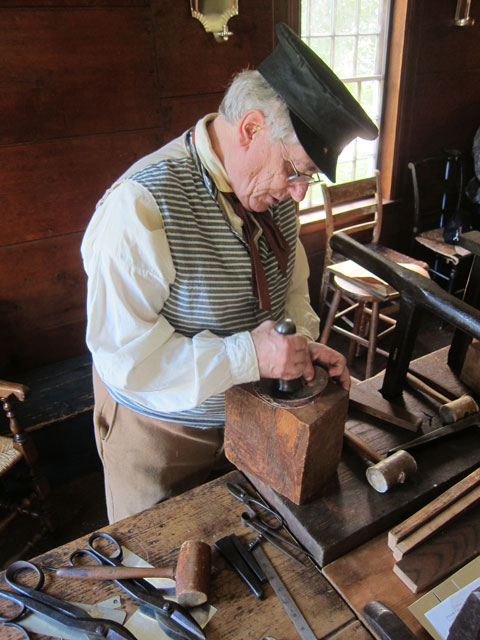
Here is Bill cutting some tin.

and, working away. In the rear is his wife, Judy, and friend Steve, who restores Colonial structures.

I chatted and chatted with Judy and Steve. They told me so much about Eastfield Village, which they are intimately involved with, and the Early American Industries Association. – now on my list to join. And, I hope in some way I may be able to get involved with their efforts to preserve and share Eastfield Village.

Bill was working away, explaining tin-smithing to others. Here he is “raising” the top for a coffee or tea pot.

Underway in the next room back was an open hearth cooking demonstration with pumpkin recipes. Of course, two weeks ago I spent about 6 hours with open-hearth cooking.

You cannot do justice to Historic Deerfield in a day, particularly when there are special events taking place. I am so glad that I am a member, and close by – I am under no pressure to “do it all,” only “under pressure” to get back often. I stopped, for the first time, at the Apprentice’s Workshop at the Dwight House, and listened to the potter at work.

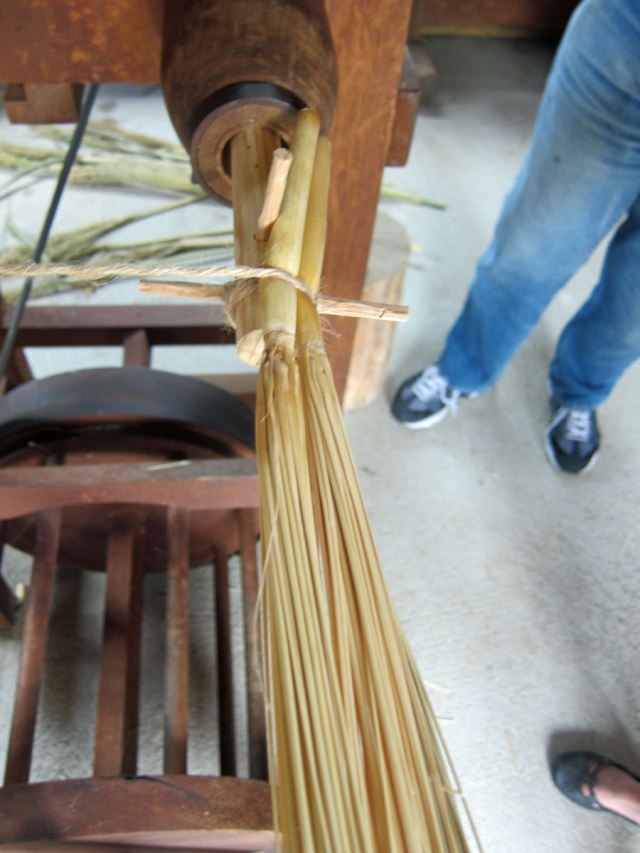
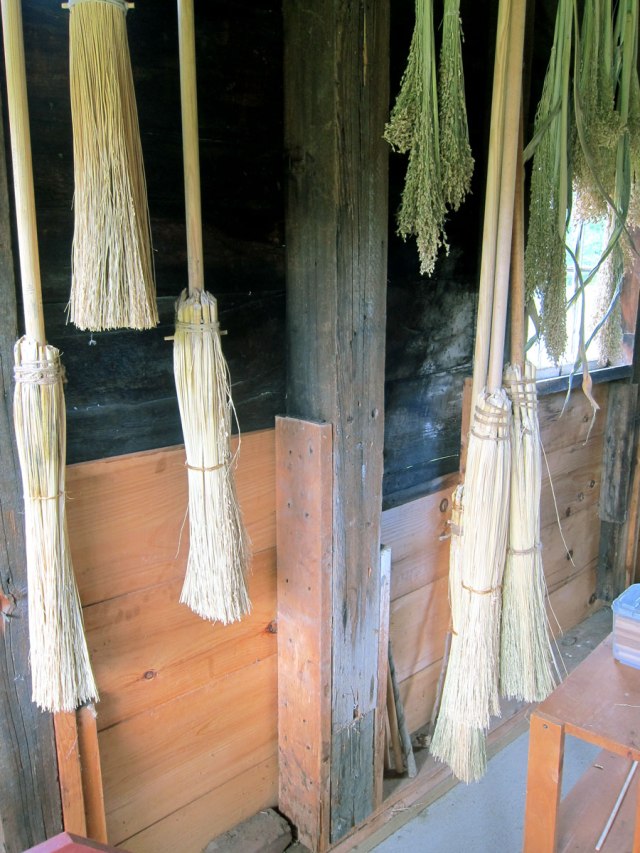
Then I headed down to the Silver & Metalware Collection hoping to see tinware, but it was an impressive silver collection (I have always had the book on the Flynt – the husband and wife founders of Historic Deerfield – silver). I was in time for the tour, and glad I was. The building behind is the History Workshop – I was there, and had to see that too. A nice facility for families to experience living history, but wait, “you look familiar” – “you do too,” she replied. It was Faith who was one of the guides during my July program (oh, I forgot to say I saw and chatted with Julie Orvis at the “lunch wagon.” She is the Coordinator of Special Events, and was in charge of the July Program). Faith then toured me and others to the broom shop, and showed us broom making.

A major broom making center was just down the road in Hadley, Massachusetts. Faith explained the history, and I recall reading about the inventor of broom machinery there, and the special broom corn that was developed. So much to learn ! Here are some views in the shop.

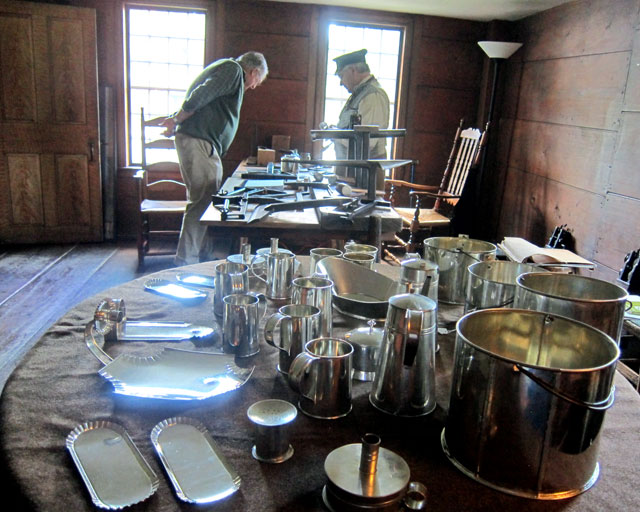
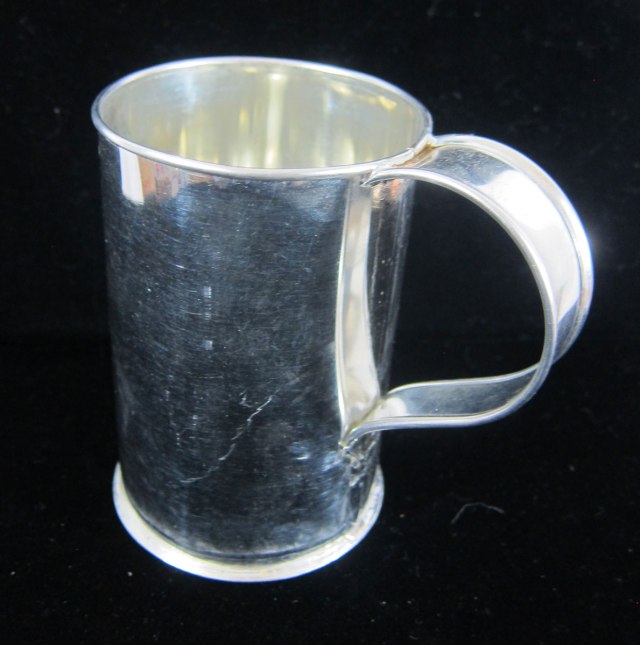
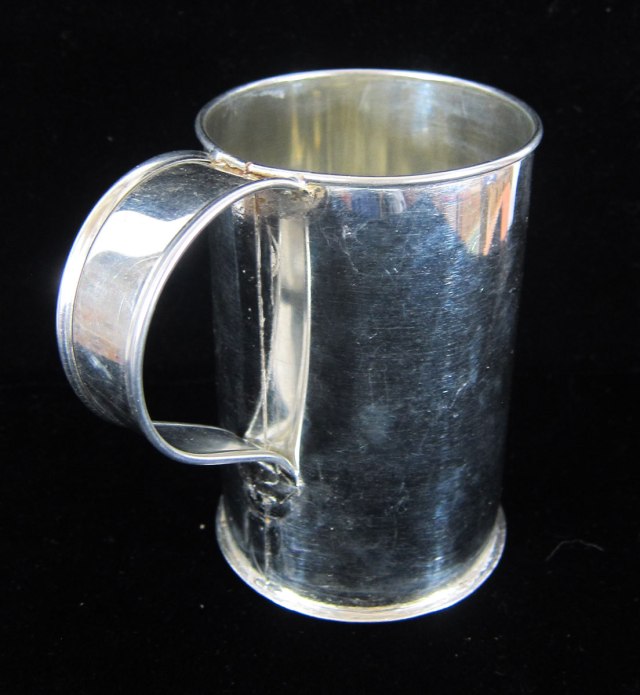
When something “speaks to me” I have to buy it. This mug/tankard spoke to me, Bill had made it only weeks ago, and I wanted it, and bought it – $15. Asking him about it he said it was patterned after the French and Indian War period, but the size and shape was dictated by the size of the imported English tin sheet. He showed me how two such pint size tankards were cut from one sheet to be fabricated. Here is my “new treasure.”

Did I tell you I had a great time today? Leaving Historic Deerfield I made two stops at antique centers, and true to “Ray fashion” bought six books, that once sold more than pay for today’s fun. From US 5 and Route 10 I cut over to Turners Falls, then Route 2 East to get Route 63 North, connecting with Route 63 in New Hampshire. This now will be my preferred route when in BB1 or BB2 to Old Deerfield. In bad weather I will defer to the “new car” on I-91.

RAY RECOMMENDS – Become a member at Historic Deerfield, and visit often to immerse yourself in all the experiences and learning Historic Deerfield has to offer.

As always, thank you for reading through, love, RAY – Shunpiker, Bookseller, Publisher, Printer, and maybe Tin-Smith?

Posted in Day (or maybe two) Trips | Tagged , , , | 4 Comments

FAIR – FARM FESTIVAL – AND A FIND – VERMONT – 22 SEPTEMBER 2018

Yes, I like alliteration. Anyway, I have had in front of me for awhile two newspaper ad clippings for Vermont events today – PERU FAIR and the 20th ANNUAL AUTUMN ROUND-UP in Ludlow (I had seen this advertised at the Dublin Engine Show). BLUE BELLE and I were on the road before 9 for Peru (Vermont that is). Parking was at Bromley  Ski Resort (45 miles from home) with a free shuttle bus back to Peru. Peru is just off Route 11, and I highly recommend you swing in to see this bucolic small village and village green.

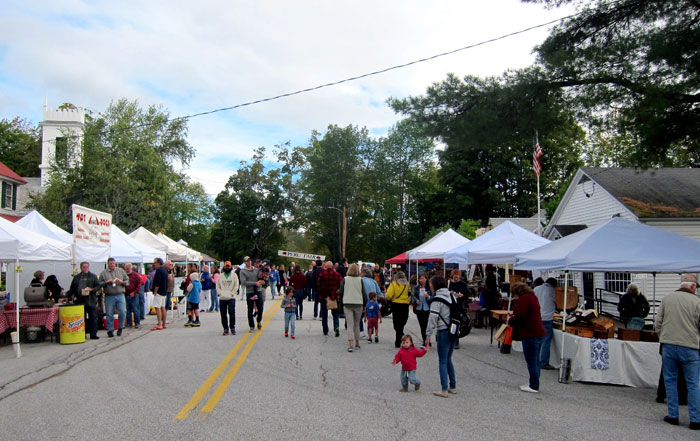
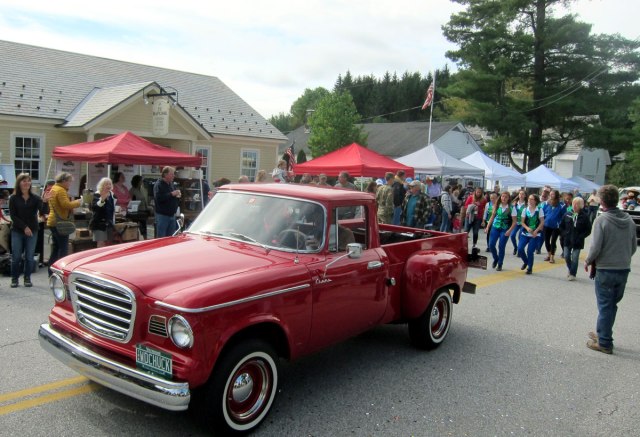
there were over 100 vendors – basically crafts (not my thing) along the small Main Street and around the common. Here is a view from the south end of Main Street looking north.

the 9:45 parade was delayed, so I did get to see the 4 or 5 participants that were entered. Here are two:

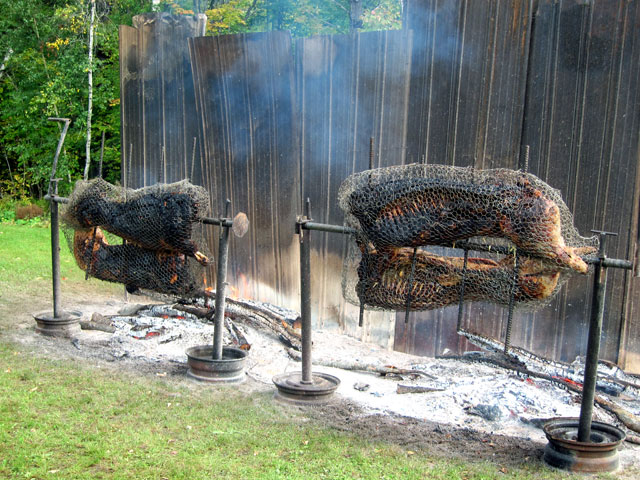
The roasting for the Pig Roast was underway, but I was hours early to partake.

It was fun, it was country Vermont, and at one home on Main Street there was a “Gourmet Yard Sale.” You know I love candles and candle holders, but I am also attracted to boxes. Some interesting things, but I zeroed in on this canvas covered, brass tacks, copper or brass fittings, maybe a stage coach chest for gold bullion? Could not believe the price – they forced me to buy it – $10 – just look at the patina. I left it on the porch until I was ready to catch the bus back to Bromley. Hey, another rocking chair study as a bonus.

the first spot at home this small chest gravitated to, and it may stay there.
SADLY SEEN ON FACEBOOK 23 JANUARY 2026

Dear Friends of the Peru Fair,

It is with deep regret that we share that the Peru Fair will not continue in 2026 and in future years at this point in time. This decision did not come easily. After many discussions and careful assessment, it has become clear that financial constraints, transportation and logistical challenges, and ongoing difficulties in securing enough volunteers make it no longer feasible to host the Fair at the level our community deserves.
The 2025 Fair was a historic year that brought many visitors to our beloved town, and we are grateful to have ended on such a high note. At the same time, our concerns about not being able to continue to deliver the Fair in a sustainable, safe, and successful way are real.
While the Board has made this difficult decision, it is our hope that at a future date there may be a revitalization of this wonderful event.
We want to express our profound gratitude to everyone who has made the Peru Fair what it has been—our attendees, our wonderful volunteers, our incredible vendors, our local community, our friends and families, and the many businesses who have stood by us with their time, energy, and generosity. Your support over the years has meant more than we can express.
Thank you for being part of this special tradition. With appreciation, The Peru Fair Board
————————————————————————————————————————————-

Packing my new box (maybe a chest for the foot of a bed?) into BB2, we headed east on Route 11 and turned left on a backroad to Landgrove. RAY RECOMMENDS, no RAY INSISTS that you visit the tiny bucolic and perfect Landgrove, Vermont, and head out past the Landgrove Inn.  It is a dirt — and, the best dirt road around, better than many (or most) of the tarred or macadam backroads I encounter. Passing the Inn, Weston Road becomes Landgrove Road (unmarked probably) and eventually after passing fantastic views and architecture you come down the hill onto the Common in Weston.

Once in Weston I took VT 100 north into Ludlow, right on Route 103 to find the left turn on Commonwealth Avenue. Up, up the hills, finally dirt, and Commonwealth became Barker Road. As I approached Barker Farm “in the scenic hills of Ludlow, Vermont” as the ad read, I was enveloped in one of the largest sprawling construction projects I have seen. More at the end.

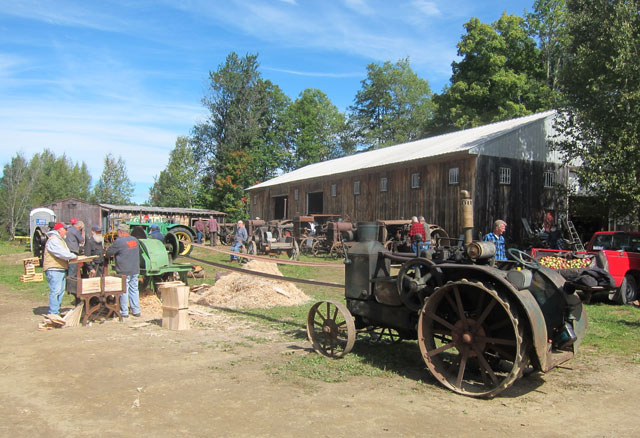
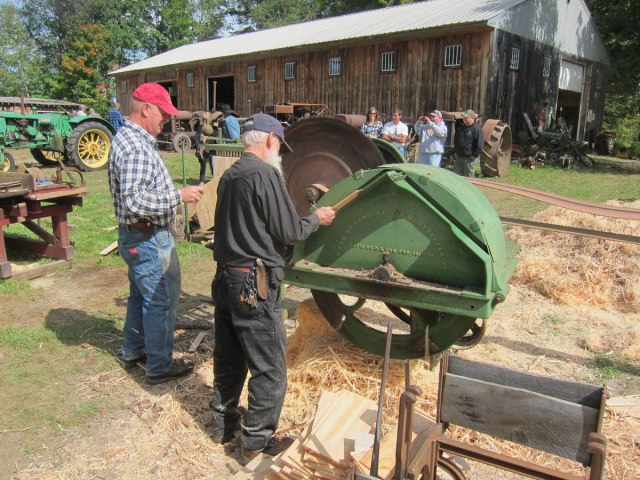
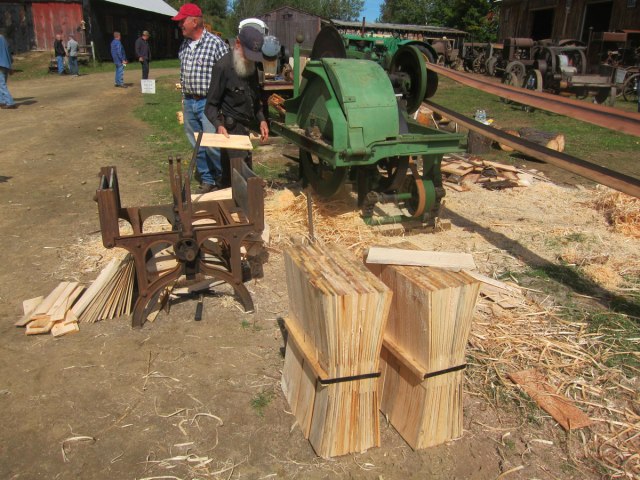
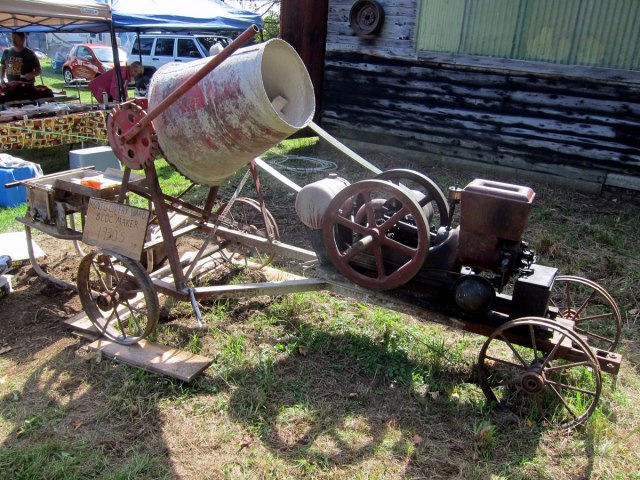
At the Dublin show, I saw a notice for this event, and also clipped a newspaper ad for the 20th Annual Autumn Round-Up: Antique Tractor & Machinery Show. You will not find a website or much information. This is a small gas engine and farm show, and is hosted on the farm of Dan Moore, featuring his collections around the property. Here is a look as I entered this event. I will again attend.

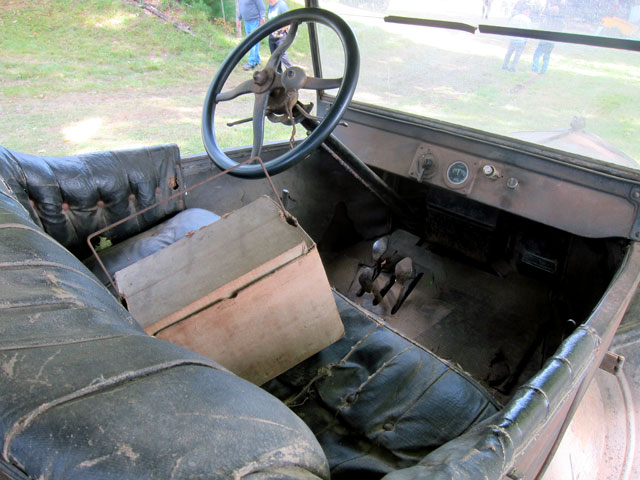
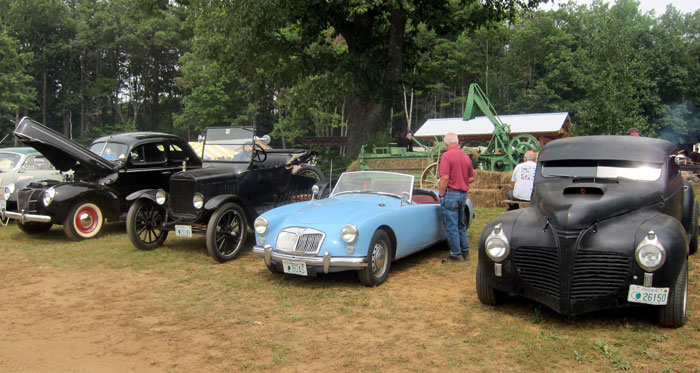
I walked down the hill from the fields where I parked BLUE BELLE (for free as an “exhibitor” – “do you mind if people look at your car,” the lady asked at the entrance. “No,” my easy reply.  And, the $5 saved paid for my hamburger for lunch). Under the trees was this 1923 Model T Touring – ORIGINAL – I love original. It was bought used by the Barker family in 1925, and been on the farm since. I am betting Dan Moore married a Barker.

My Dad had me first behind the wheel of his 1919 Model T Touring on US Route 7 in Wilton – prior to legal driving age. On the front seat of Dan’s T is a box of Ford Briquets (writing on the opposite side) for a roadside picnic. My Dad had a similar box or two. On the back floor was an original hand tire pump with the Ford Script, and some license plates. A 1937 Vermont plate still hung on the rear. If you would like lessons on how to drive a Model T, buy me one and bring it over.

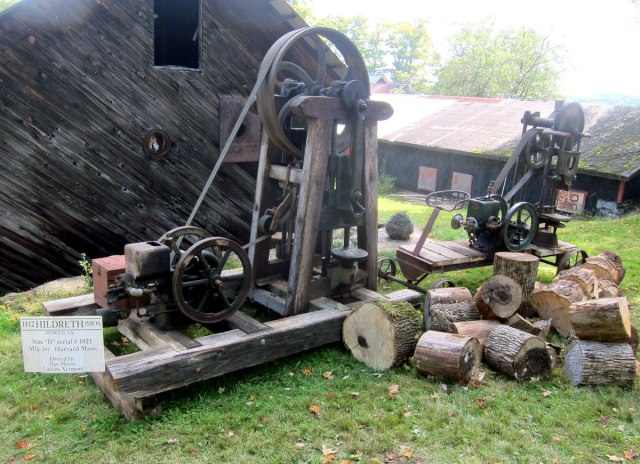
This rig was at Dublin earlier in the month. I found out it is Dan Moore’s.

and, now close-ups of cutting and shaping and packing the shingles (above you can see them in the forming unit)

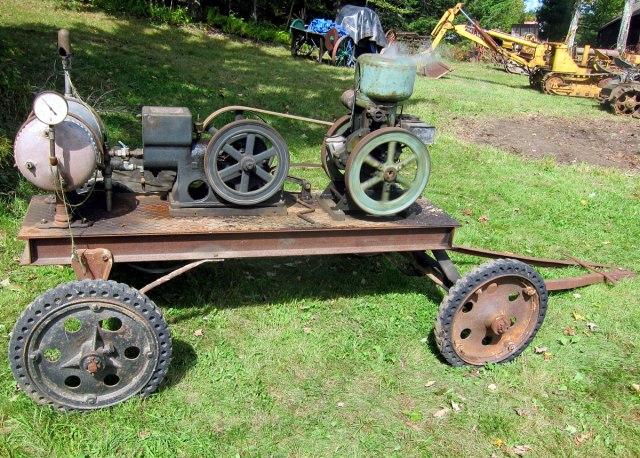
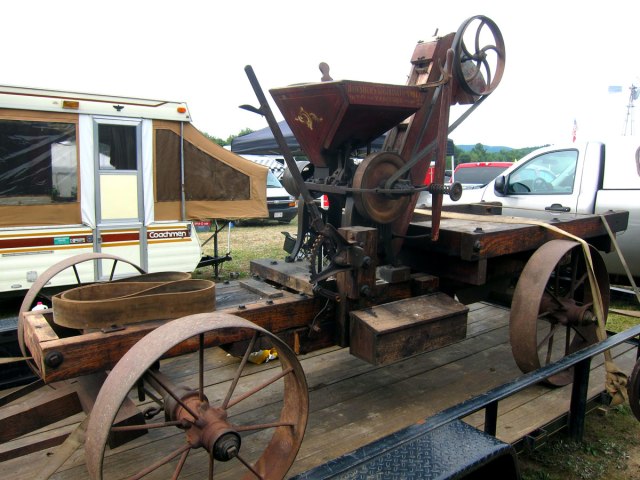
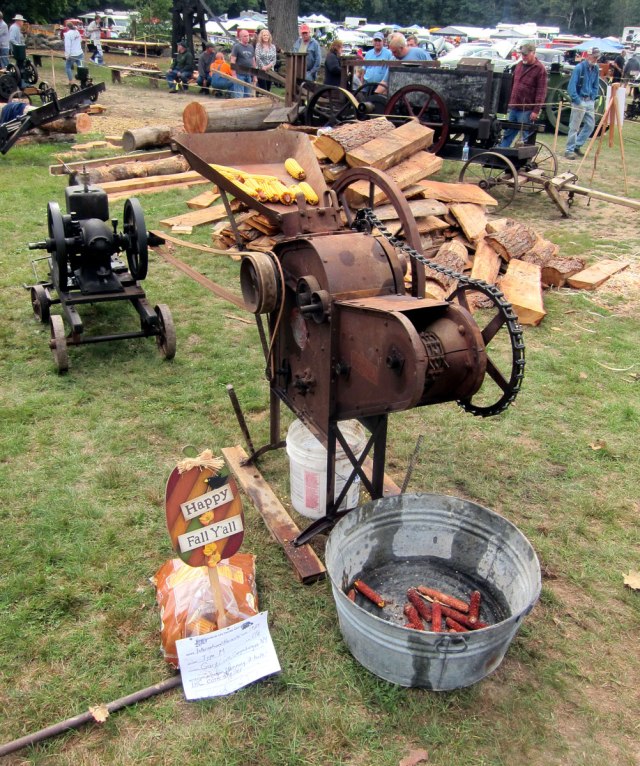
here is another gallery that you can open for larger size images of equipment I had not seen before. I really enjoy trying to figure out how all the mechanisms work.

This Cordwood Saw was made almost in my backyard across the river. It is an 1909 Abenaque Gas Engine.

I studied the arrangement for awhile, and realized that the wood was placed on the platform bed that would then be pushed forward on the rails and into the saw blade. How many arms were also “corded?”

Here is the first of two short videos at this meet for you – first haying and a panorama.

Pressing cider by hand. The yellow jackets were enjoying the shavings in the wheelbarrow, and I was served a glass of apple juice pressed probably within the hour – yes, good.

and, another unique use of a hit ‘n miss engine that I had to share – probably could be used with a baby cradle also.

As I mentioned before, this gas engine, tractor and farm event is small, probably a small club, and hosted by Dan Moore to be able to share his massive collection. Isn’t that one of the reasons we collect things, to share? Here is a gallery to open up of some more of his collections around this main area. I felt like I was right in the middle of an AMERICAN PICKERS filming set for The History Channel.

I mentioned earlier that as I approached the farm I was surrounded by a massive project. Hopefully you can see part of it in this panorama from the parking field on the other side of the road (you can click for full screen).

Obviously a solar field. While eating my hamburger on a bench I listened to several visitor’s conversations about it – questioning the sensibility. And earlier I chatted with a couple who said that with taxes so high in Ludlow, and farming no longer profitable that Dan had to do something to “save the farm.” Playing with google he also has SCCA (Sports Car Club of America) races on the property. That couple said the lease was for 20 years, and if not renewed,  all of the facilities must be removed, and the land restored.

Leaving the event I found Barker Road terminates at a massive power transmission sub-station and high-wire towers and lines. In reading articles on line, I found that this is the Coolidge Solar Project for a 20-megawatt array that will include approximately 83,000 solar panels.The project is using 88.5 acres of a the 155-acre farm. In the next 20 years $15 million in labor income and more than $25 million in gross domestic profit will be generated for Vermont. Also, the array is supposed to increase state and local tax income by nearly $4 million. “During construction, which is projected to last six months, the project will employ about 80 people, according to state documents. “Four full-time permanent positions are expected thereafter.”  One article reported the project is, “four times larger than any other Vermont solar installation.” The power generated is heading to Connecticut if I read correctly. So, google the Coolidge Solar Project, and see what you can learn about “my find.” Learning keeps us young, I believe. Also travel over the hills between Ludlow and Proctorsville – see this facility, and just keep exploring.

As always, be safe shunpiking, yours, RAY

Posted in Day (or maybe two) Trips | Tagged , , , , , , | 3 Comments

BOARDING WITH THE BIXBYS – 15-16 SEPTEMBER (1838) 2018 – OSV.org

BIXBY HOUSE – OLD STURBRIDGE VILLAGE (image from OSV.org)

There are some adventures that are so rare, uncommon and unique that you just have to do them. And when it also covers an interest you have for adventure or learning, so much the better. And, that is what I did – I signed up for BOARDING WITH THE BIXBYS at Old Sturbridge Village – OSV.

You may recall that last year I got back for the first time in about nine years for a full day at Old Sturbridge Village in Sturbridge, Massachusetts, and also attended the SLEEPY HOLLOW EXPERIENCE. You know I “vote with my dollars” and became a member during that visit. I returned in December for CHRISTMAS BY CANDLELIGHT in the Village. Do visit both of my links above.

I tried to go to this experience in the Spring, but the session I choose was cancelled. The program is designed for six participants, and as I learned, three are needed. Laura, her daughter, coming from State College, Pennsylvania, and I were the only three signed up – and thanked each other for doing so. Meeting at the visitor center, our interpreters, Ruth and Susan, met us and took us to costuming to be outfitted for 1838. OSV, as a living history museum, unlike others, focuses on one time period – 1838. A fantastic approach, and made even more special by the interpreters on the grounds. This is a working town and surrounding farm side, and mill area. In my previous visits I realized everyone was a family, and that only happens when management does its job in treating people well, training, and just comradeship. Following costuming we headed to our home for the next 22 hours – the Bixby House.

We received a brief introduction to the house, made our beds (which have straw and down mattresses). I really did not understand the fact that the afternoon would be spent with a craft. I choose the Tin Shop, and expected to just observe as the tinsmiths worked and chatted with visitors. Was I wrong, I was put to work making sconces. And, then I was overwhelmed to learned that the two sconces I made I was getting to keep (see images at end).

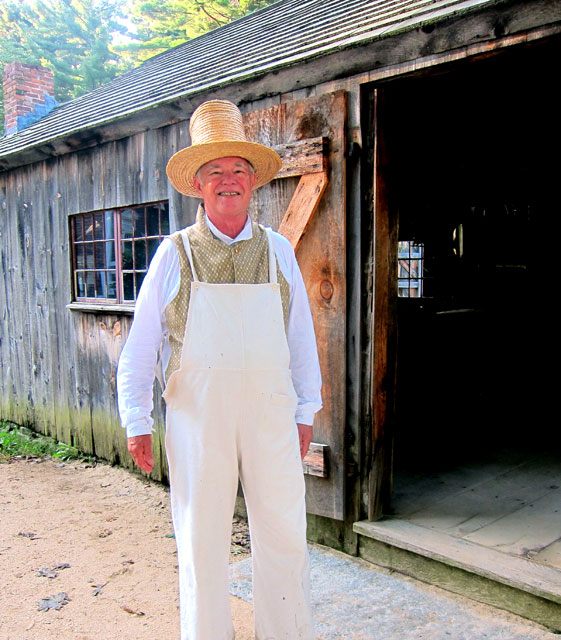
Ray in costume, ready to work in the Tin Shop behind.

Here is the interior of the Tin Shop – taken the next day (remember, no cameras in 1838, so when the museum was open, as participants no photography). Phil has been with OSV almost 40 years. In conversations I learned many people have “worked” here for decades.

Phil inside the Tin Shop at OSV

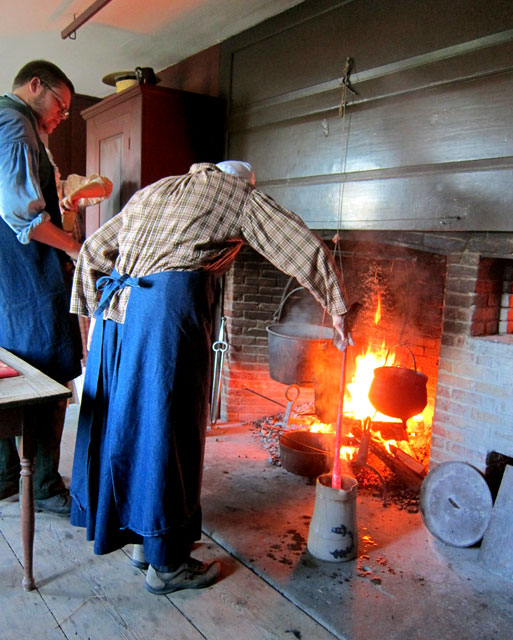
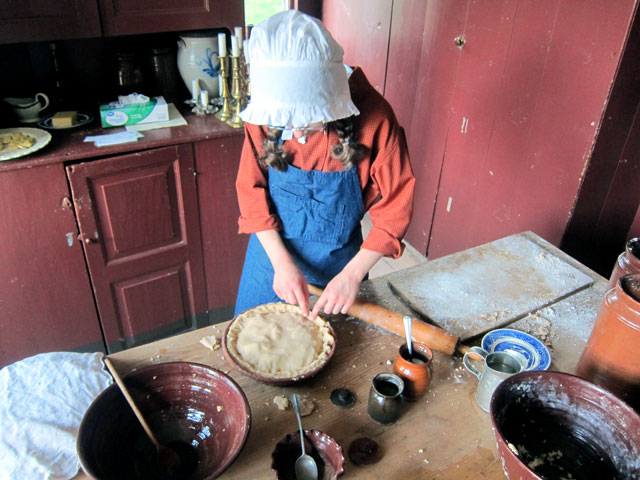
Completing my two hour apprenticeship at 4, it was time to head home to prepare dinner – a four hour hearth-side process. Zack joined us, and began preparing the meat. I prepared the rub, and coated the roast.

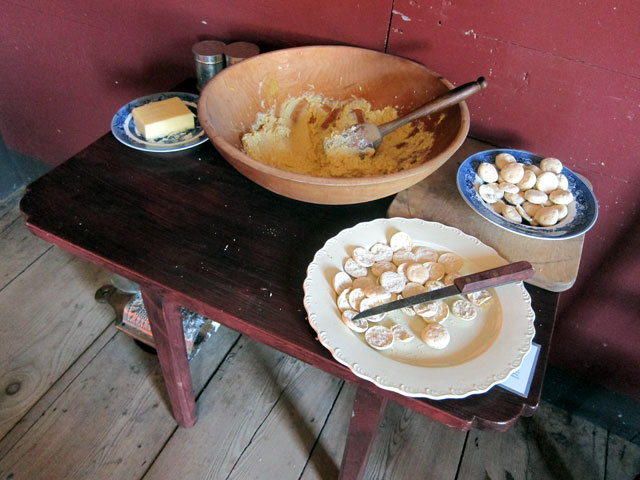
As an appetizer, Laura prepared Pounded Cheese with Common Crackers. She grated two cheeses, and then rubbed together with butter using a mortar. Sherry was added for that extra touch (I have all the recipes for the event, just email and ask).

Pounded Cheese – ready to eat – well, after some work.

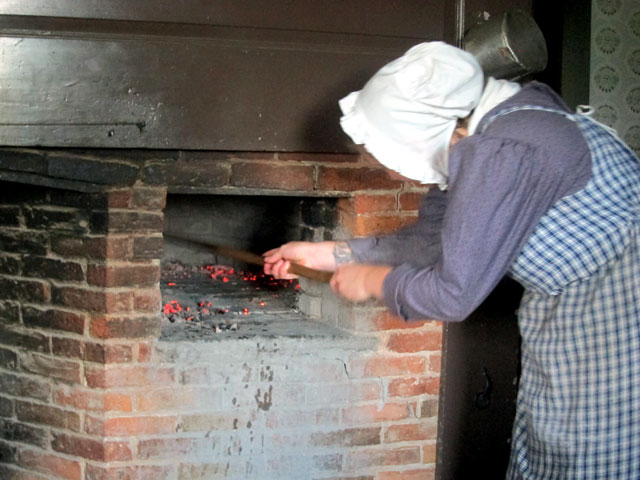
Ruth got the oven going to bring up the temperature for baking the bread and pies (not desert pies – part of the meal itself).

I was put to work (after finishing the rub) to coining vegetables. One new thing/term I learned.

Zack got the roast going. Skewers through two ends, string attached, and we constantly made sure it was spinning for even cooking. Often then the meat would be shifted to the other skewer.

Mulled cider? Of course, and once the spices were dropped in, a hot poker was inserted to boil and caramelize them.

Laura’s lovely 13 year old daughter did a fabulous job making the bread and dressing the pies.

With the fire in the oven bringing the bricks up to temperature, Ruth scraped out the coals. Then, with her experience, she checked to see if the temperature was correct. It was, she could only hold her hand in the oven for 12 seconds.

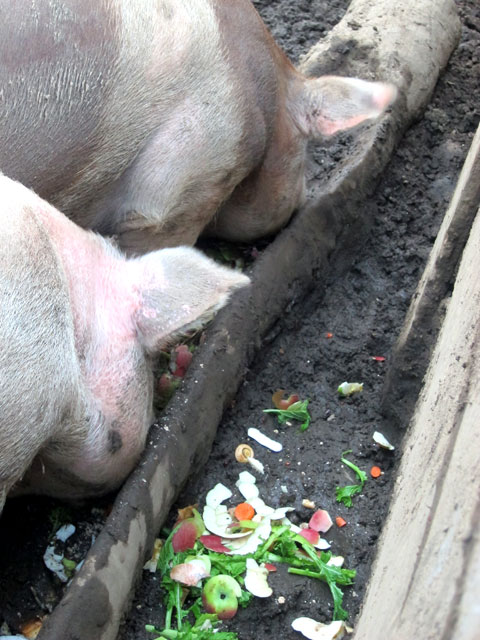
while things were cooking, we went up to the Freeman Farm to feed the chickens, and the scraps to the pigs.

Every question I asked, I got great detailed answers. I asked Zack why the pigs are always in mud. Hopefully I am relating this correctly – pigs do not have great skin/hair systems to prevent heat loss, or protection from the sun. They roll in the mud to keep cool, and coat themselves to minimize exposure to the sun and heat loss. And, now you know too, and they will eat anything at anytime. Just part of the process for Christmas dinner.

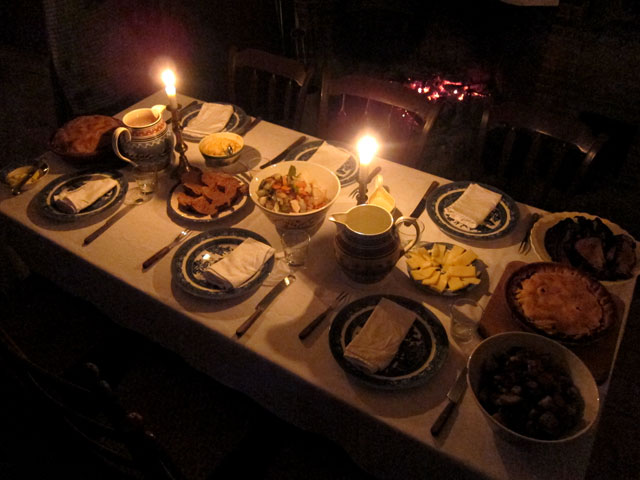
It gets dark around 7PM now, and it was time for dinner

Our hosts, Zack, Susan and Ruth. Note serviettes tucked into neckline – what was done. Not napkins as a term — those were on babies’ bottoms. And, as was appropriate, I am now adept with eating with a knife – the wider the better, and actually very easy. Small fork is a pusher.

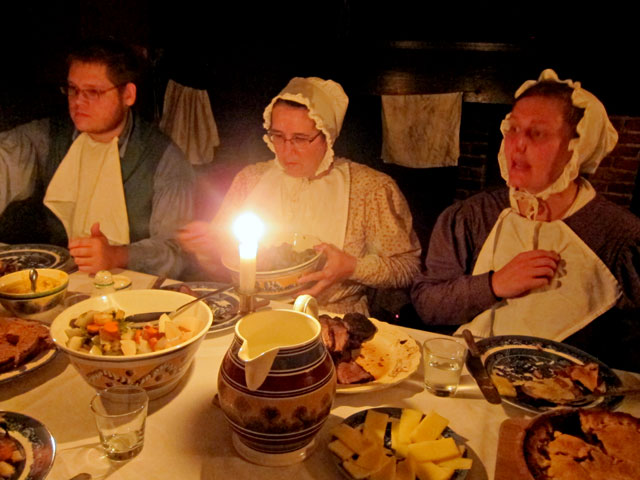
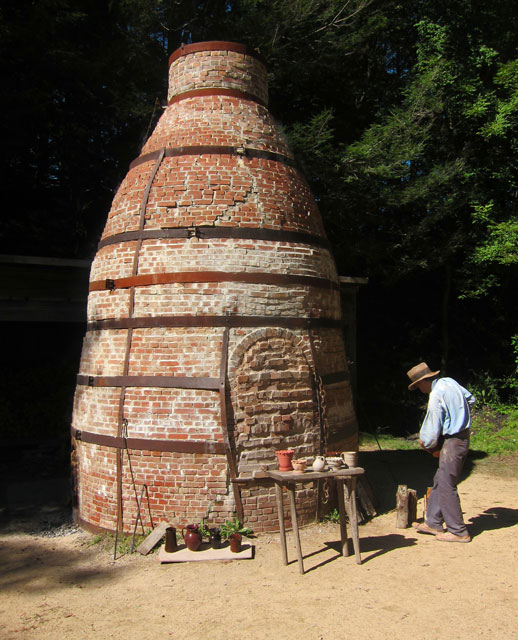
Sometimes (as is my good fortune) timing is everything. Once a year the potter’s kiln at OSV is fired, and this was the night. A three day process to fire several thousand pieces – and we were there at the right night. The fire burns at two opposing sides – not the inside of the kiln. The intent is to bring the kiln to 1800 degrees if I remember correctly. The coals are cleaned out below the burning wood so the draft of air carries the heat up into the kiln.

It takes a day to get up to temperature, a day to fire the items, and a day to cool down. Four cords of wood are consumed.

Here is an image of the kiln I took the next day – after the program when I could use my camera in public.

When we returned from experiencing the firing of the kiln we played several games. Here we rolled (not so round) clay marbles (or tried to roll) through holes with different scores. Not sure anyone won.

At about ten our hosts departed for the night until returning at 7AM. I was exhausted, and retreated to my room. The newest room in the house built as the families’ finances increased. Mr. and Mrs. Bixby slept here, their three daughters in the new chamber above built off the garret.

morning came quickly – the view out my window.

and, around the Bixby House in the fog.

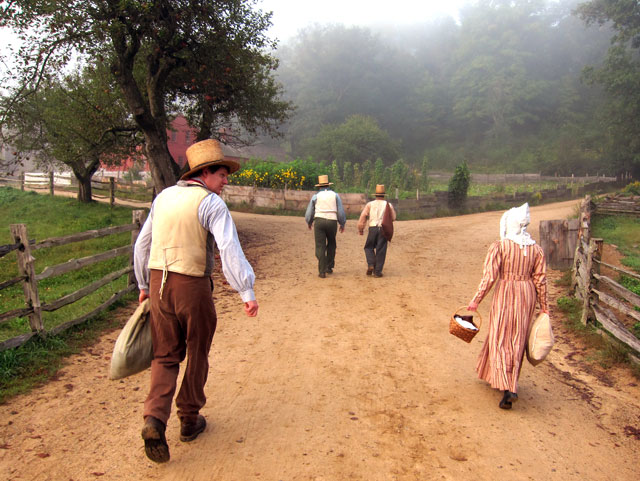
then, shortly after 7AM, before breakfast, it was off to chores at the Freeman Farm, and in Town. We joined several “staff.”

Happy to see us.

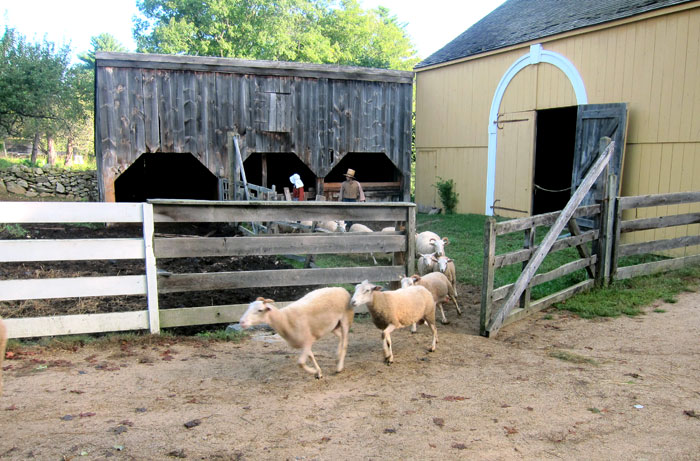
And then it was into town to feed chickens, turkeys (Thanksgiving is coming – don’t tell them), and the sheep. The sheep stay at the Towne House residence at night, and at the other end of the common (next to the Meeting House) during the day. Twice a day a gate is opened, and off they go for their next feeding.

Returning “home” breakfast was about done on the hearth

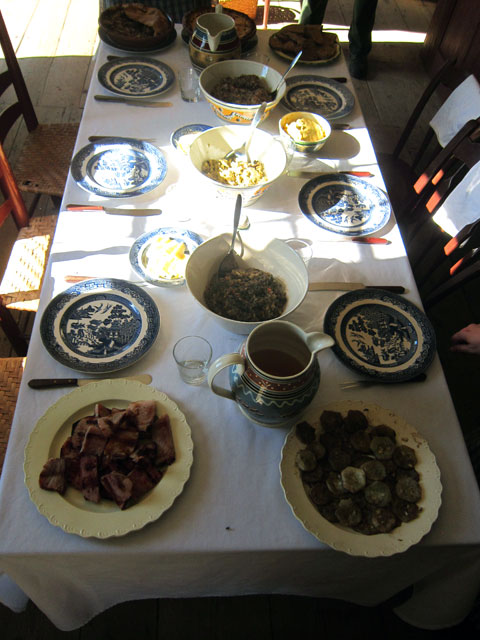
and, the table set

Before it even started, it was over about 10AM Sunday. TOO MUCH FUN, and worth every moment, and every penny – lodging, two meals, two sconces, and then a gift of blacksmith made skewers just like we used.

RAY RECOMMENDS:
1 – Visit Old Sturbridge Village OSV – soon and often, better yet, become a member
2- Take advantage of OSV special programs – particularly Boarding with the Bixbys
3- Read and devour OLD STURBRIDGE VILLAGE by Kent McCallum – get at your library, inter-library loan, or on-line (around $10 with luck). I love my copy, read several times. The Bixby House and blacksmith shop are on the front cover.

I couldn’t leave, and enjoyed OSV until about 2:30 sitting on benches, talking with interpreters, and visiting the Tin Shop, Print Shop, Country Store, and more. Realizing I had not gotten a picture of Susan and Ruth, fortunately I saw them coming down the path. Here they are with the country store from Dumerston, Vermont (across the river from me) in the background.

Then I saw George. We chatted a great deal in October finding many mutual acquaintances. He provides the teams for the buggy and stage rides. Everyone at OSV is a treasure and asset to the experience.

I travelled to Sturbridge on back roads (of course) – Route 32, Route 32A, Route 9, Route 148 to US 20 into Sturbridge. And, did the same on the way home working my way up to Old Deerfield — of course. And it was time for dinner before I went home, and back to work. Not having eaten at the Inn since July, I ate on the porch. And, my fish and chips was amazing.


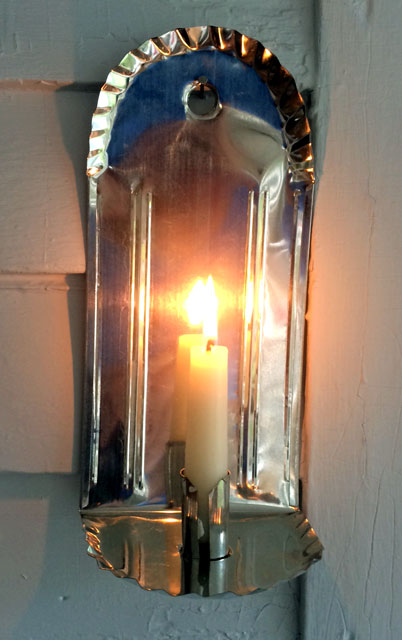
Remember my post – FLICKERING HOMES OF A HOPELESS ROMANTIC? Well, now I have two more candles on my porch – my own handmade tin sconces that I made at the OSV Tin Shop. Not a good image below – better in flickering light – on the board in the center is my gift of two blacksmith made skewers.


Did I say – RAY RECOMMENDS – Hurry to Old Sturbridge Village, now and often.

Thank you for getting this far, love, RAY

Posted in Day (or maybe two) Trips, Old Sturbridge Village - OSV | Tagged , , , , | 7 Comments

47th ANNUAL DUBLIN GAS ENGINE MEET – 8 SEPTEMBER 2018 – LOVE IT

Today for the fourth time I journeyed to Dublin, New Hampshire, to take in all the wonders at the Annual Dublin Gas Engine Meet. I became fascinated with the old “hit-n’miss” engines decades ago, and have reported to you about my recent visits seeing these amazing old machines.

Central Massachusetts Steam and Gas Show – 27 June 2015

44th Dublin Gas Engine Meet – September 2015

45th Dublin Gas Engine Meet – September 10, 2016

46th Dublin Gas Engine Meet – 9 September 2017

and, today —


The organizers encourage people with “antique” cars to come and exhibit. Entrance then is “free.” Hey, I am not proud, the $5 saved paid for my lunch, and BLUE BELLE loves the attention.

how can you not love these machines?

Every time I have shared this show with you, I have sought to show you things I have not seen before. Looking out my back windows (if it were not for the trees) I can see the buildings that still exist in Westminster Station, Vermont where these Abenaqui Machines were built.

The ingenuity some people have is amazing. My Dad could have built this, I can only marvel at how the mechanics have been assembled to use a “hit-n’miss” engine to drive a buggy and pull a sulky. (remember, you can click on my galleries to get larger images).

This video will give you an overview of part of the main exhibition area.

Some images on the field


Easy way to saw wood?

Colorful — how could you not want one?

In the past year plus I have become fascinated with forensic crime research. If I remember, I may even tell you at the end of this post what made these tracks (not my shoes at the lower left). Can you guess?

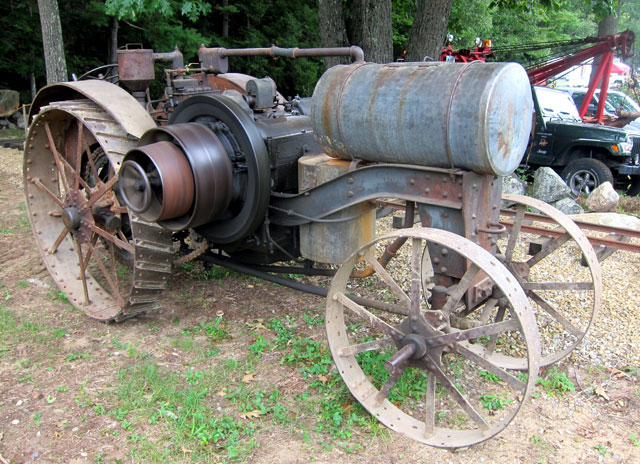
“How much wood could a woodchuck chuck, if a woodchuck could chuck wood?” Or, if all else fails, cut your wood with a 1917  Model 10-20 made by International Harvester.

I gave you an image of these fans last year. Better yet, here is a video.

Below is something new to me – a  1912 1 1/2 Horse Power Side Shaft Domestic (brand) Engine with a Goulds Mud Sucker Pump to pump water out of ditches.

I wanted a ride !!!

Ready for another video???

And, here are two more galleries of unusual items I saw today.

ready for some more?

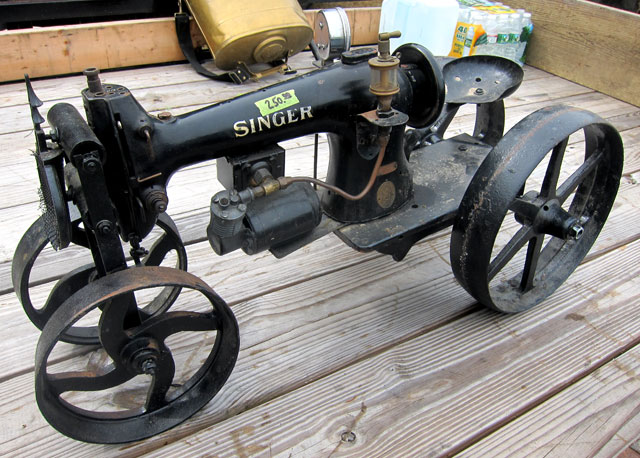
and, just when you think you have seen everything — a Singer Sewing Machine made into a tractor model — or does it really work?

Three hours plus of really too much fun – and “for nothing.” I then headed to Peterboro to see what was new, and at the last moment decided to head home via Jaffrey (to see what was new) instead of deadheading back on Route 101. Glad I did !!! Bought a print shop. Sadly too big and too much weight for BLUE BELLE to ferry back. Will make another trip to retrieve the balance – can live with that, if I decide to sell, a nice 2K profit. Around the corner from that purchase I saw I shop I had not before seen, and a fountain. Been looking for one – and this will serve until the absolute perfect one materializes. How do you get a fountain into an MGA? Carefully !

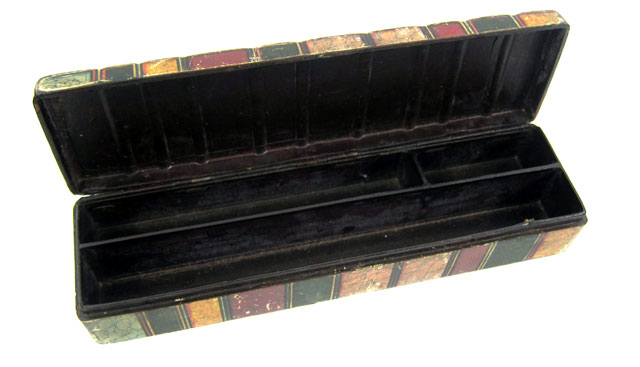
And then, there were more stops, and books purchased. Hey, this day (and month) now more than paid for. At one stop I saw something not seen before. Cathy and I collected what we called “book a likes.” Things that look like books, but are not books. I have my formal living room decorated as a library, but there is not a single book in it. A fellow bookseller once told me, “you need to write a book about your collection to create additional value.” Been on my list, to document my “book-a-like” collection, but now I have a tremendous pencil box that looks like a set of books.

What’s next? Who knows, maybe something will strike me when I wake up. But, I did see a notice at Dublin for a show in Ludlow, VT – now “on my list.”

See you there — ENJOY, love, RAY

PS – those tracks? Figure it out? Rear steel wheels on a vintage John Deere Tractor.


Posted in Day (or maybe two) Trips | Tagged , , , , | 1 Comment

IMPRESSIVE DISCOVERY – 1 SEPTEMBER 2018 – SOUTHERN VERMONT NATURAL HISTORY MUSUEM

For months I have had day excursions planned for September. This weekend is the Garlic Festival in Bennington. Years ago, Cathy and I visited when it was still in Wilmington, Vermont. That was the plan for the first, and BLUE BELLE and I headed off a tad before 9AM – first stop the Antique Flea Market in Wilmington at the junction of Route 100 South and Route 9. (Last, and first, time I was at this flea market, I purchased and packed in BLACK BEAUTY four banana boxes of books – and had great explorations) I could hardly stand when I got out of BB2 – good thing she did not carry me to the Lakes area days ago. First time hips did it to me this way – getting close to time. I started thinking, “not going to do a big walking field in Bennington.” I returned to BB2 about 11, and studied the map for alternative ideas. On the way out I had seen a sign on Route 9 to South Newfane taking me on a dirt road I did not know. That became the plan, but first a complete tour around Harriman Reservoir. The map below of today’s route can be enlarged by a click.

I had never been on the section of Route 8 from the point Route 100 heads south. You think of Route 100 as a truly north/south route – the back bone and spine of Vermont – but note the circuitous route below Route 9. I now, looking at the map, realize why – the reservoir impacted a more direct route.

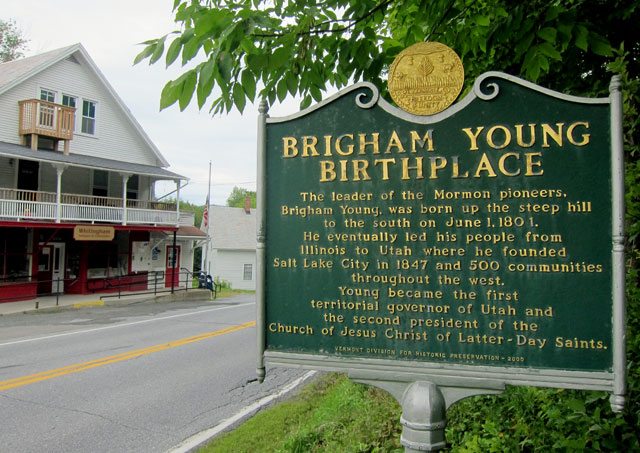
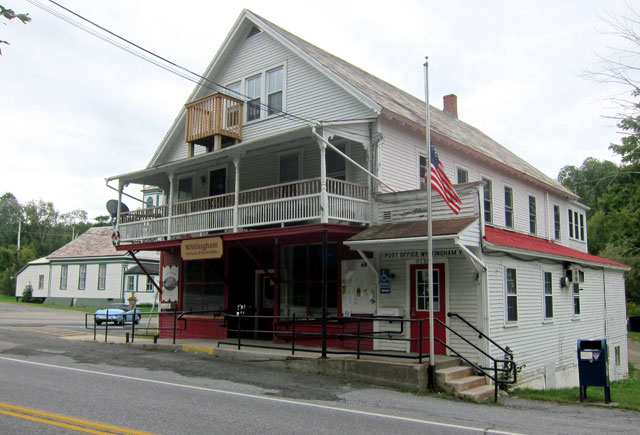
I stopped in Whitingham this time though to share its importance with you (click here for my last visit). Brigham Young was born here in 1801 (click on the image if you wish to read the details on the sign). Also, you know I love original general stores, and sadly this one is vacant with the post office expanding into it some in a crude construction manner.


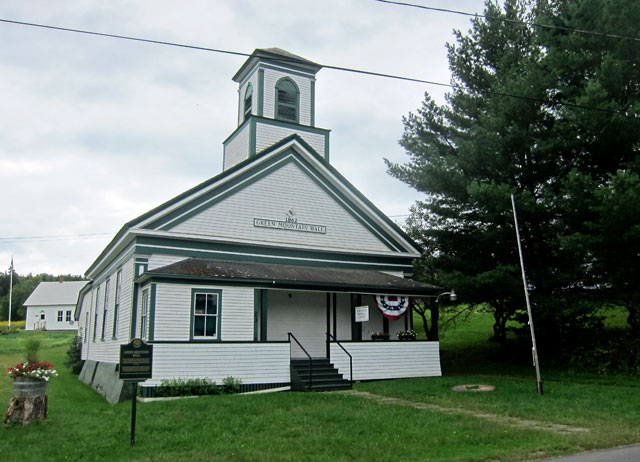
The building you can see over BB2’s bonnet is Green Mountain Hall, built in 1861 as a Universalist Church. The church disbanding the end of the 19th century, the building became the Green Mountain Club, and when that association disbanded in 1909, they turned ownership to the town. Used for Town Meetings, plays, dances, in 1973 the building was leased to the Whitingham Historical Society.

Heading further west on Route 100 South, next is Readsboro. Last time through I stopped at a bazaar and had lunch. Most of the old storefronts that trip were vacant – now all are vacant. Too bad, interesting architecture, and I hope it can be saved and revitalized.

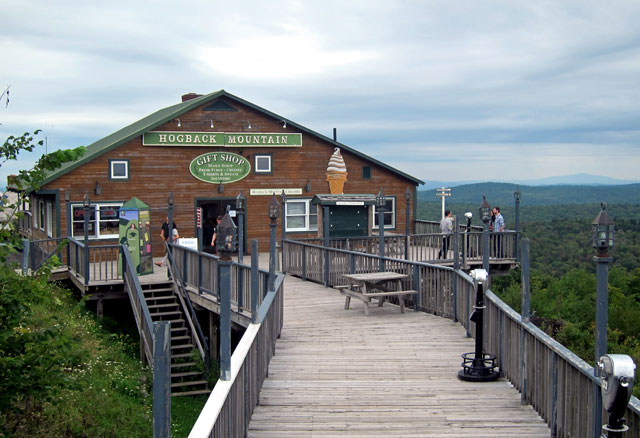
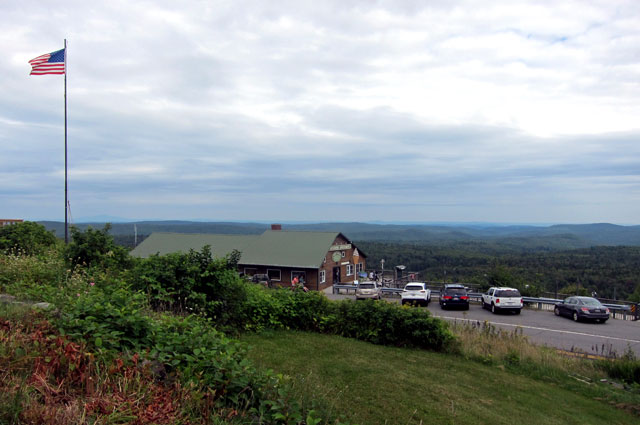
Coming to Route 8, I headed north to Route 9, and turned right back towards Wilmington. I stopped at Gary Austin’s bookshop, and chatted with his wife. Gary is recovering from some medical hiccups, and I wish him well. Karen told me the skinny on Jim Barnes and his Hermitage Club which defaulting on loans, taxes, and bills in the tens of millions has brought ruin to the Deerfield Valley area. She suggested I google him – I did, and you would enjoy reading the ruinous exploits also. Continuing east on Route 9 to find that turn to explore, I climbed back up to the sharp, dangerous turn, and view on Hogback Mountain. I do not recall in four decades of passing ever stopping. Something said, “this time stop and take in the view.”

And, I went to take in the gift shop with the 100-mile view to the south.

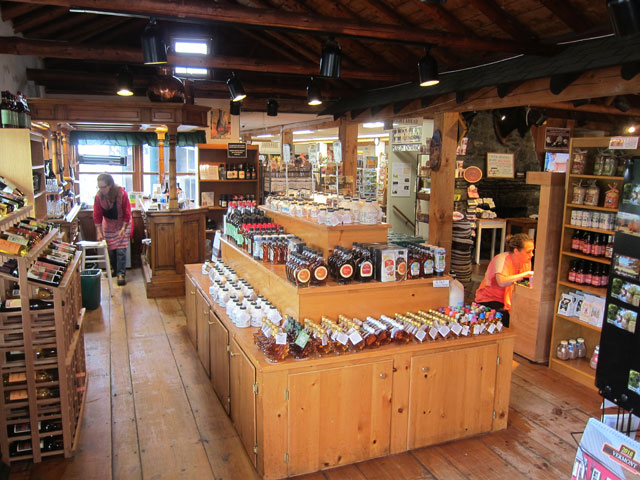
it wasn’t bad – touristy – but you need that sometimes.

and, I saw a small sign at a staircase going down. Not something I usually take in, but heck only $3 (yes, I am a tad over 60), I am here, and I may learn something. Boy, did I learn lots.

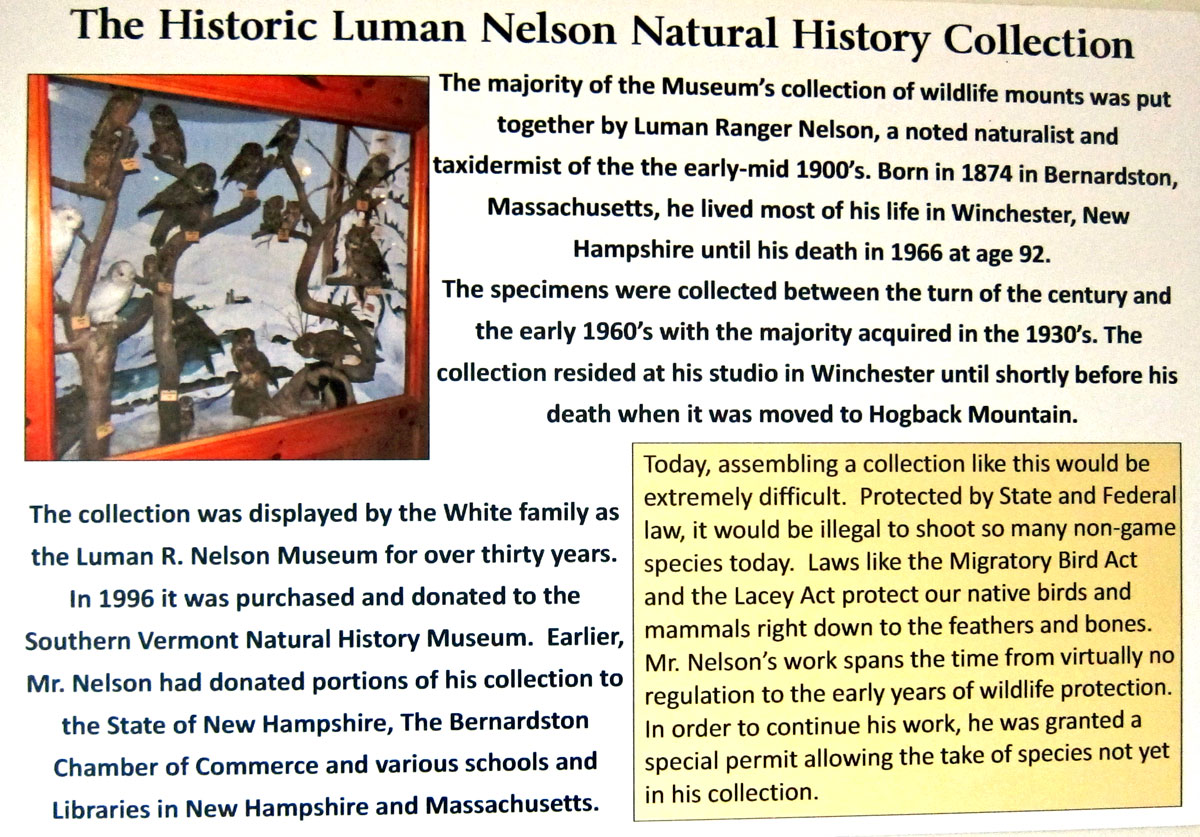
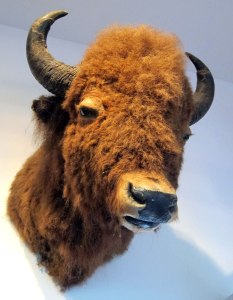
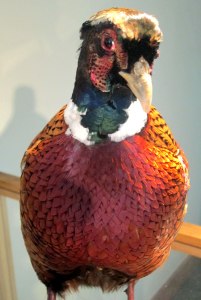
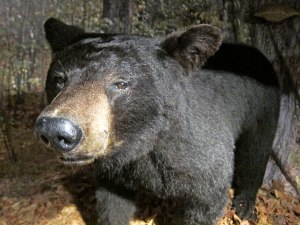
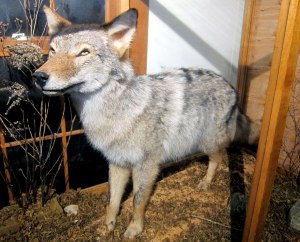
Three floors of exhibits – birds, animals, reptiles, geology history. More stuffed animals than you would find in FAO Schwarz, and here is why (you can click for larger size):

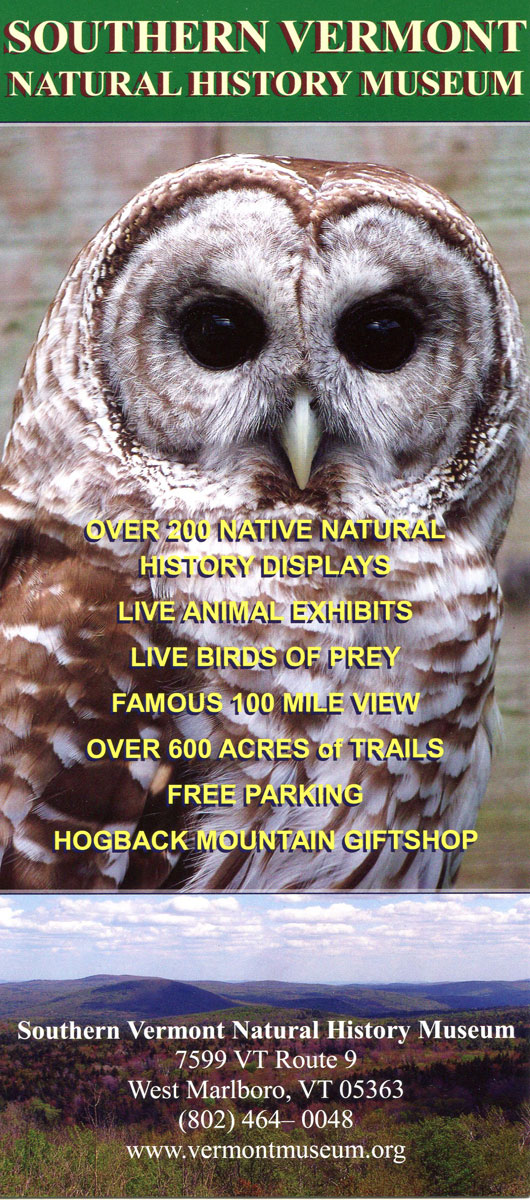
RAY RECOMMENDS — Less than 45 minutes away – visit the Southern Vermont Natural History Museum, at least visit their website. Take your child, grandchild, arrange a school visit. Check their website for all they have to offer. Share this information. Did you get my subtle hint?

To the right is the front of their rack card – click to enlarge

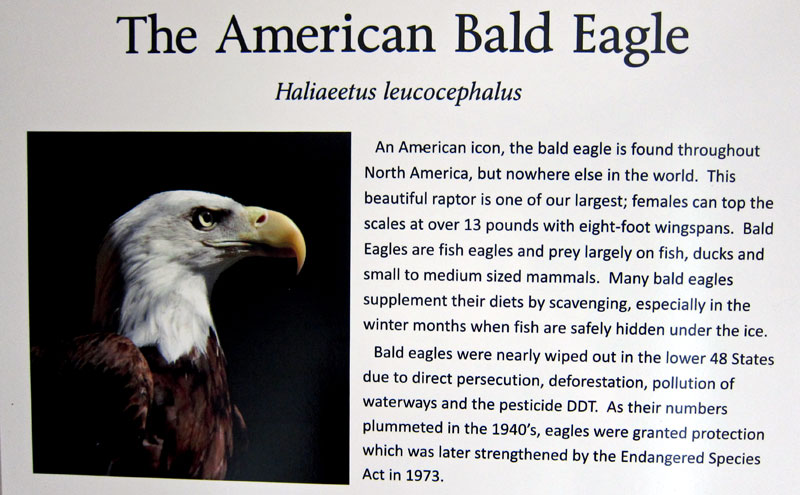
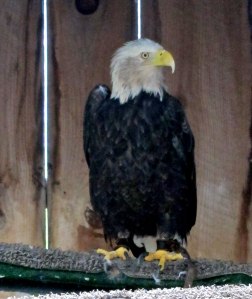
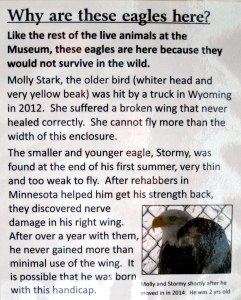
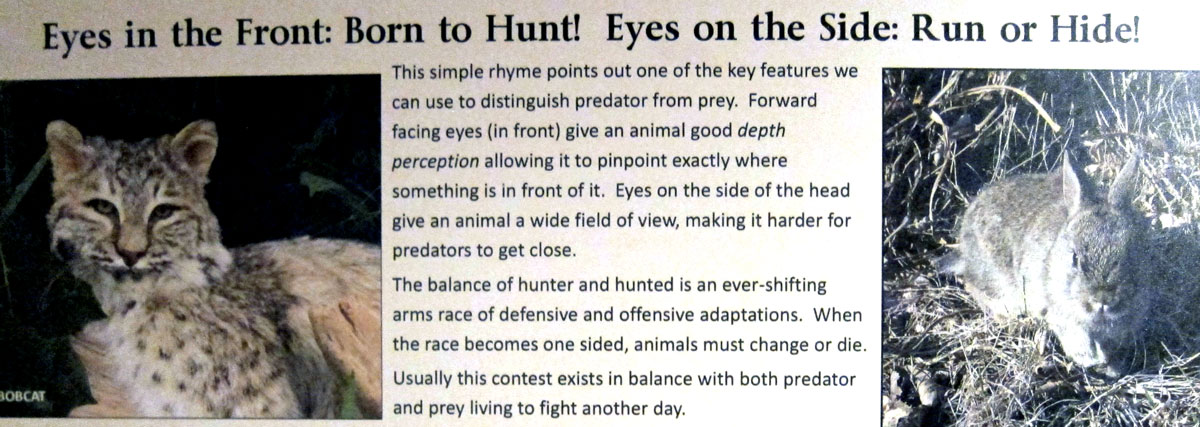
I spent almost an hour browsing and reading. You know I write here to remember, but enjoy sharing. Here are some things I decided to share that I found interesting to learn about. First, mainly some birds, but other critters are here too:

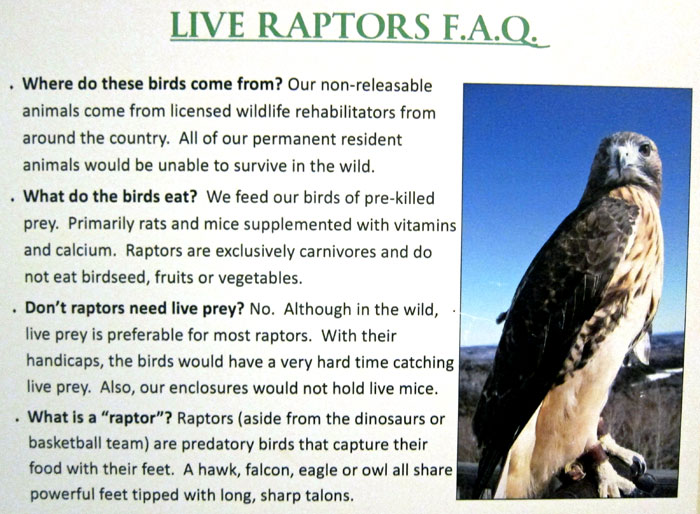
Now I know what a Raptor is — should be the first bullet in this sign.

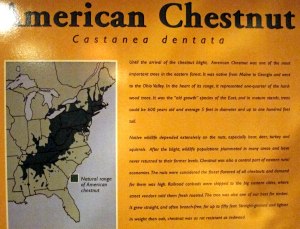
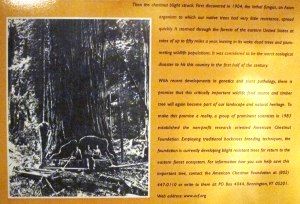
And, if you wish to learn about Chestnut Trees, click on these. Something to remember is that a chain of animals can depend on a tree, plant or environment. And the loss of Chestnut trees had a ripple effect on many species.

Here is something else I bet you did not know (again you can click to enlarge).

The museum is beginning a campaign to build a new facility – check their website. You may wish to visit here soon, or think about helping them in their capital drive. I may help spread the word in THE WALPOLE CLARION as I did last year with Santa’s Land – ending up with almost 3,000 “hits” on “shunpiking” in one day as a result.

After almost an hour enjoying the museum – surprising myself – I exited, and decided to cross the road to see the old brewery building higher up. It was past 2:30, and when I saw Andrzej’s Polish Kitchen, I thought, “perfect, nothing else within miles, particularly on planned dirt route heading home.

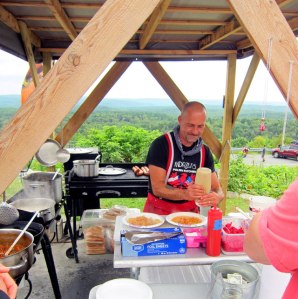
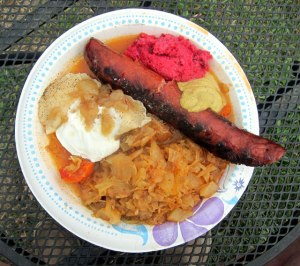
Chef Andrzej is amazing, and entertaining. Hard to decide what to select, I went for the full Polish plate. Telling him I would not have to eat tonight, he replied, “but you can still drink.”

My view while having lunch

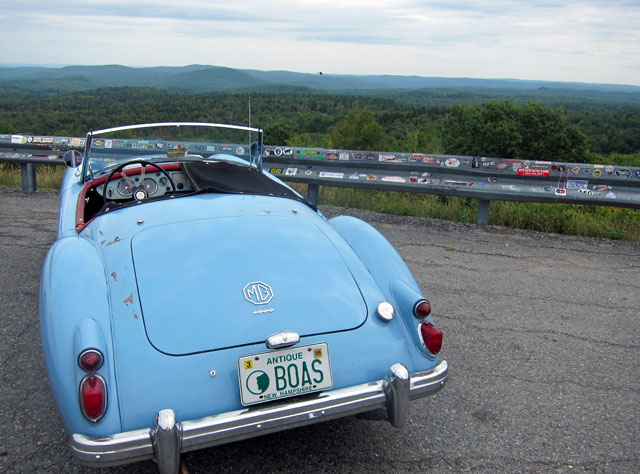
and the view poor BLUE BELLE had to endure during my wonderful visit on Hogback Mountain. The guardrail is plastered with stickers from all over.

Continuing east on Route 9, I found my turn, but if you look at the map you can see I missed (probably not marked) the right turn dirt road that would have taken me directly to South Newfane (which you should visit). When I found myself on Route 100 again, I figured what I did wrong, went north a tad, turned right and crossed to Route 30, down to the covered bridge, over East West Road to US Route 5 and home.

Close to 5 PM, I stopped at a relatively new vintage clothing and antiques store. Stretch legs if nothing else. Great fashion, some booths with interesting items and terrible books, then – STOP – a top shelf with $2 books – and some 1930s and 194os mysteries in dust jacket. I took a chance and bought eight – researching when home (darn I am good at what I do), I just finished cataloguing them at $500.

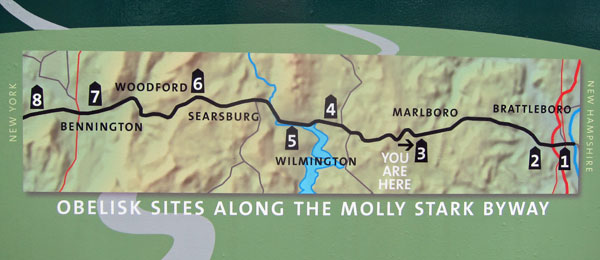
This was one of those days that I had great fun, and never accomplished what I set out to do. But that is what I enjoy doing. BB2 clocked 128 miles, and her run down I-91 at 65-70 MPH was like sailing, and she wanted to give more. Please do visit the SOUTHERN VERMONT NATURAL HISTORY MUSEUM, and I recommend you enjoy Route 9 – The Molly Stark Byway – as I have done for decades. here is just some information on that route. Enjoy, as always, yours, RAY

PS – skip below to see what suggestions one of my readers sent to me:

Ray the next time you do that loop don’t miss the following:

1) the Vermont Bowl Company on #9 1 mile west of the center of Wilmington

2) lunch (the best sandwiches) at the Jacksonville General Store

3) driving west on #100 past Jacksonville heading toward Readsboro, look sharp for Dam Road on the right. Follow it to the end where you’ll see the Glory Hole, an incredible spillway, a hole in the earth that drains overflow for the entire Harriman Reservoir. It is a most scary construction featured years ago in an Archer Mayor book (a great place to dispose of a body)

4) on the way back on #9, 3 miles east of the center of Wilmington, don’t miss the Art of Humor Gallery near the flea market you mentioned. Watch for the sign for the Gallery. Address is #30 Not-a-Road road!). It is an amazing house and grounds where the humor of internationally known humorist and cartoonist, Skip Morrow, is on display and available for purchase. I promise you a lot of laughs.

Posted in Day (or maybe two) Trips, ROADS and ROUTES | Tagged , , , , , , , | 6 Comments

MAKING WAY ON – ROADS – RAILS – and WATER – 26-27 AUGUST 2018

A 34 hour vacation that felt like a week when I arrived home – that much done and seen – and three things that had been “on the lists.” In fact, the Inn I stayed at Cathy and I talked about experiencing years ago, and ironically I drove by and took some pictures exactly 4 years ago, August 26, 2014. The experience for each day was on last year’s definite list, and rolled to this year’s definite list written back in May. We got the September CLARION done early and off Friday to the printer giving me a “window of opportunity.” I made two phone calls to verify schedules, then one call to book the Inn. And what followed was a great time to share with you here.
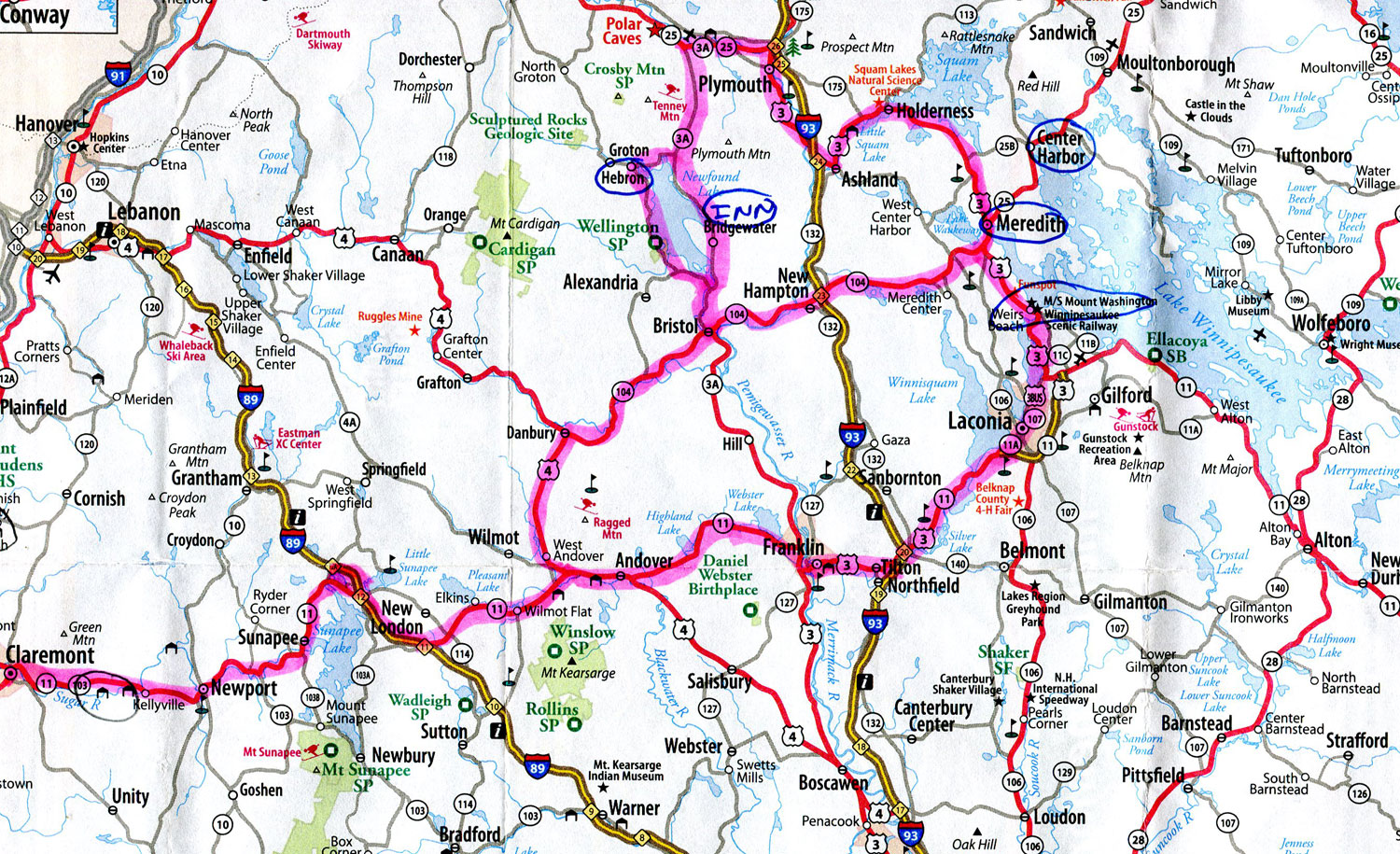
Lots of routes to get to the lake region, I considered several, considered taking BLUE BELLE, but for comfort sake decided to exercise GiGi some more. Here is the route I will be taking you along. Yes, you can click on it for a larger size.

Leaving Claremont I headed to New London, then headed east on Route 11. Turning left on Route 4 towards Danbury, and then a right on Route 104 to Meredith. I recommend this route. On Monday coming home, I took Route 3 from from Weirs Beach back to Franklin and Route 11. But there is way to much traffic and commercialism on that route – not a BB2 route. Redeeming factor, on this route home, was a purchase in a Laconia antique center of two books, which once sold will pay for almost 1/3 of this holiday.

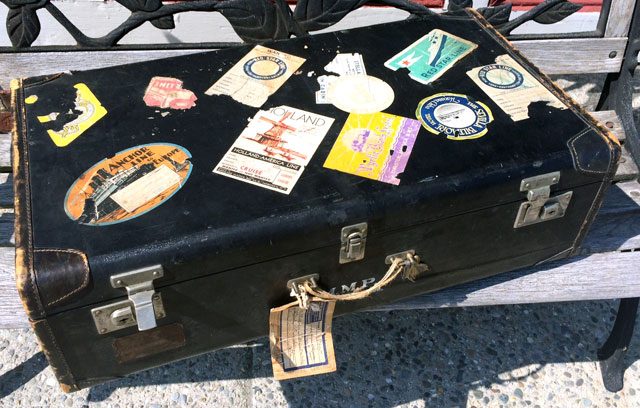
A fascinating stop is Bristol on Route 104. Some interesting shops and eateries in this architecturally interesting mill town. I left a so-so antique shop, and walked the opposite way to see the river, and there in the shop’s window that I did not see was this:

This suitcase owned by a Bostonian resident is full of ocean liner stickers. Note the exceptional “character” of this piece, including the replacement twine handle. I have been watching these since Gary maybe wanted one for his Tiki Bar decor. Saw one in Connecticut last month (not as nice) for $275. I felt guilty (not) having to pay $40.50 for this treasure. I may loan it to Gary.

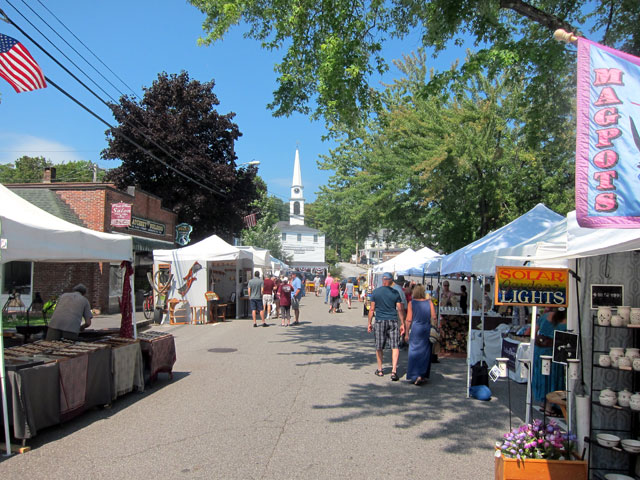
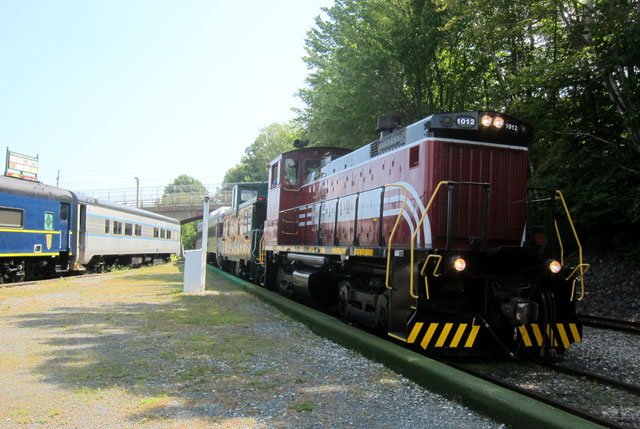
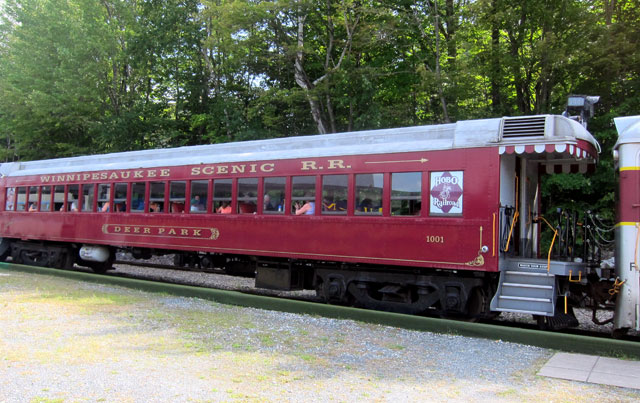
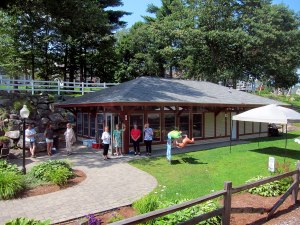
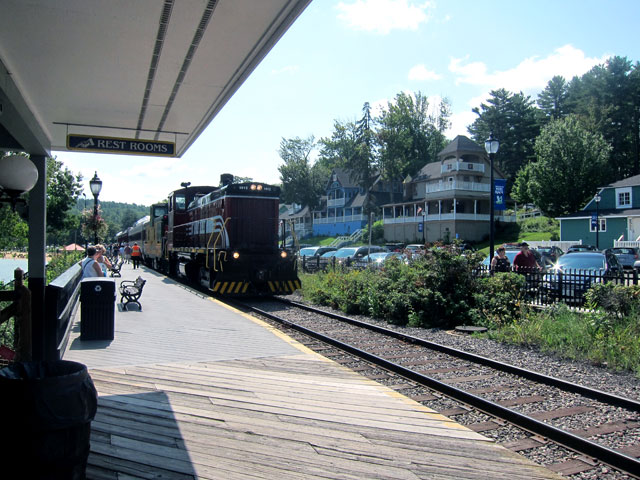
I then arrived in Meredith with my respectable hour to spare to catch the Winnipesaukee Scenic Railroad – run by the HoBo Railroad in Lincoln. I wanted the full round trip from Meredith through Weirs Beach to Lakeport and return. I bought my ticket, included a “Hobo Picnic” and ventured down Main Street to see the craft fair. For over 40 years I thought Meredith was the strip along the lake – Route 3. I found out Main Street is one or two blocks back from the lake – architecturally pleasing with shops, eateries, and today the street fair.

But it was time to get back to not miss the train.  The station/ticket master asked if I knew the derivation of the term HoBo. “Well, I should,” I replied, but with all my reading on trains, I do not. You probably know that particularly during the Great Depression, many unemployed traveled the rails (without paying) looking for work, or just for something to do. Many actually desirous of work would carry their own tools, thus improving their chances for that job or meal. Agricultural work was most often offered, and offered to those carrying hoes, ready to work the field. Those boys carrying hoes became know as HoBos — you needed to know this. And, right on time, the train arrived from its first run.

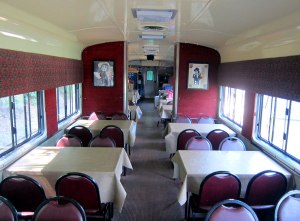
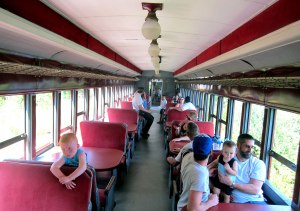
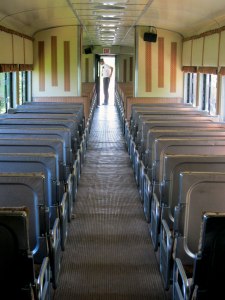
I started off in this car

and, some views of the cars

and, some views along the rails on my trek (and remember, you can click and open my galleries for larger views).

Two things of interest – everyone waves as a train passes, and those waves are returned. I saw the same happen the next day as the MS Mount Washington met smaller craft on the lake. And, everyone in the lake side communities and developments appeared to have golf carts to get the the lake shore — they were parked everywhere.

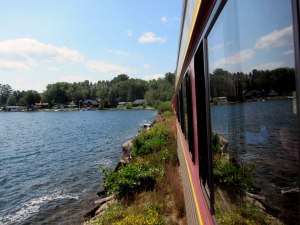
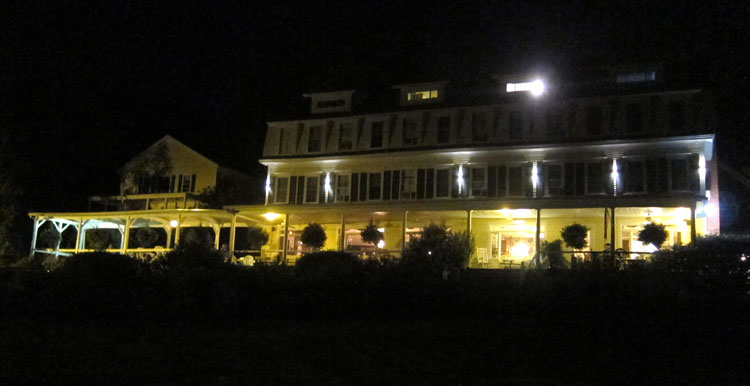
When my “ride on the rails” was completed I headed north on Route 3 to Plymouth passing a campground I took the boys to in the early 1970s. Heading west on Route 25 from Plymouth, then south on 3A and along the east side of Newfound Lake. Getting there before 5 PM, I spent (other than dinner inside) about 5 hours on the porch. Did not get to take an image of the The Inn on Newfound Lake until dark.

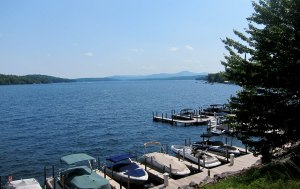
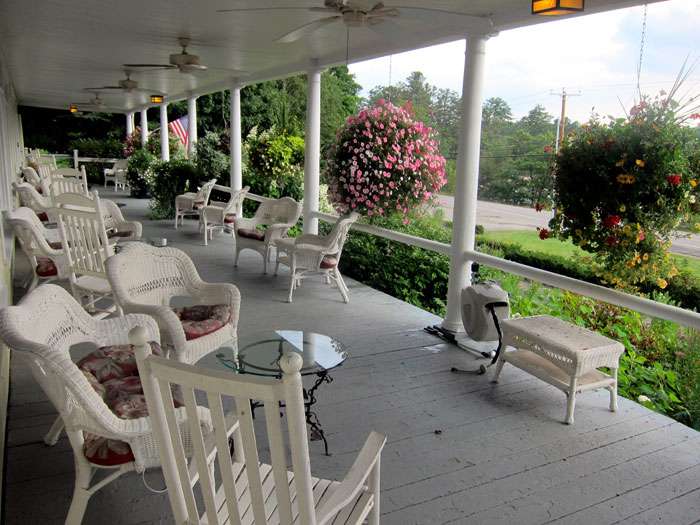
Porch, yes the porch overlooking the lake. Here is where I planted myself.

and some views around the Inn.

I must tell you, the owners love Rabbits — in one form or another (even the key fob) are everywhere. And, the restaurant is wonderful. Locals trickled in all night, the Inn is popular for wedding parties — but well worth a stay to experience.
Monday’s plan was to take a cruise on the MS Mount Washington on Lake Winnipesaukee. I could have done a one day combination of rail and sail, but then the temptation would have been to drive home. Instead I choose to separate the rail and sail with an overnight. At the continental breakfast I visited with a few couples staying at the Inn. I had thought, and then discarded, touring around Newfound Lake on the way to Weirs Beach. One woman, whose family had over a 100 year history on the lake, convinced me I should take the drive.

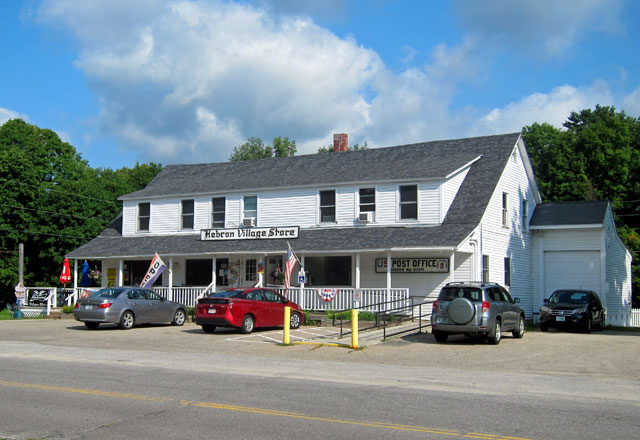
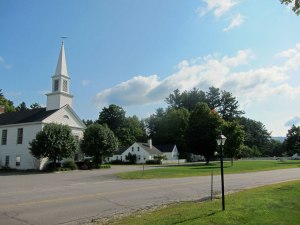
So heading back north on 3A, a left toward Hebron, to get West Shore drive. Hebron is a perfect New England Village.

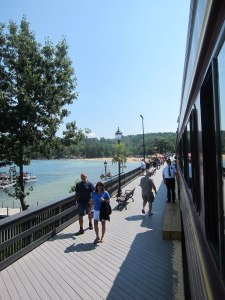
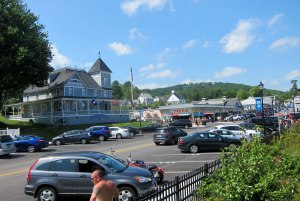
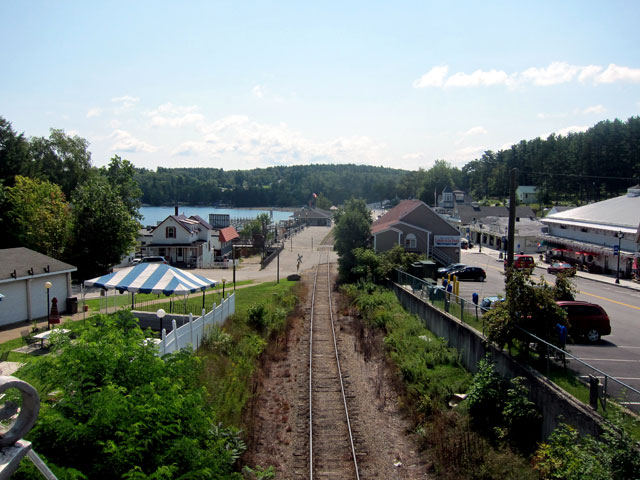
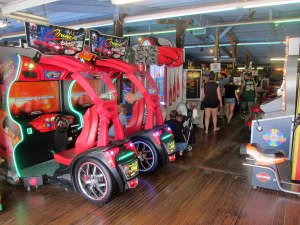
Looping back to Bristol, then Route 104 east to Route 3, and south to Weirs Beach, I arrived. I have visited Weirs Beach for over four decades, and it has not changed. It is the perfect early 20th century lake side honky-tonk with games, gift shops, and food establishments, not to mention 19th cottages and architecture. This view is looking south from the footbridge over the railroad tracks.

and, a galley of views around town

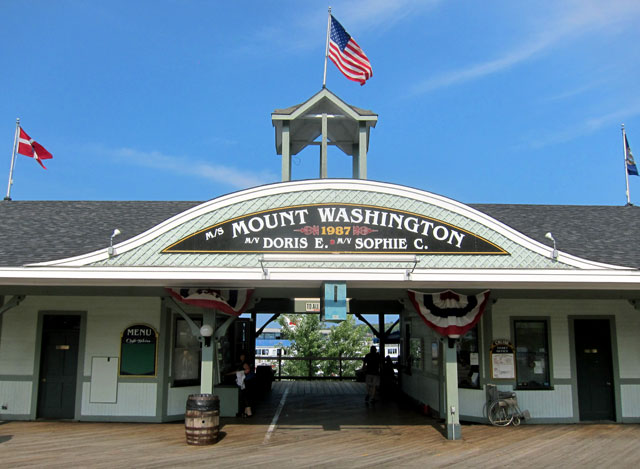
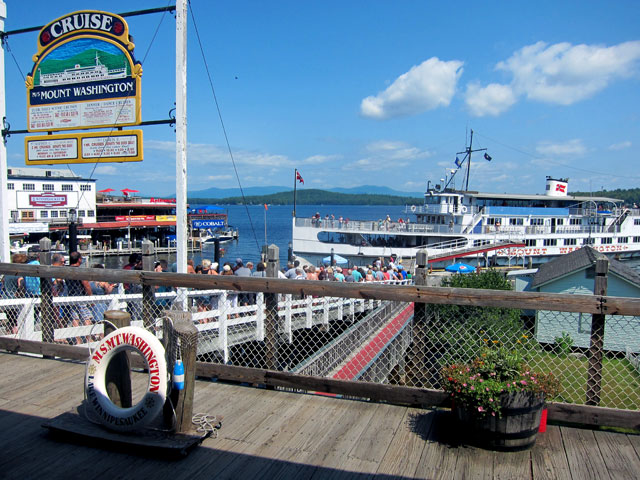
I then headed over to wait for the cruise on the MS Mount Washington.

while there, the train was returning from Lakeport heading to Meredith

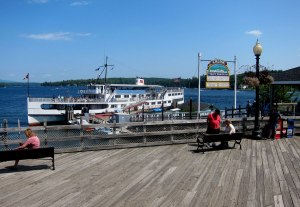
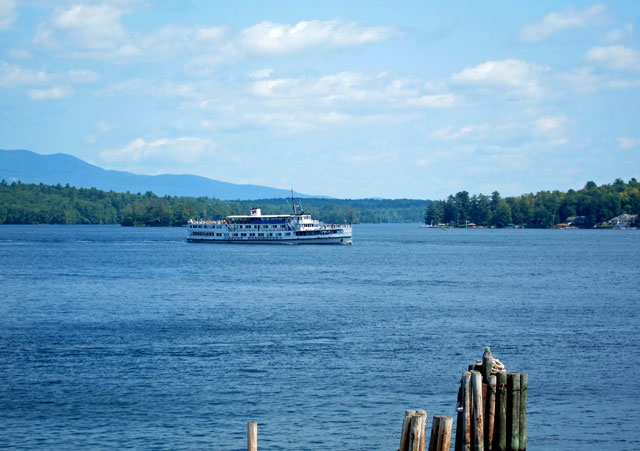
and, then the majestic MS Mount Washington was coming into view

it was time to board

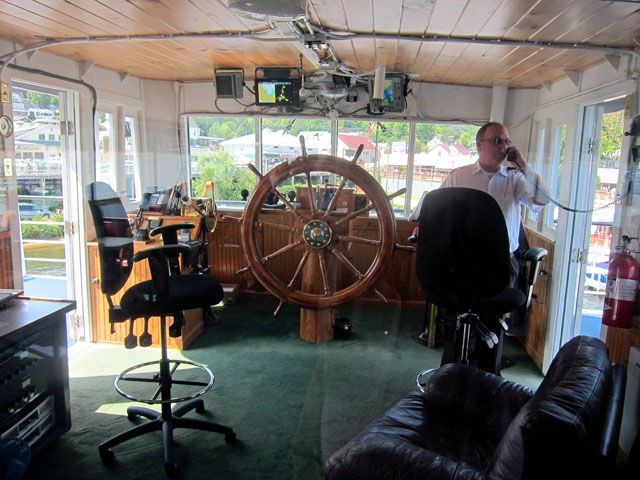
checking out the wheelhouse, I approved.

Our first, albeit short, stop was Center Harbor

And, a close-up. On the marine railway is currently the original mail-boat undergoing some repairs. This is where the MS Mount Washington is pulled up for the winter. Notice Tom on the pier tying up the ship. Tom was at Weirs Beach, now Center Harbor, and then met us at Meredith before we again saw him upon docking in Weirs Beach. I told him, “I hope they are paying your mileage and speeding tickets.”  Too much fun.

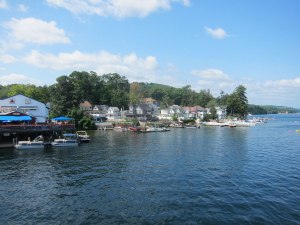
And, then pulling into Meredith. Remember, this is what you see traveling through. As I mentioned before, Main Street is just up the hill.

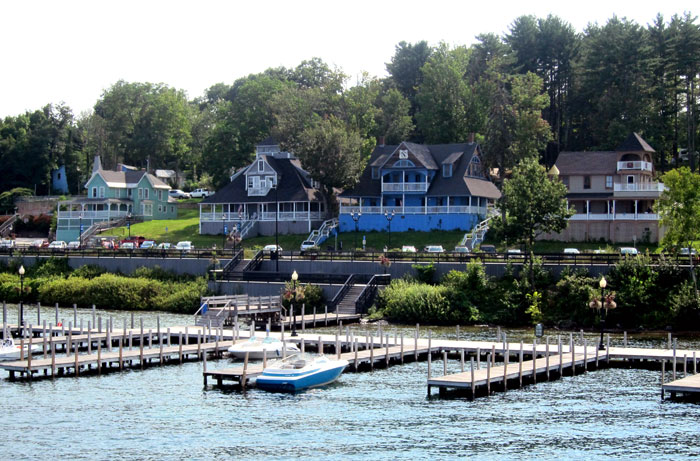
and, back to Weirs Beach, and my favorite buildings there. Built for Civil War veterans for their post war encampments. Just beautiful.

RAY RECOMMENDS:

1 – Even a 34 hour vacation can work wonders
2 – Take the Winnipesaukee Scenic Railroad
3 – Plan a cruise on the MS Mount Washington
4 – Look into Center Harbor — I have already started my research and found a B&B to center my further explorations from
5 – And, finally, relax and enjoy – LIFE IS TOO SHORT

Love, RAY


Posted in Day (or maybe two) Trips, ROADS and ROUTES | Tagged , , , , , , , | 4 Comments