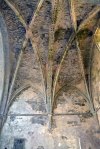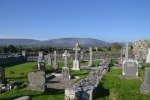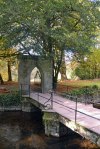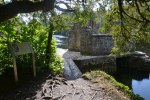
FINAL FULL DAY – THIS TRIP – 17 October 2013 in IRELAND

Happily working on this post at the Dublin Airport having arrived here in plenty of time for my flight.  No problem being early, but late “does not fly!”

Yesterday my only plan was to go to Strokestown to see the Manor House and National Famine Museum (which was high on my list as is trying to understand the Great Famine and Irish history), but by the time I was done breakfast I added stopping at the Turlough Park House and Country Life Museum after first touring the grounds of the Westport House.

IR-101

Open to the public since 1960, it was worth touring the Westport House grounds and how the harbor originally came up to the estate.  Now various amusements have been tastefully added around the grounds obviously to provide the needed income for upkeep.  I am glad that Sadie at the Boulevard Guest House suggested that I drive in.  She knows the current owners, descendants of the original family as I mentioned before.  I encourage you to learn the history of the house and town. (remember to click on thumbnails to open slideshow in each group.

It was a short trip to reach the Turlough Park House and Country Life Museum.  Days ago I dismissed it thinking, “oh, another farm museum,” but Noreen peaked my interest, and a quick IPad look convinced me I had to take in this free national museum.  The original estate is there with two rooms open – the library and a drawing room, gift shop and food in refurbished stables, but the museum itself is the modern complex to the rear.  Glad I went, and thankful for my little Canon because I snap images of all the history panels that I want to remember.  This museum is based upon the collection of folk arts and crafts saved prior to total disappearance to explain life in Ireland from 1850 to 1950.  In addition there was an excellent history on the famine and land law problems, which along with the book I bought there may help me.  (At the gift shop at Kylemore Abbey I saw the ATLAS OF THE GREAT IRISH FAMINE which Amazon will be delivering to me today.)

After almost two hours there I continued on to Strokestown where I was in my element for the next three hours at the Strokestown Park and The National Irish Famine Museum I bought my ticket for the 2:30 tour of the house and bought lunch to wait the couple minutes.  As you may know, I like original when possible, and that is what you experience in the house.

IR-110

An interesting tale of ownership in one family, neglect and selling off of some heirlooms to survive, purchase by a local businessman needing a few acres for expansion of his automobile dealership, and then discovery in the attic of the original records of the estate dating from the time of the famine in late 1840s.  With a wonderful social conscience from his discovery preservation began, and utilizing the documents found, the idea of the famine museum materialized.

Here is a look out the library window towards the ruins of an early church.  The guide mentioned the Victorian romantic vision of ruins in view.  Much like the need for people to take a Grand Tour, and the same reason people were fascinated with Fort Ticonderoga when it was in ruins and they traveled to see it.

IR-111

The house is deceiving.  A relatively small center part, but flanked by curved accesses to kitchen spaces on the left leading to servants areas, and stables etc. in matching architecture flanking to the right give the impression of grandeur.  A tunnel (I was given a personal looksee) connects the two flanking wings so the servants need not been seen as they travel to carry out their tasks.  Much of the furnishings, personal photos and momentos  are original as purchased with the estate from the owners who were then given life tenancy.  The interior is untouched, worn carpets, peeling paint, faded wallpaper and left as it would have appeared in the 1930s.

The museum in restored stable areas is impressive with famine details and history of the poor and workhouses.  The intent is to give the contrast between the manor estate and the lives of the poor tenants.  I later quickly toured the formal gardens, but if was still earlier in the year would have spent much more time in them.  As it was, I was toured in the home with just one other couple – the advantage of off-season travel.

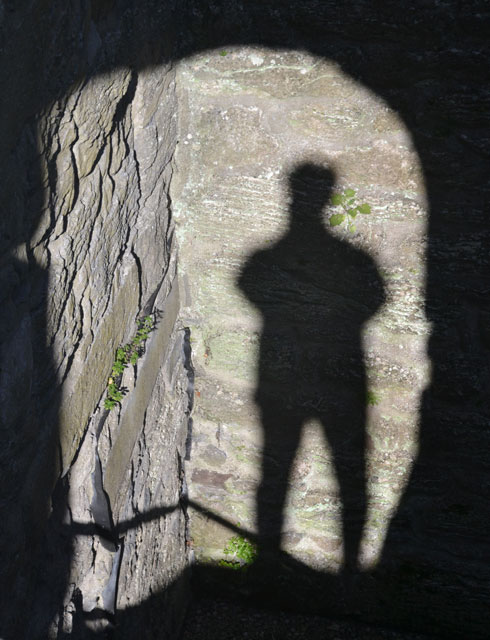
And, you know I like shadows and windows.  Here are a few in the kitchen

IR-119

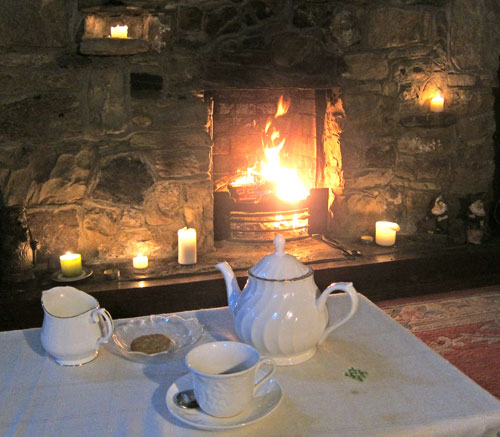
After almost three hours there I headed to my B&B, and once I settled before the fire decided that even a little Irish pub could not pull me away.

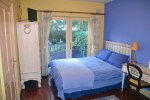
Unpacking at my B&B

Unpacking at my B&B

How could I leave this for a Pub?

How could I leave this for a Pub?

IR-118

I had a restful night, easy drive in the pouring rain to the Dublin Airport this AM, and have prepared myself for the flight home.  I have no idea what is next, but then I have said that before.  Thank you for traveling with me, as always, yours, RAY

PS – and now with no plane at the gate at boarding time, they are handing out meal vouchers, and next information is 15 minutes after takeoff — next trip might be sooner than thought!  With luck the next voucher will be for a room in Dublin.
Posted in 2013-c - IRELAND 2013, Uncategorized | Tagged , , , | Leave a comment

HEADING TO WESTPORT, AND DAY-TRIPPING FROM THERE – 15 and 16 October 2013

IR-100I am writing this in front of a fire on 17 October in Longford Country House positioned an hour and a half from the Dublin airport.  I know how to find B&Bs, and it is too comfortable to go out to eat, so I must get to writing.  It seems like weeks ago I left The Burren for Westport.

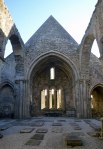
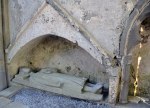
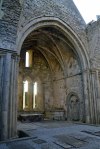
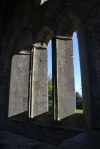
When I did, I made one more stop recommended by Conor – the Corcomroe Abbey, a 13th century Cistercian Monastery hidden in a quiet valley and noted for its detailed carvings and ornamentation.  I have lots of images, but here are just a few of my favorites — remember whenever you see thumbnails to click on any image to open up a slideshow gallery.

Have to give you my favorites in “large size”

IR-66

IR-67

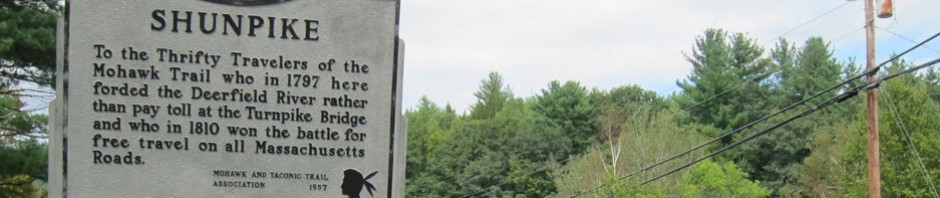
From here I thought, “instead of the direct route back to Galway, let me explore The Burren a tad more,” so passing out the lane I turned left instead of right — soon I thought that wrong — but a great adventure.  An adventure that gives you RAY’S REVIEW OF ROADS.  There are few Motorways in Ireland — analogous to our limited access interstates.  National Roads – major byways between towns, are in rare instances divided highways, but usually two lane roads ranging in width from comfortable to opportunities for opposing rear view mirrors to kiss (or worse).  Motorways are designated with a M, Ns are National roads, and a road with an R and its number is a regional road.  I found regional roads from comfortable to hoping to meet the oncoming car without brushing it or the hedgerow.  I left the Abbey on an R road looking for a certain L road (Local road) to cut over to Gort.  Local roads (paved or dirt) can be wide enough for one and a half cars, or wide enough for one – plus or minus a few inches – resulting in more than kissing mirrors.  I made a left turn where I thought the L should be — it was not — after squeezing a number of kilometers up into beautiful terrain I figured I would not be meeting too many folks.  And, when I did, quick decisions have to be made as to who is going to try to duck into a rare open spot or back up.  The hour I was trying to find my way out of this masterpiece of shunpiking I wrote my review of roads in my mind.

I followed N84 from Galway towards County Mayo, the only way to go,

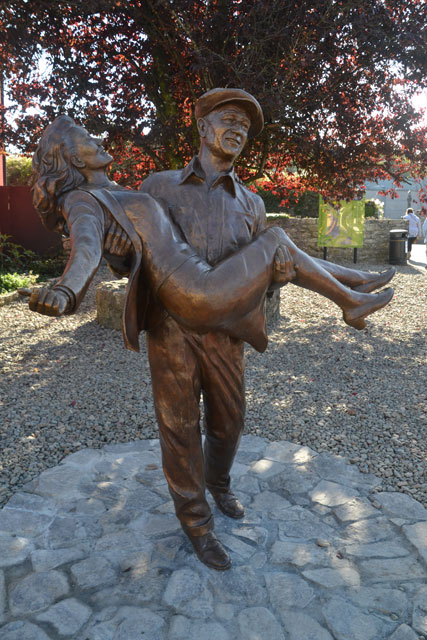
THE QUIET MAN STATUE with "The Duke" and Maureen O'Hara

THE QUIET MAN STATUE with “The Duke” and Maureen O’Hara

but with Rick Steves in hand.  Cong is the first sidestep, and worthwhile.  A quaint village noted for its Abbey dating from the early 1100s and adjoining forest area, and the location for muh of the filming of the 1951 John Wayne and Maureen O’Hara classic John Ford film, THE QUIET MAN.  Although two generations ago, the town still touts that fame.  I wandered all the streets, had lunch at the Hungry Monk Cafe, and poked into the forest.

Self-Portrait at Cong Abbey

IR-70

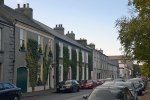
Soon I arrived in Westport, and easily found my magnificent c1830 Georgian B&B, the Boulevard Guesthouse.    (as an aside — everywhere I now  see TripAdvisor.com decals on windows.  In Galway I was talking with a lady in the B&B who said she uses the site exclusively and selects places in the top 10%.  I have filled out reviews, and do look at them — every little bit helps, so check out TripAdvisor.com)

Outside The Boulevard Guesthouse in Westport, Ireland

Outside The Boulevard Guesthouse in Westport, Ireland

Wednesday’s plan was to follow the route southwest through the Connemara recommended by Rick Steves (really only one route, but he points out the spots to see), and then (again thanks to Conor) I decided I would experience Achill Island northwest of Westport.  Wednesday ended up being a great deal of driving (as has this trip in general), and that is because in the West it is mainly nature and scenery to experience and not the museums and historic sites that I am drawn to and spend hours at.  But you know I like to  drive, so it is not a problem, just kilometers.

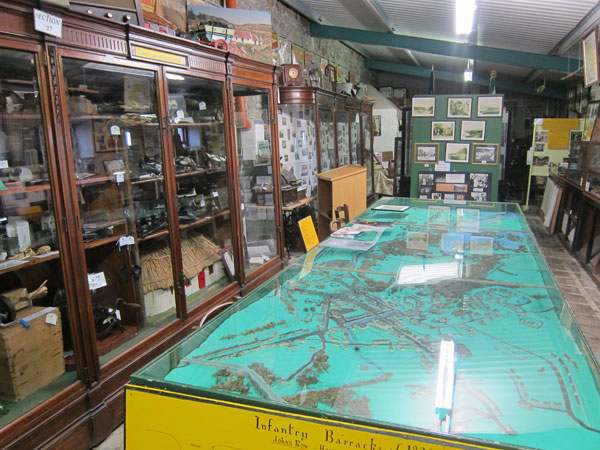
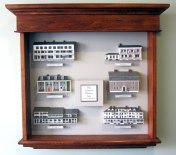
On the way out of town I stopped at the very small Westport Heritage Centre, and I am so glad that I did.  I always have to know an area’s past history and development (the whys and hows).  The volunteer explained, using this large model of the area,

Westport Heritage Centre model of the town.

Westport Heritage Centre model of the town.

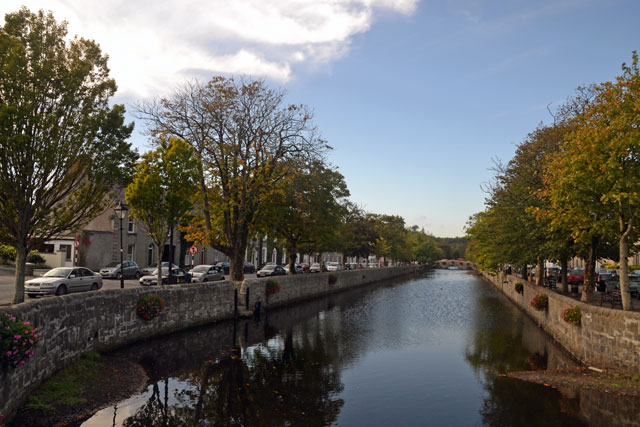
that in the 16th century  there were tower forts around the harbor, and a lady pirate, Grace O’Malley, or Granualie, ruled the bay (plan to read the book about her). In 1730 a descendant built the Westport House on the site of the tower at the inner point of the harbor, with the town adjacent.  But in 1780 to get the workers and tenants out of the front yard, a new town center was planned, one of the few such planned towns in Ireland.  The river in front of my B&B was straightened to make an attractive promenade.  After 300 years the Browne family still lives in the house.

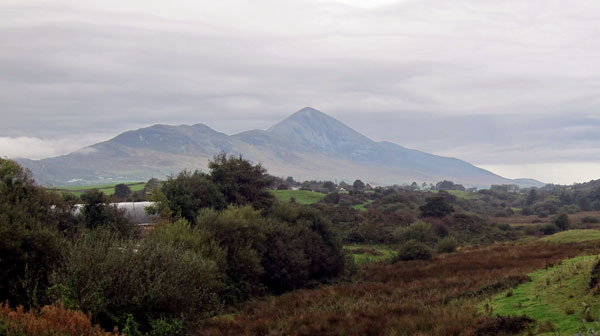
Then striking out on R335 you first come to Croagh Patrick, a

IR-81

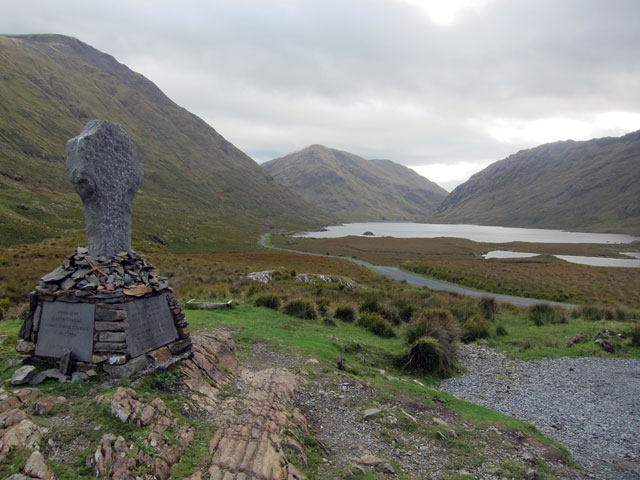
small but imposing 2,500 foot mountain where St. Patrick supposedly fasted for 40 days of Lent and then “drove the snakes” out of Ireland.  Hoping to learn some history I pulled into the pay parking lot for the Visitor Center.  Pay and Display machine does not make change, so for 2 Euros I found out there was nothing in the Visitor Center except cheap souvenirs and food.  So, Ray Recommends — don’t stop unless you want to make the 3 hour hike to the summit.  The scenic drive continues to Louisburg where the road turns south through some of the most rugged and barren looking scenery in Ireland in the Doo Lough  Valley.

Doo Lough Valley and Famine Monument

Doo Lough Valley and Famine Monument

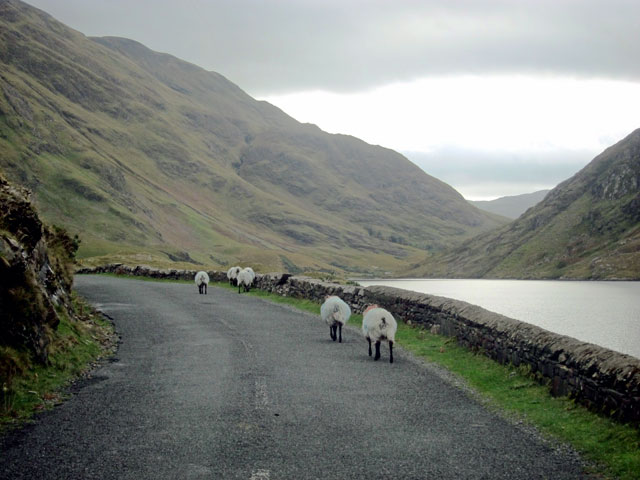
Only a monument along the way honoring a famine tragedy in the area, and sheep, lots of sheep on a road too narrow for sheep and car.  At one point two little ones jumped out of some bushes on a slope 8 feet in

Out for a stroll -- EVERYWHERE in this area

Out for a stroll — EVERYWHERE in this area

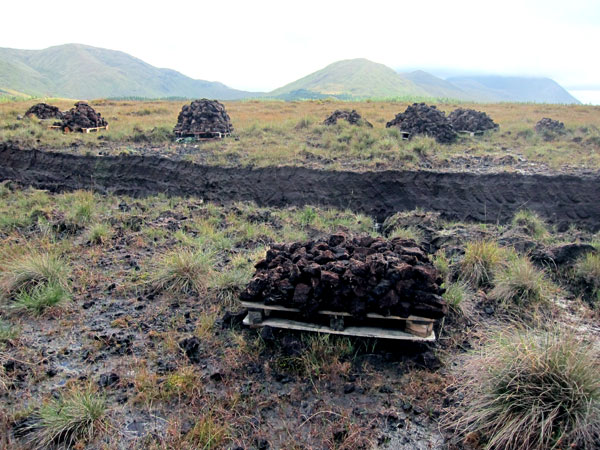
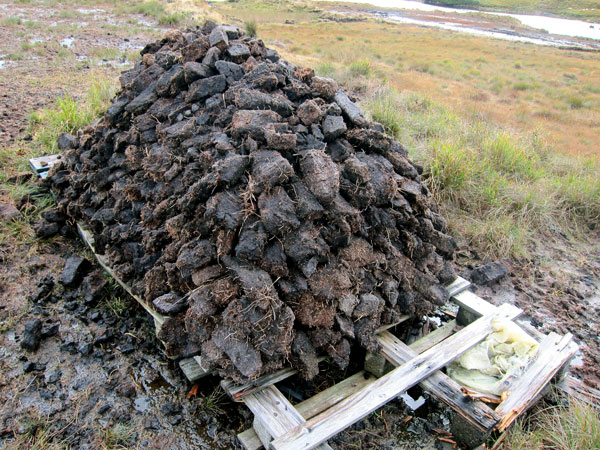
front of me.  Screech, and no time to get that on “film.”  Soon the road comes alongside the long Killary Harbor, considered to be in a fjord (small Irish size compared to Norway from what I remember – yes been up the fjords to Bodo, Norway in a past life).  At Leenane you loop down the otherside, and the treat (thanks to Rick) is to find this unmarked Peat Bog.

Peat Bog showing where cut with a spade, and stacks

Peat Bog showing where cut with a spade, and stacks

not something you see in the states, so here is another image and two videos:

IR-84


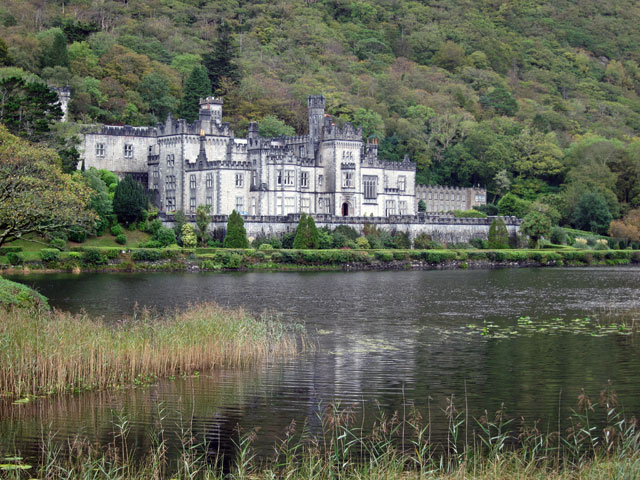
Before heading back towards Westport I stopped at the Connemara National Park which was established to preserve the dwindling wild bog areas after which I pulled into the Kylemore Abbey, but with no desire to see it.

Obligatory image of Kylemore Abbey

Obligatory image of Kylemore Abbey

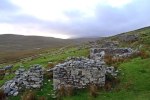
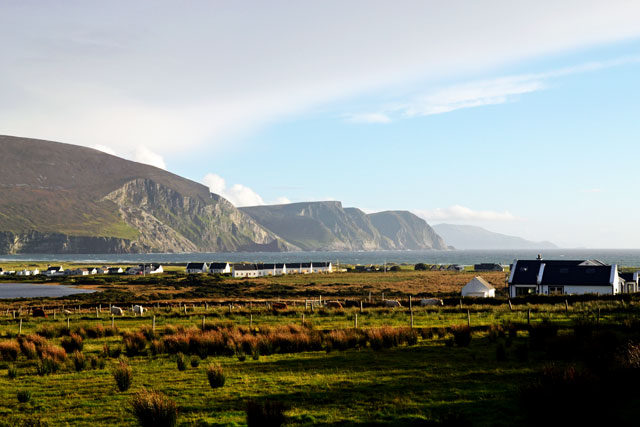
Northwest less than an hour from Westport is Achill Island, Ireland’s largest island (connected by a bridge).   This was another totally different view of Ireland than what I had experienced before.  It is a vacationers’ area with beaches and hiking and biking trails, and remote.  Archaeological remains are here too, and I hiked to see the Deserted Village on the slopes of Slievemore Mountain.

And, as I was leaving the sun final came on strong. This is looking east back at the Atlantic Ocean

IR-92

WOW — that was a great deal to show you — but I told you I did alot of driving.  Today, Thursday, was not as much driving, and I got to spend hours in 3 museum areas — so, will probably work on that post at the airport, since I want to finish this up and post it.  Good night, RAY

PS – just looked at my notes — fast fact to share that I learned from the volunteer at the Westport Heritage Center where she had the half-door open at the top.  The reason there were half-doors (or, Dutch Doors) in early homes was to let in more light.  Homes were taxed based upon the number and size of windows.  Thus, windows were small and few of them.  Leaving the top half of the door open let in some light and prevented the tax collectors from additional DAYLIGHT ROBBERY.

Posted in 2013-c - IRELAND 2013, Uncategorized | 3 Comments

A DAY EXPLORING THE BURREN — 14 October 2013

Let’s see, I left you last looking out the front door of my B&B (CAPPABHAILE HOUSE) looking at weathered limestone.  Have I ever told you that I cannot get enough of Ireland??  One day in The Burren is not enough!  During Crowell’s conquests in Ireland in 1649-52, one of his generals best described The Burren (meaning a stoney place) as  “a country where there is not enough water to drown a man, wood enough to hang one, or earth enough to bury him.”   It was forested in prehistory, but stripped by man probably 10,000 years ago.  It is an area, about 140 square miles, of a limestone plateau formed under an ancient sea.  This small area is an archaeological treasure trove of upwards of 3,000 sites including cairns, ring forts, tombs of various types dating many thousands of years ago.  More recently, religious orders built many abbeys, monasteries and churches (a couple I showed you before) that date back over 1,000 years with fascinating ruins extant.

Newtown Castle behind my B&B

Newtown Castle behind my B&B

My host at the B&B, Conor, sat down with me at breakfast, and marked up a map with all the places I had to go to get a good overview.  His knowledge of 1,000s of years of area history, plus all the writers and poets who lived in the area making it popular, amazed me, and I am glad I can remember enough to want to learn more.  He even loaned me 4 books to read to further whet my appetite (I already have ordered 3 of them).  Conor and his wife built their B&B 12 years ago, but it looks like an old farmhouse, which inside is a spacious luxury accommodation.  I will digress — quality B&Bs are a bargain in Ireland.  Two have cost me (for a single – slight surcharge as usual) 50 Euros a night, and one is 45 Euros (50 Euros is about $67 USD). I don’t mind paying $125 for a US B&B that is clean and unique and finely appointed, and I am good at finding them. Food however, overseas, is more (maybe because tax is included?)  The prices of meals here look similar to the US, but the 17.95 Euro dinner is really over $24USD).  Now, fuel, Americans have to stop complaining.  I love my small 6 speed diesel, and there is a reason — 1.49 Euro for a liter of diesel would equate (I will do the math for you) to $5.63 USD for a gallon of fuel.  I have “Ray’s Review of Roads,” too, but I will save that for later.

Model of Newtown Castle I saw in the Burren museum at Kilfenora. Click to enlarge so you can see method for relieving yourself.

Model of Newtown Castle I saw in the Burren museum at Kilfenora. Click to enlarge so you can see method for relieving yourself.

I will trust that you have your map of The Burren in front of you.  Conor had me start at the Newtown Castle right behind his place, and then head up to Galway Bay to head to the northwestern tip at Black Head.

Looking toward Black Head along Galway Bay

Looking toward Black Head along Galway Bay

I followed the coast (on the backroad – natch!) to Doolin, then up

Doolin is a small fishing village, a ferry landing to the Aran Island, and dozens of resort B&Bs

Doolin is a small fishing village, a ferry landing to the Aran Island, and dozens of resort B&Bs

As I climbed the hill out of Doolin I saw the Doonnagore Castle.

Doonnagore Castle

Doonnagore Castle

Then around some hills to The Cliffs of Moher at the southwest end of the peninsula (for lack of a better description).   As you will see in the videos (two different), it was an overcast day.  I stopped at the center, which was not crowded, because it is something you have to do.  But the best views you will get will be in travel travel promotional films.  But it is something you have to do.

The northern end of the Cliffs of Moher from the visitor center.

The northern end of the Cliffs of Moher from the visitor center.

And here is something you are not supposed to do !!!

IR-34

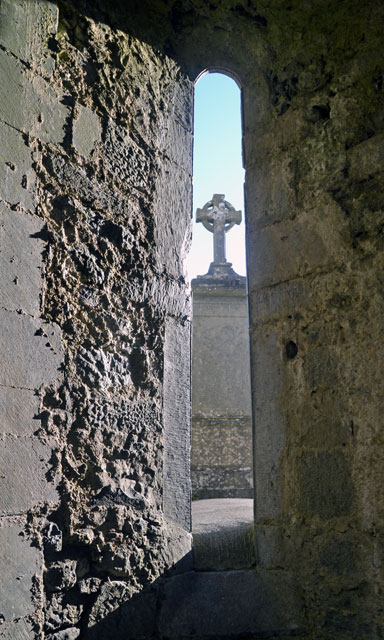
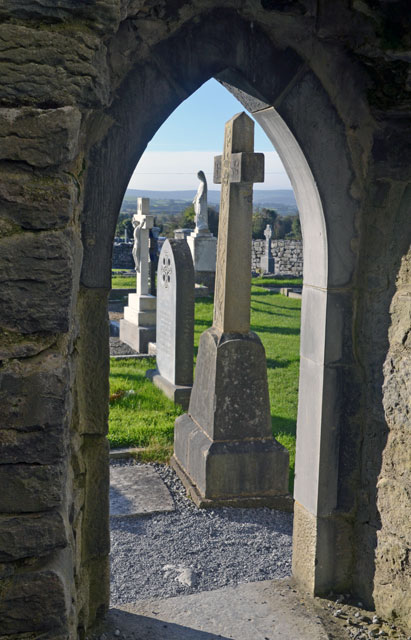
I enjoyed the Burren Centre museum at Kilfenora even though it is small (but concise), and then explored (and photographed) the 11th and 12th century Cathedral and Crosses adjacent.

Inside the Kilfenora Cathedral

Inside the Kilfenora Cathedral

Twelve foot cross almost 1,000 years old, restored from two broken sections.

IR-37

And down the road a piece at my turn to repeat my trip across the top of The Burren is the Lemanagh Castle.

Lemanagh Castle

Lemanagh Castle

R480 is the route I recommend, and the high point is the Poulnabrone Portal Tomb, dating to about 3600 BC, and the most photographed megalithic monument in Ireland (remember in June I gave you the most photographed Lighthouse in Canada?).

Poulnabrone Portal Tomb

Poulnabrone Portal Tomb

Here is a gallery of some other views along this route. (remember to click on an image to open a slideshow)

And I completed my introductory tour (need to find an archaeology program to attend here) in time to scoot off to Kinvara to attend a medieval banquet at the Dunguaire Castle which is a 16th century tower house.  Read about this in the Rick Steves’ guide, it is just one of those must do silly fun things.

Arriving at Dunguaire Castle

Arriving at Dunguaire Castle

Spoons were not used, so we lifted out soup bowls to slurp and drink away.  Following the desert course a full show went providing tales and anecdotes about history and writers and poets who have made the area famous.

And, sadly time to leave…

IR-54

I could go on and on throughout 1,000s of years of history that I have learned, but I won’t simply saying:

RAY RECOMMENDS:

1) Discover and tour The Burren region of Ireland

2) Attend the Medieval Banquet at Dunguaire Castle (equidistant from Galway and Ballyvaughan), or attend the affair at Bunratty Castle closer to Limerick.

Posted in 2013-c - IRELAND 2013, Uncategorized | Tagged , , , , , , , | 5 Comments

BACK IN IRELAND — 12 and 13 October 2013

YES, I am back in Ireland – third trip since I realized in 2011 that it would take five trips to give justice to this beautiful and small country (1/140 the size of the US – about the size of Indiana).  I left Boston at 9PM Friday night, arriving in Dublin at 8AM, Saturday 12 October, and was on the road to Galway (due west) at 10AM.  I took the motorway across country to be able to have a half day in Galway.  The area I traversed is essentially open and flat.  I arrived at my B&B in Galway by 1PM.  My hostess had said I could check in early, so once I freshened up, off I walked the 5 minutes to town.  After some words and itinerary this is mainly a picture show (sorry it has been cold and overcast), and make sure you see the last one.  (remember to click on any thumbnail to open up a slideshow/gallery)

Pedestrian Shopping in Galway

Pedestrian Shopping in Galway

Galway is small – main sites are walking.  A “city” of 70,000 (with 20,000 students), the population can jump to 150,000 during the summer and festival times.  I toured the square and pedestrian shopping area (sadly the museum was not worth it), and decided I should get on a tour bus.  Timing was perfect, I found the stop minutes before the 3PM start, the last of the day.  In fact, if I had not walked up they would not have left with the one other person.  I got a nice overview of the city and surrounding area that I would not have achieved driving.  Guide was good, and an hour well spent to get the overall feel of Galway.  Then back to walking around to some spots including the  Saturday market the guide mentioned.

But with over 5 hours on my feet after only a few hours rest on a plane I knew I was not going to last, so back to the B&B to plan Sunday and sleep.

For Sunday, get out your road map of Ireland, and if that is not in your travel collection bring up the maps on your IPAD (I make screen saves of everyone I may need) or on Google maps.  I had read that  about 23 kilometers back to the east is the medieval walled city Athenry, which I decided I had to see, and was not going to be out of the way because I wanted to backroad to Ennis and then head back up to my next B&B in Ballyvaughan in The Burren.

Here I am, “SHUNING” the “SHUNPIKE”

IR-10

And this is what I can find … probably a medieval Norman 11th or 12th century remaining tower on private land.

IR-11

So from Athenry, follow R347 to R446 to Loughrea to pick up N66 to Gort, and continue south on R458 to R462 then passing through Tulla to get R469 back towards Ennis.  Plan was to see a medieval tower and museum of medieval life in Craggaunowen (supposed to be open early Oct – now closed), and then stop at the Knappogue Castle and Walled Garden (well at least I got to tour the garden – castle was closed).  From Ennis follow me along R476 north to R480 which enters The Burren.  Words cannot describe The Burren, but I will try with my next post.  The drive over R480 is amazing, and I will be repeating it tomorrow.

and, the view from outside my B&B in Ballyvaughan – note the weathered rocks — so much to learn and tell you!!!  Good night.

IR-26

Posted in 2013-c - IRELAND 2013 | Tagged , , | 4 Comments

PLYMOUTH NOTCH, VT and LEAVES – 2 October 2013

If I were to ask you, “where is my favorite place?”  You had better answer, “Calvin Coolidge’s birthplace, Plymouth Notch, VT.”

Driving across southern New York state last Saturday, the color on the leaves on high elevations was wonderful.  And the Saturday before crossing VT Route 9 the colors too at the high elevations were wonderful.  I was afraid I would be missing the color back home, and I am still not sure — it has been a strange year.  The weather was beautiful today, Comcast’s computer connection was down, and BLACK BEAUTY said, “let’s go.”  So off we went a tad before 3 PM for a “three hour tour.”  In many places the trees are bare, and peak spots and views will be mixed this year, I have no idea.  But here is the fun we had today.  Enjoy my little slice of “God’s Country.”  Yours, RAY

About my best color view was on VT 100 just below Echo Lake

PN-1

This is behind the President’s homestead from the Cheese factory

PN-2

Looking down the street from the Cheese factory

PN-3

No explanation necessary, you know one of my fetishes

On President Coolidge's porch.

On President Coolidge’s porch.

The Wilder House and barns to the south

PN-5

Top of the Notch

PN-6

You saw this last month, sans fall decoration

PN-7

Off into the fields

PN-8

“She” did not want to leave!!!

PN-9

And, I am back to trying panoramas, click to get the full effect, but come back !!!

PH-10

Posted in Miscellaneous Musings, Plymouth Notch, Vermont | Tagged , , , , , | 2 Comments

FIVE HOUR TRIP COMPLETED IN TWELVE HOURS – 28 September 2013

Sadly I left the Atheneum Hotel about 12:30 on Friday the 27th, andWH-1 travelled back roads to Corning and then to Pine City, NY where I stayed at one of the best B&Bs I have stayed in – The Rufus Tanner House.  Donna and Rick have done a splendid job for over a decade, and if you are in the Elmira area I highly recommend you plan to stay with them.

My room at The Rufus Tanner House, but check their website for more.

My room at The Rufus Tanner House, but check their website for more.

WH-3The plan for Saturday was to backroad home via Cooperstown.  But first I had to make a few visits in Elmira.  Now, if I asked you, “where is Mark Twain buried?”  you may say Redding, Connecticut (next to my hometown) where he died, or Hartford where he had lived or in Missouri where he was born.  I was surprised to learn he was there in Elmira, but it becomes clear when you realize that his wife was from there, and they summered there for years, providing stability in his life.  In fact, built on the family’s Quarry Farm on East Hill, and patterned after a riverboat pilot house this octagonal building is where he wrote eight of his famous works.

Mark Twain's study on the campus of Elmira College.

Mark Twain’s study on the campus of Elmira College.

In 1952 it was moved to the campus of Elmira College and has been

WH-5preserved with original furnishings as though he left just yesterday.  Here is some great history I found on NPR.

Out of Elmira heading east on I-86/NY 17, I saw a sign, Newtown Battlefield Historic Site.  “What? Need to know what that is about.”   And since you are now wondering too, it was here in August, 1779, the Continental Army engaged in battle

New Hampshire's 1929 plaque commemorating it's native son, General Sullivan.

New Hampshire’s 1929 plaque commemorating it’s native son, General Sullivan.

with the British regulars, Loyalist rangers and 1000 Iroquois Indian warriors.  Known as the Sullivan-Clinton Campaign, this was the decisive clash in one of the largest offensive campaigns of the American Revolution. This expedition has been regarded as punishment to several tribes among the Six Nations of the Iroquois Confederacy who had sided with the British in the war and had attacked frontier settlements.

Passing through Binghamton, I travelled a few miles on I-88 and exited for NY7 (yes the same NY7 that I travel from Bennington, VT west to Troy and points west).  Not having been in this part of the state before, I had to experience the back roads and villages.  I stopped at three interesting antique centers: a barn, a grist mill, and an old factory.  Do you remember exactly 2 years ago today my post when I proclaimed

My "Billy" The Rocking Goat

My “Billy” The Rocking Goat

“Ray, the Great American Picker” when in Vermont I purchased a rare circa 1905 De Moulin Bros. Rollicking Mustang Goat?  Thanks to a “Google-Alert” I subsequently sent it to be proudly displayed at the De Moulin Museum in Illinois (great website, take a look – you can see my “former” Billy on the About Museum page).  Well, here was another one — so back to the car for IPhone, I call the museum, and John who I worked with answered.  “Yes, I do remember you, and am standing right next to your goat.”  “Well, I am next to another one, may I send you a picture,?” I asked.  Well, the one I WH-13now saw was made the majority of the years the company was manufacturing, so one of the more common, and John had one.  “But, it is so great to have another set of eyes, keep searching,” he encouraged me.  So, Ray will continue to be one of the great “American Pickers”  — I am because I found three asterisks in printer’s type for Jan recently — a punctuation mark seldom cast in type.

You know I am not much of a sports buff, but thought I should see the Baseball Hall of Fame in Cooperstown, but somehow was stalling so maybe it would be closed when I arrived.

Baseball Hall of Fame in Cooperstown, NY

Baseball Hall of Fame in Cooperstown, NY

Why Cooperstown, you ask?  Abner Doubleday (the famed Civil War General from there) is credited with inventing the game as we know it in 1839 in town.  I arrived at the museum at 3:45 with an hour and a quarter before closing, and figured, “I am here…”  Glad I did, and am sorry that I had such little time, but at least I made it.  An exceptionally well done museum, and I can see if you knew the players and teams how much meaning it would have, but I spent the most time with the early history displays learning the times and culture when it was introduced that lead to it becoming America’s Favorite Pastime.  I did get to walk through and see (but not read) everything, but one recommendation if you have limited time — SKIP THE MOVIE.

Nice theater and effect, but just "puff."

Nice theater and effect, but just “puff.”

I love starting with the introductory films because of the capsule of history they give, but this film was just RAH, RAH, BASEBALL.  I could have used that 13 minutes to better advantage.  Cooperstown is quaint at the foot of Otsego Lake, and baseball stores predominate in the Victorian storefronts.

I loved the early baseball history displays.

I loved the early baseball history displays.

The image below has an original ticket booth from Yankee Stadium, used up to 1979 if I remember correctly, along with statues of longtime (decades) of unique fans at various stadiums — fun.

WH-10


And here is the main focal point of the main floor Hall of Fame.

WH-12

Wooden statue of "The Babe."

Wooden statue of “The Babe.”

Upon leaving I followed Route 31 up the east side of the lake taking in gorgeous views.  Reaching US Route 20, I headed east to Albany on this old original route.  I have been recently finding websites for the “old roads” and the Route 20 Association of New York State is doing a good job of sharing and preserving our road heritage.  I was amazed that most of the road was divided four lanes, and the views commanding.  You can almost make as good a time (except for passing through villages) as if on the NY State Thruway just north to replace US 20.

What is next?  Well I know, and will soon share.

RAY RECOMMENDS:

  1. A trip to Cooperstown, NY and the Baseball Hall of Fame, and a trip up the east side of the lake
  2. Get off interstates and take the wonderful old main roads and routes – experience US20 — I have to return soon for the whole distance
Posted in 2013-b - CHAUTAUQUA, Uncategorized | Tagged , , , , , , , , , | Leave a comment

I LOVE LUCY – JAMESTOWN, NY – 25 September 2013

This is being posted Friday night, 27 September, from from one of the nicest B&Bs I have ever stayed at – The Rufus Tanner House in Pine City, NY – just outside Elmira.  Worth the trip.

I played hooky Wednesday afternoon, and drove a few miles south to Jamestown, NY, birthplace of Lucille Ball.  Hey, if you are nearby, and you grew up with Lucy (who hasn’t – continuously showed for over 60 years) you have to stop.  And, it is worth the stop.  The architecture around town is great too.

LB-1In two parts   THE LUCY DESI CENTER FOR COMEDY includes I Love Lucy memorabilia; and next door, the Desilu Studios which is the home of the 50th anniversary traveling exhibit of sets and history that made its permanent home here in 2005.  Enjoy their website, and in way of introduction here are some details from their website:

The LUCI DESI MUSEUM  – Since 1996, Lucy’s hometown has welcomed visitors from all over the world to the Lucille Ball Desi Arnaz Museum in the heart of downtown Jamestown, New York. Inside its doors you’ll find a warm salute to the First Couple of Comedy! Here you’ll see priceless costumes, awards, photographs, and other vintage memorabilia on display from the estates of Lucille Ball and Desi Arnaz.  — There is no photography in this area, but you can read all about what is there on the link above.

DESILU STUDIOS is devoted to the “I Love Lucy” TV series.  It is home of original props, costumes, memorabilia and more.  Inside, you’ll also find complete re-creations of Lucy and Ricky Ricardo’s New York City apartment and the Hollywood hotel suite where Lucy pantomimed with Harpo Marx and set her nose on fire with William Holden! — and here are some views from the 50th anniversary traveling exhibit.

THE IDEA

THE IDEA

HOW IT STARTED

HOW IT STARTED

LB-4

LB-5

The Second New York City Apartment (with window) – Kitchen behind the wall

LB-6

Suite from Beverly Palms Hollywood Hotel

LB-7

Film editing machine developed for the show.  Previously single cameras were used, but with I LOVE LUCY for the first time 3 cameras filmed at once, and then combined.  It took time to edit on one machine as done before which was easy with single shots.  With this new combination the three films taken simultaneous could be viewed at once and edited. (I LOVE LUCY was the first filmed TV show for distribution – formerly shows were televised live, and film made as it was broadcast for later distribution.  Sorry I forget the name of that poor quality process).

LB-8

Live Like Lucy! Bedroom Set: An example of the popularity of the First Couple of Comedy, the “I Love Lucy” bedroom set seen here was advertised in Life magazine in 1953 for $198.00. Purchased in 1953 by Gladys Viola Bladys of Springville, New York, this set was donated to the Lucille Ball-Desi Arnaz Center by her son, Don Bladys, in 2004.

LB-9

And when I left the museum I decided to drive back up the east side of Lake Chautauqua across the top and then back down the west side to the Atheneum Hotel.  Glad I did because I discovered Bemis Pt. and the old Hotel Lenhart (first built in 1880, burned, rebuilt in 1891, and run by the fourth generation of original owners).

LB-10

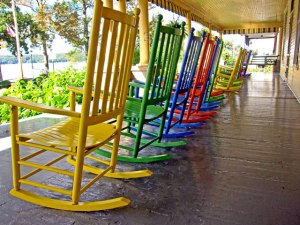
And yes rocking chairs.  I have now started a page for my rocking chair collection, and you will see another Hotel Lenhart line up there.

LB-11

Posted in 2013-b - CHAUTAUQUA, Uncategorized | Tagged , , , , , , , , , | 5 Comments

A TOWERING EXPERIENCE — ATHENEUM HOTEL – September 2013

Posted Friday, 27 September

Remember my excursion climbing up ladders through the attic and cupola to the top of the Town Hall the other day?   Are you aware of my interest in architecture and how buildings are put together?  And are you aware of my constant curiosity, and need to know?

This post will not go up until I have left the Atheneum Hotel in Chautauqua, NY.  I respect signs like “keep out” or “staff only,” even if it is only the back servant’s stairway which would be fun to see.  But if there is no posting, and a door is unlocked, it is “fair game,” right?  I got to explore the old attic in the Mt. Washington Hotel that way seeing the old staff quarters.  No sign, unlocked door. Cathy would not join me.

Remaining tower, originally there were two additional tiers.

Remaining tower, originally there were two additional tiers.

The hotel when built in 1881 had a three tiered Mansard Roof tower, but now it is but one section above the third floor.  Just to give you an idea of the height, there are 31 steps from the main floor to the second, and then 22 steps from the second to third floor where my room is (of course I am always walking them).  For comparison, at home I have 14 steps from the first to second floors.

Monday I went to the front stairway for the first time to go down to

Would you be curious?

Would you be curious?

breakfast.  But there were stairs going higher too, but with a wall blocking off the landing before the stairs came back to the next landing where the tower obviously would be.  “Gee, I would love to see the tower,” I say to myself.  But no, that door has two locks on it.  I get halfway down the stairs and say, “Gee, I wonder,” and walk up to the door. IT OPENS, and a few steps in I say, “go get your camera now!”

Below you see what I saw, that probably few people have seen (or cared about seeing).  With all the plaster and lath gone I assumed that it had been removed to reduce weight, and later I learned that the top tiers had in fact been removed in the 1950s due to concern over the stress caused by the weight.  An adventure, and a learning experience.  Enjoy the view!

Coming up the first flight

Coming up the first flight

Heading up the second flight.

Heading up the second flight.

A small formerly enclosed circular stair to the removed towers, now roof. I stopped before getting to the hatch (there is a limit)

A small formerly enclosed circular stair to the removed towers, now roof. I stopped before getting to the hatch (there is a limit)

TOW-4

Corner of Mansard Roof.

Corner of Mansard Roof.

Windows probably removed from the higher removed tier.

Windows probably removed from the higher removed tier.

Looking out towards the Lake

TOW-8

Out a window to the south

TOW-10

And looking north to the Miller Bell Tower and Pier Building

TOW-11

Another perspective of the Tower from the south

TOW-2

Posted in 2013-b - CHAUTAUQUA | Tagged , , , , | 3 Comments

CHAUTAUQUA INSTITUTION – Experienced 22-27 September 2013

I had to experience sleeper car train travel. I had to experience a trans-Atlantic crossing. I had to experience Star Island, and now I am experiencing Chautauqua (but in an off-season mode).

Church Camp Meeting grounds began in the early 19th century as week or two week retreats, usually by water for religious spiritual learning.  Originally attendees lived in tents on small close lots.  In 1873 the Chautauqua Lake Camp Meeting Association established a small camp here.  Akron, Ohio manufacturer, Lewis Miller, and John Heyl Vincent, a Methodist minister, having similar ideas for standardizing teaching methods for Sunday School teachers joined forces and rented this location in 1874.  The initial mission was to bring ministers, Sunday school teachers and superintendents, along with some families to study Sunday school teaching methods and norms.   With its immediate success, the new Chautauqua Institution purchased the grounds and soon expanded into a summertime center for adult education and cultural enrichment.

Also at this time people were wanting to learn more, and the need for education was expanding.  This faith-based summer resort from the outset offered both religious and secular education which blossomed into the Chautauqua Movement.  By the early 1900s, more than 300 Chautauqua-style resorts associated with various Christian and Jewish congregations had been established from New Jersey to California.  The word Chautauqua became, and is today, the generic descriptive term for resorts that blend the summer season with religion, education, cultural arts and recreation.

The summer season here is 9 weeks during which time 4,000 to 8,000 people on any given day may be here to partake in lectures, concerts, theater, and mind-stimulating discussions.   In the 66 day season this year there were over 2,200 events one could attend.  The season is over now, but this Road Scholar program, with over 200 people, immerses the participants in lectures and discussions during the day, and cultural activities at night.  We have the grounds essentially to ourselves, and most of our activities are in the Atheneum Hotel (atheneum is Greek for “House of Learning”).

Start of my walk for you. See below. (I had to show the hotel again!)

Start of my walk for you. See below. (I had to show the hotel again!)

The full details are on the Road Scholar website (expand the daily schedule).   Mornings are three hour lectures, electives in the afternoon, and musical entertainment in the evenings.  Monday the morning session was a fascinating presentation on Assassinations.  Learning How to Listen to Music was Tuesday.  Something I never would have done on my own, but I enjoyed every note and comment gaining a new appreciation to this art.  Wednesday lecturer on the Civil War in 1863 was knowledgeable but a very poor presenter, and this morning’s session was titled “Making an Impact for Future Generations: A Look at Our Legacy.”   I have so much to share from this, my note to self is to work on a separate post to share what I learned from this, and from the book I read on Chautauqua’s history that I have owned for over 20 years and brought with me to finally read in the right environment.  Tomorrow’s lecture I believe is on poetry.

So, to keep this short(er) I am going to close with a look at some of the historic spots on the grounds followed by a gallery of architectural images.  Enjoy, and:

RAY RECOMMENDS:  Plan a couple days or more on the grounds of Chautauqua Institution and immerse yourself.

Starting this walk with another view of the Atheneum Hotel (above).

Bestor Plaza: The Common with shops, the post office, bookstore, food and library.

Bestor Plaza

Bestor Plaza

The Ashland

The Ashland

THE ASHLAND — I stayed here for a night in the early 1980s.  “Timing is Everything”  A fellow asked me why I was taking a picture and said,  “the owner is here I will tell her to show you around.”  She enthusiastically toured me throughout (I did remember the layout of the floor I stayed on) and showed all the work she had done in the last 22 years.

The Auditorium with seating for 5,000 and overflow for many more.

HA-4

The Miller Bell Tower (1911) and Pier Building (1916) that replaced the original boat landing building that was the original entrance until the trolley and automobiles brought vacationers to the road at the top of the hill.

HA-5

A model of Palestine, its Biblical towns and the Mediterranean.  Used from the beginning to teach children and adults Bible history and geography.

HA-6

Site of the first meeting.

HA-7

An early cottage from the beginning, about 1875, and originally built on a tent platform.

HA-8

The Miller Cottage.  Built by the founder.  To be ready in time for President Grant’s visit in 1875, the building was prefabricated in Akron, and moved to the site for rapid assembly.  Miller’s daughter, Mina, later became Thomas A. Edison’s second wife, and they did vacation here often.  In the original family since new, the cottage is on the Historical Register and now on the market for $2.3 million.

HA-9

Alumni Hall of the Chautauqua Literary and Scientific Society which is the oldest continuously operating book club in America.  Attendees partake in a four year reading program for graduation.

HA-10

Hall of Philosophy which is used daily seating over 2,000 for various lectures and programs.

HA-24

And, you know me and collecting rocking chair images.  You may like to view and follow this rocking chair page I started last night,

And, a postscript:

VACATION YESTERDAYS OF NEW ENGLAND by William H. Marnell is the book that solidified my interest in summer resorts coupled with my owning a Victorian summer cottage in a late 19th century camp meeting ground community patterned, in fact, after the Chautauqua Institution on the western shore of Chautauqua Lake.  I brought with me on this trip two books about the history of Chautauqua, one written in 1943, CHAUTAUQUA: AN AMERICAN PLACE, which I have had in my library unread for over 20 years (I started it last night) and a second book CHAUTAUQUA: IT ARCHITECTURE AND ITS PEOPLE, that I purchased here in the early 1980s.

Posted in 2013-b - CHAUTAUQUA, Uncategorized | Tagged , , | 2 Comments

“THE REAL BEDFORD FALLS” – TREKKING ACROSS NEW YORK STATE – 21-22 September 2013

On Saturday, 21 September, I pulled out of the drive at about 7:20 AM and headed west.  Down I-91, exit 2 and headed west on VT 9 across the state and into New York.  FOLIAGE ALERT — I could not believe the beautiful colors on leaves already turning on the higher elevations on Route 9.  Pay attention, some beautiful deep reds, oranges — I just could not believe it about 3 weeks before we should see anything.  My first “cheat” for the day (in a need to make time and still have half a day exploring) was to take the new bypass around Bennington (I had only been on the part from US Route 7 west previously).  Arriving in Troy I crossed the Hudson on NY 7 and picked up I-87 south to connect with the New York State Thruway.  I know, UGH CHEATING, paying for a turnpike, no shunning and a $6.05 donation — but I had a plan.

I am headed to arrive at a program at Chautauqua, New York starting at 3 on Sunday, thus an overnight on the way.  The early start was the plan to arrive in the Finger Lakes area for four full hours to explore and learn.  Unfortunately I did not  spend the  planning time for this trip that I should have, but Seneca Falls jumped out as a place to explore.  At the northern part of Gayuga Lake, a canal via Waterloo to the west connects Seneca Falls to Seneca Lake.  I read of the Seneca Falls Visitors Center and Museum of Waterways & Industry, but the clincher was the IT’S A WONDERFUL LIFE MUSEUM.  Yes, the “real” Bedford Falls is Seneca Falls — but you just read the convincing story on their website.  (click second link for the story)

BF-2

I exited the boring pavement of the NY Thruway for I-481 in Syracuse to pick up the “old route” US 20 to view some back road scenery.  On that route I passed the most pristine upscale village, Skaneateles, at the tip of Skaneateles Lake.  I arrived in Seneca Falls at 1PM, and first toured the Visitor Center and Waterways museum.  Fascinating history, I love to know why a town is where it is, and again it was the vision of a few BF-1people establishing a town to take advantage of the water power.  Some major firms were established here.  Next I walked down to the small IT’S A WONDERFUL LIFE MUSEUM.  If you have ever watched the movie, you know it is the best, and watching had better be a yearly tradition.  I was the small museum’s first (and possibly only) visitor for the rainy day, and the enthusiastic host made me so welcome.  This is small mill town early 20th century personified.  George Bailey’s daughter, Zu-Zu, has visited often, and contributes to the now yearly celebration (conflicts with A CHRISTMAS CAROL, or I would go – well also conflicting is the Norman Rockwell Stockbridge, Massachusetts Christmas Street recreation — how can I do it all?).  She is a tad older than I am, and very charming (she was 6 when the movie was filmed in 1946).

In the rain I walked around town and crossed the bridge which may have given Frank Capra the inspiration to have Clarence stop George from jumping.  Then I walked up to the Woman’s Rights National Historical Park where I took in the video and toured the exhibits.  In July, 1848, some 300 women gathered at a chapel in Seneca Falls to hear the first formal demands for women’s rights from Elizabeth Cady Stanton and other area women.  The movie and exhibits really open one’s eyes to the subjugated life women held in the 19th century (and prior) and the overall changes that came about since that important meeting.  Take some time to learn about this.

Remember to click on any image to open the larger gallery

The rain not abating, I continued west on US 20 following the Cayuga and Seneca Canal (remember I love canals) to Waterloo.  I passed the Waterloo Memorial Day Museum, but then stopped and checked the internet for their hours, and called.  It was 4 PM and the fellow on the phone said he was just leaving (the website stated open everyday to 5).  “Oh, they have not changed that yet,” he said, “put please come, I have not had anyone visit yet today.”  And I did, to end up with an interesting one hour personal tour of the restored mansion with in depth Civil War and GAR exhibits.  It was  in Waterloo that on May 5, 1866, the first Memorial Day exercises were held honoring those who had lost their lives in the War Between the States.  Previous celebrations were welcoming home and commemorating those who fought.  Those giving the ultimate sacrifice had been overlooked.  A wonderfully documented tale, and on the 100th anniversary a resolution of Congress officially recognized the town as the birthplace of Memorial Day.  Lots to learn here, the tour was nice, but the lonely and chatty historian would not stop sharing and let me read all the panels.

Down Route 96 then to Interlacken and my B&B.  I do not understand the high prices in this area, and also the lack of accommodations (thus the high prices, I guess).  But my innkeeper is friendly and the room large and clean — just not the authentic 19th century ambience I am used to, especially for $150.  But her recommendation to have  dinner down the road at the Americana Winery’s cafe was fabulous.  Wish I could have had all the meals that passed by me, but my Salmon Salad was just right.

So, it is Sunday (early still)  I will prepare yesterday’s images for upload, and work on my route for my remaining 3 to 3 1/2 hour drive at breakfast.

Departing about 9:30 I took 96A (check your maps) west to 414 turning south with Seneca Lake to my right.  It is impossible to throw a stone on 414 without hitting another winery and/or its fields of grapes.  Beautiful scenery eventually leading down to the lake.  This is what the Finger Lakes is all about.  To be truthful, many of the NY town and cities names I have always heard I have not placed on the maps in my mind.  I forgot that Ithaca was just south of me (been there once over 40 years ago), and to my pleasant surprise Watkins Glen is at the foot of

For Scott and Rich

For Scott and Rich

Seneca Lake with Corning about 20 minutes further south – the way I was headed to then cut west.  Watkins Glen was cute, a little campy reminding me of Lake George, NY, but probably because of the race track there which evolved from Watkins Glen being the spot for the first road races in the US.  I stopped briefly at the Watkins Glen State Park seeing the cuts into the rock, but then drove out of town, up, up and up a country road to the race track.  What views.

Continuing south to Corning to pick up back roads west I said, “dummy, Ray, you are here, the Corning Glass Museum is here, so STOP.”  And I did for over two hours.   This video tells why the museum is here (the few seconds of the beginning are at the end – I started late)

World-renowned  (I have even sold books to their research library) and worth a stop.  I had no idea that such wonderful work was artistically done in glass 1,000s of years ago — and it is all on display there.  Being of more recent mind, I found the exhibits on US glassworks and developments of most interest.  But, believe me, I did not scratch the surface, and you can easily spend a full day there — I will go back.

Some images from inside the museum

But, checking WAZE on my IPhone I was still 150 miles away from Chautauqua, and felt the timing would not be right for the back route I was thinking about, plus there really were no towns along the way to explore.  So, I hopped on I-86 (at least free, so not really shunpiking – no I am fooling myself – I cheated again), and arrived shortly after 4 PM for checkin at my program here.

The view from my window

The view from my window

I will spend more time filling you in on the history of this special place, and my long-term interest and the impact on my life, but in closing I will just share some images with you of the Athenaeum Hotel, built in 1881.  If you know me by now, you know why I wanted to come here to experience the hotel, the grounds, and the experience.  Talk to you in a couple days, as always, yours, RAY

CA-15

Chautauqua will be a photo taking delight for me: Victorian, architecture, early summer resort — here is a taste to come (remember to click to open up)

RAY RECOMMENDS:

  1. Enjoy touring the website of the IT’S A WONDERFUL LIFE MUSEUM
  2. Plan a visit to the CORNING MUSEUM OF GLASS
  3. Ray, Try not to be so wordy !
Posted in 2013-b - CHAUTAUQUA, Uncategorized | Tagged , , , , , , , , , | 2 Comments