
I started writing this adventure on November 16, it is now two weeks later the 30th, and I do hope I get to share this evening, as December 5th marks a 250th anniversary of an event I recommend you follow. But….
Long overdue to visit again here, as you may know I have other trips to share still going back years.
Not too far away, the Ticonderoga area has lots to explore and easy to get to simply crossing Vermont, and then head north from Whitehall, New York. I decided to head south on Route 4 from Whitehall for awhile, but turning around I did not realize I was at Sally’s and since late, went in for chili in a break bowl — good.
Heading back north, I have often stopped at Champlain Canal Lock 11 (north of Route 22 near the prison. Always wanting to share this row of trees along the canal — now I am — a must see.


Heading back up north, and following Route 22 to my ultimate location – Putnam Station and my B&B I headed off the “main road” to see Dresden Station (below) — simply the old station itself with the main line and a siding.


Ahead of schedule a tad I continued north to Ticonderoga and turned right to the Fort, and the ferry landing from Vermont. One of my first outings in BLACK BEAUTY was to Fort Ticonderoga and Ironville in Fall 2010 – before “Shunpiking with Ray” days to document that tour. Below is the ferry landing (now closed for the season) looking across Lake Champlain to Vermont. And, below that BLACK BEAUTY and me on the ferry that fall day in 2010.


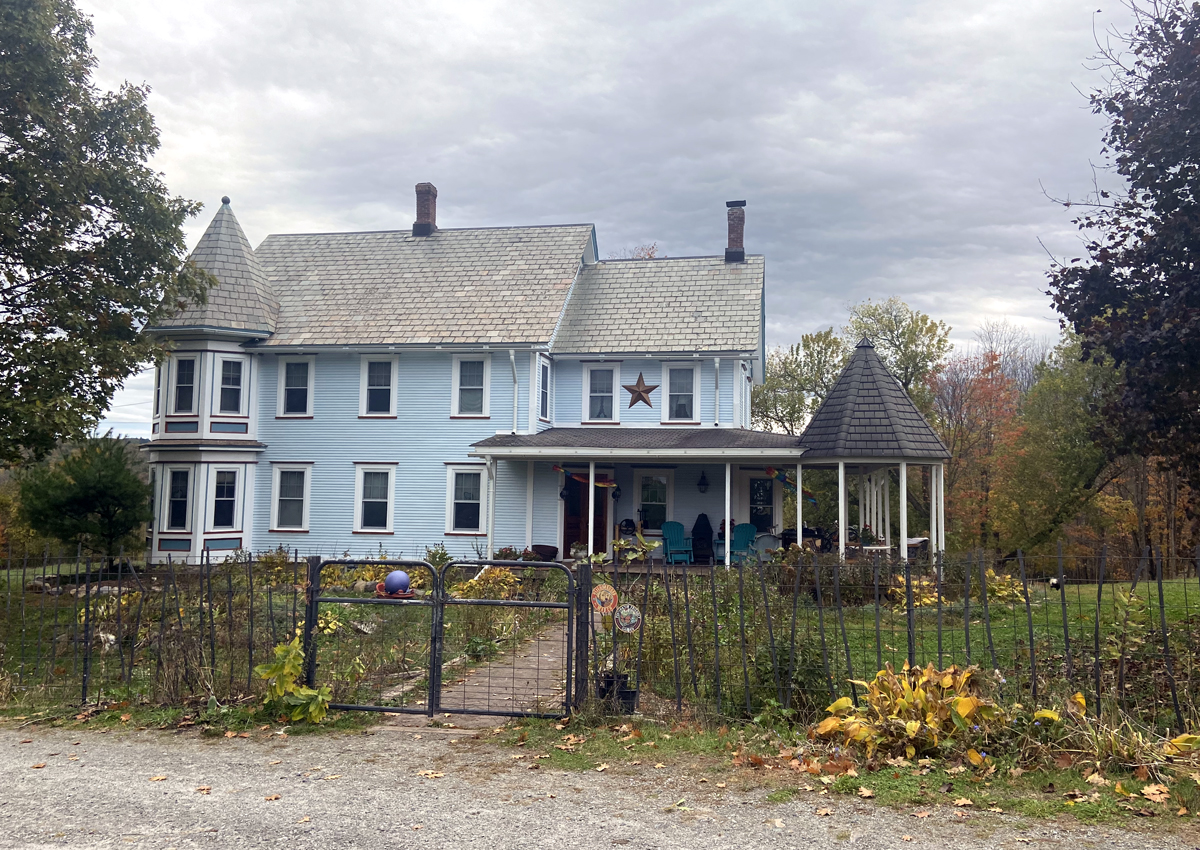
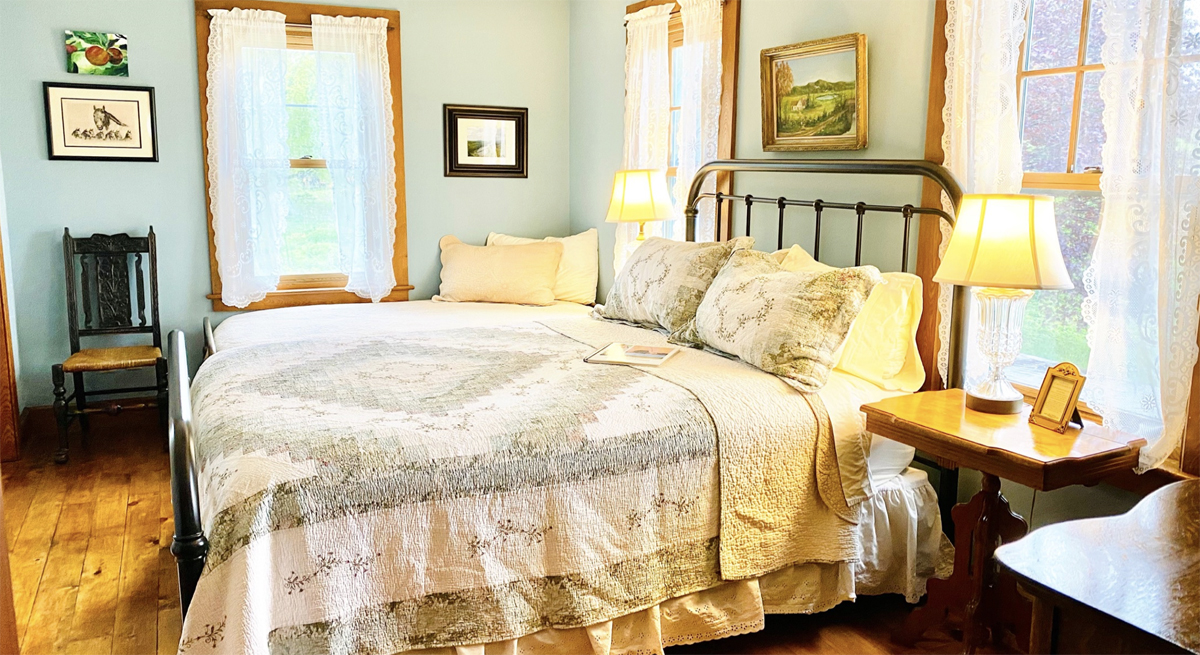
back then to the Inn on Lake Champlain for two nights — the old farmhouse, and my room below.
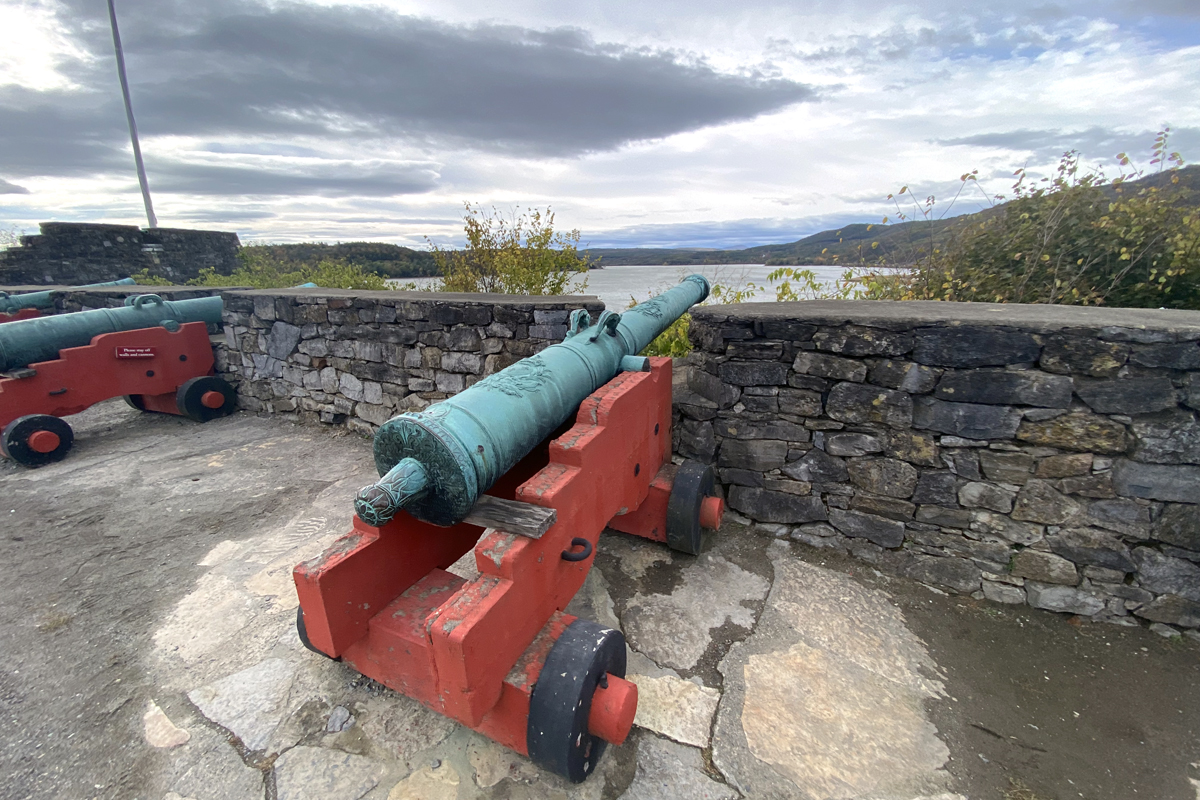
My plan for my full day between two overnights was Fort Ticonderoga. When I was last there (twice) you could tour the grounds, and not pay admission until leaving the gift shop to head to the fort – you could go to the cafe or shop without paying admission. That has changed. Below is looking south on Lake Champlain from the fort’s outer walls — Ticonderoga means “between two waters.” Winding north from Lake George through the town of Ticonderoga and coming east into Lake Champlain, is the La Chute River – just over the wall in the image below.
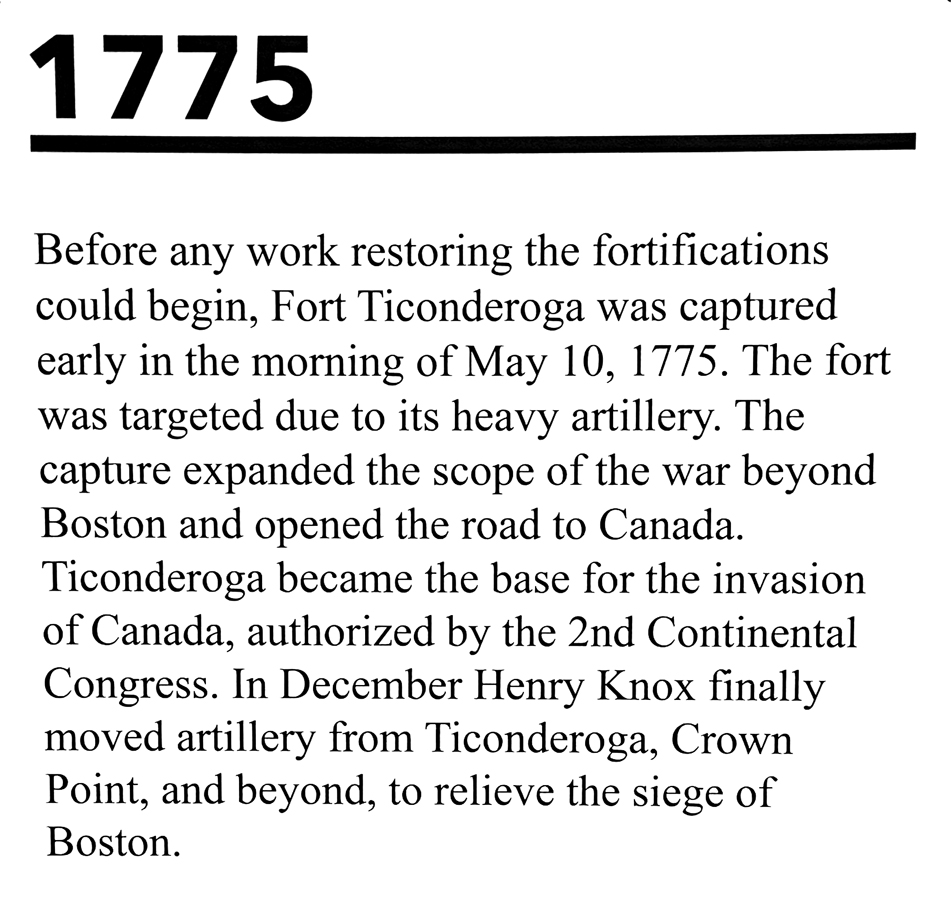
To set the stage “so to speak” here are four panels you can click to enlarge for a quick history of the area and American Revolution here. Not mentioned here (but an important display in the museum) is probably one of the most significant events leading to the Colonists’ success — Knox’s Noble Train of Artillery which left here December 5, 1775 – 250 years ago. Visit the Fort’s website where now you will find important links to this event on the home page – and with activities on-line this week.



below the parade grounds inside the fort, and below two views looking out windows – you should remember I like to share views framed by windows and doors. Bottom right is looking south west towards Mount Defiance (more later) behind the La Chute River.
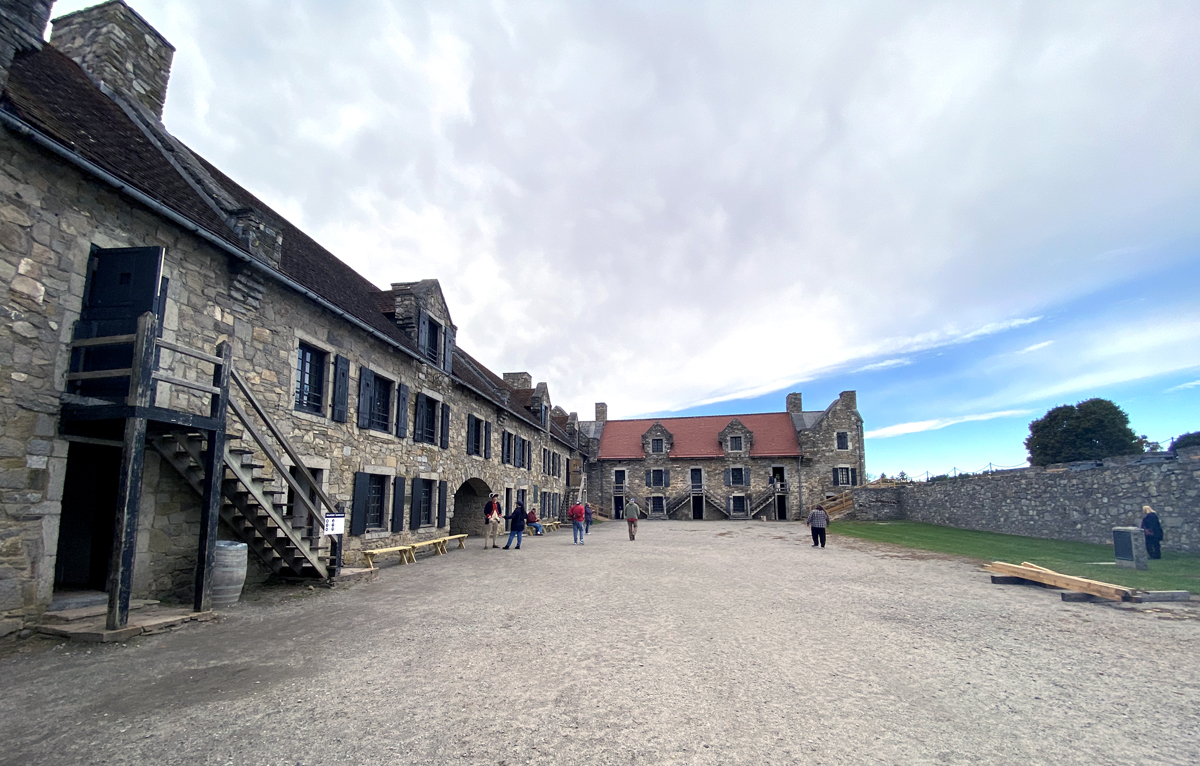


typical soldiers’ barracks, and this docent was relating his work as the cobbler.

below is a gallery of the panels you read leading to the entrance of the fort. As we approach looking back 250 years, I thought it helpful to share this brief concise history of the area from 1609 to 1820. Click to open the gallery to read the panels.


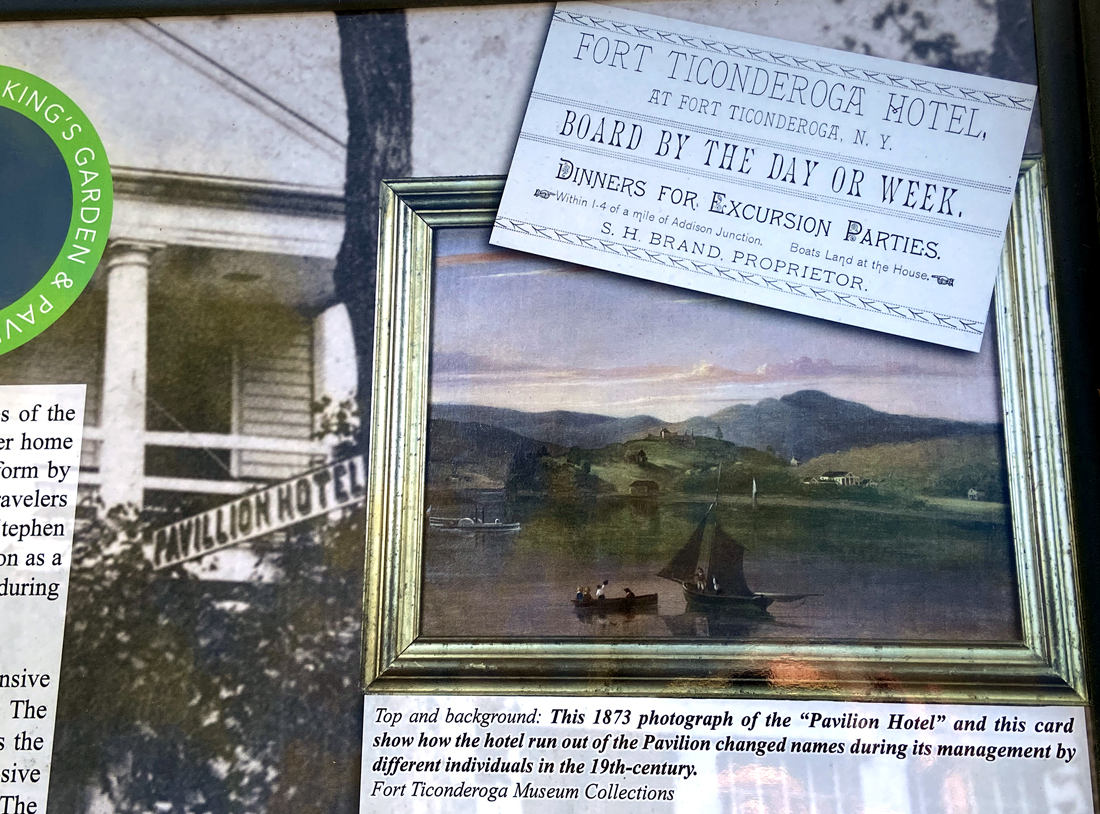
I had lunch in the cafe and then headed down to the Pavilion on the lake. Open the panels below for the history of this structure. The tour boat Carillion now docks in from of the Pavilion. Fifteen years ago I toured the lake on this boat, but at that time it docked at the ferry dock in Shoreham, Vermont.


Leaving the fort – with my token to gain entrance to Mount Defiance – I headed there, with details in the first panel below. My next two images are looking back at Fort Ticonderoga from Mount Defiance.
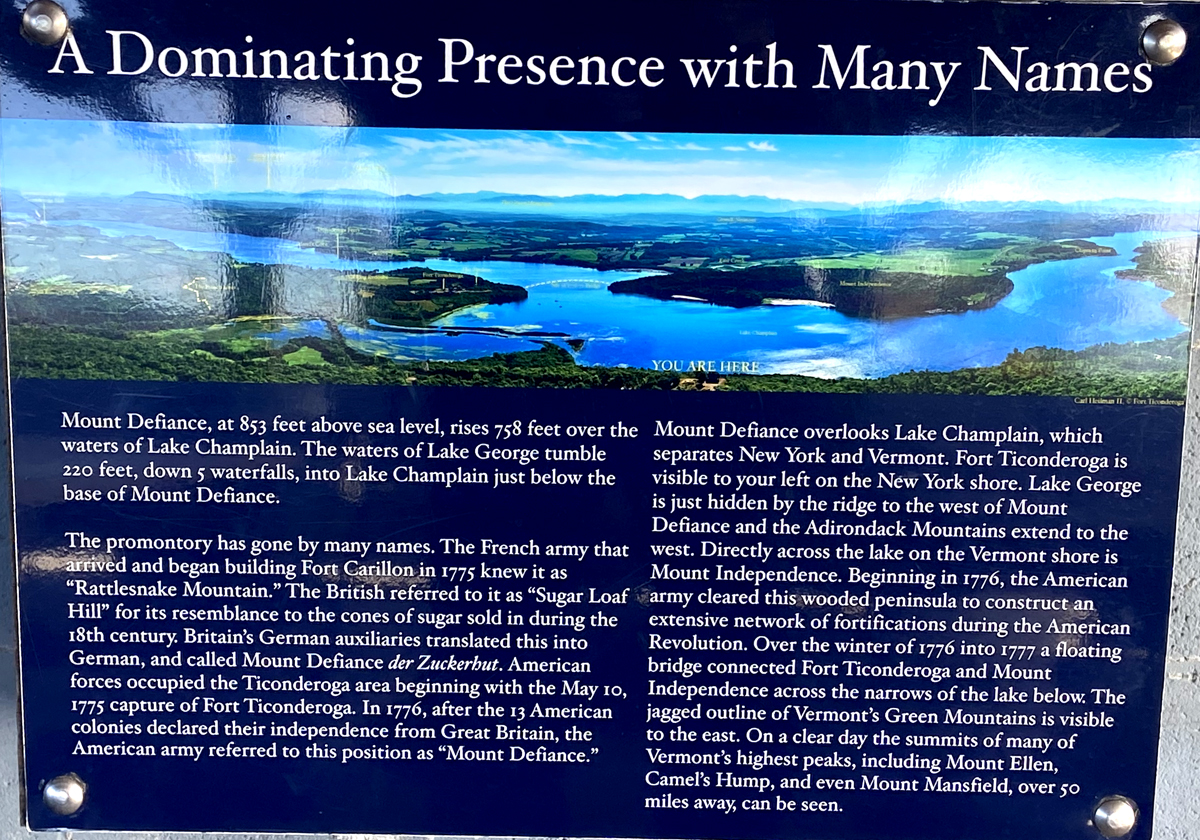

below looking over the fort to Vermont and the Green Mountains.

Ironville was on that 2010 trip – how I learned about the celebration that day I do not remember, but I went. Ironville, NY, is considered the “birthplace of the electric age,” as the first location in the world to put electricity to commercial use and inspired Thomas Davenport to invent the electric motor. None of the iron works remain, and the historic district consists of 12 buildings — isolate, remote, nothing nearby IT DESERVES A VISIT, and I may go for another visit. You may wish to learn more, and here is one link to start with.
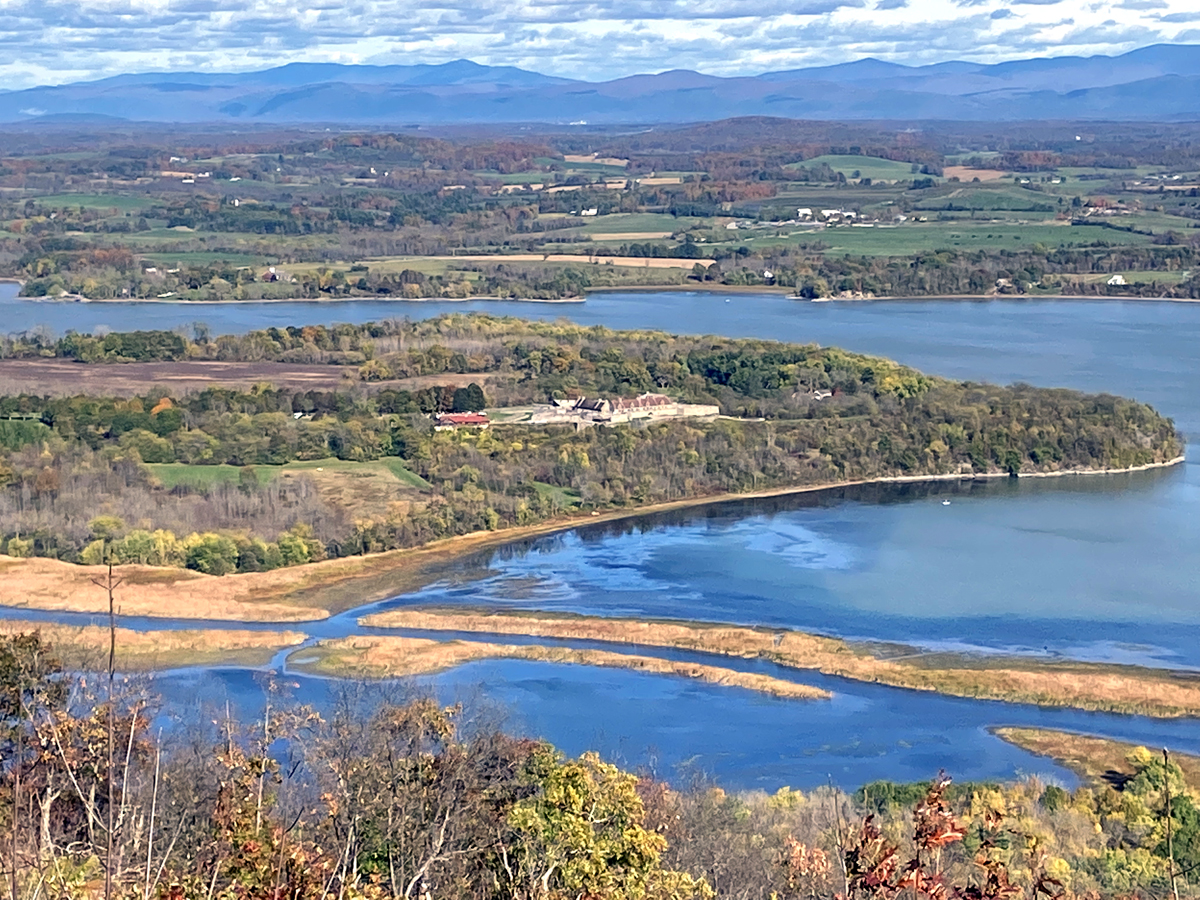
The first view below is about where BLACK BEAUTY and I parked 15 years ago – sadly I cannot find any images I took that day – the image of the ferry I had saved to a website ages ago. What you see here is basically the town – the bottom right image the historic house museum. I have a 14 page historical booklet of the area that I bought in the museum, my note at the top “Bought 10/10/10.” I need to make a PDF to share with you on the history of the industry and use of electricity here – so check back.


I then headed back south to see more of “downtown” Fort Ticonderoga to prepare for when Gary and I visit next year to the Star Trek Museum. A lovely park along the La Chute River with this covered bridge in the park.

Be warned when you visit that there are limited eating options, particularly “mid-week” and this time of year. But I was pleased with Seymour’s Restaurant at Ticonderoga Golf Course, and do recommend it. Left the view from my table.


Back to the B&B for the evening. In the morning, of course I took a long route to get home heading north to cross Lake Champlain on the new bridge at Crown Point, my first time across this new span. shown in my gallery below.


I have visited the fort at least twice before, but again went in. Open these panels that are in the museum for more history of this strategic “choke point” on the lake.


Only wonderful stonework remains

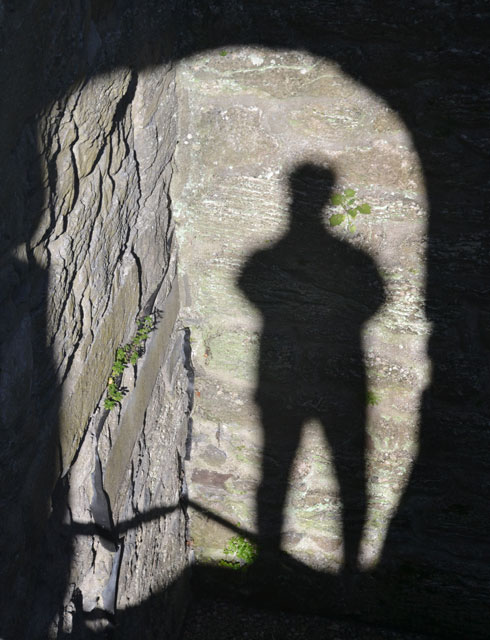
you know I enjoy shots through windows or openings and texture

rock outcropping on the surface inside the fort — so similar to the rocks I showed you near Saratoga in my recent post that included LESTER PARK with rocks of 490 million years ago showing fossilized sea bottom.

Back in Vermont the museum at Chimney Point was now closed for the season (have not been there in over ten years so need to go again), so then I picked up Route 123 heading basically east across flat lands to Middlebury and my favorite US Route 7. Open, rural, unique, and as you can see not too much color this season.

So, I am pleased to finally get to share another outing with you – one that I recommend for some leisurely history learning, especially now as the important events in this area are reaching 250 years ago. I have been on part of the Knox Trail, the 59 cannon traversed to Boston, but plan to report more to you this coming year. May I recommend you find historic trails like this to use as a basis of exploration. I have many in mind to finally traverse in 2026 and share.
Stay safe and well, luv, RAY





 Shunpiking with Ray